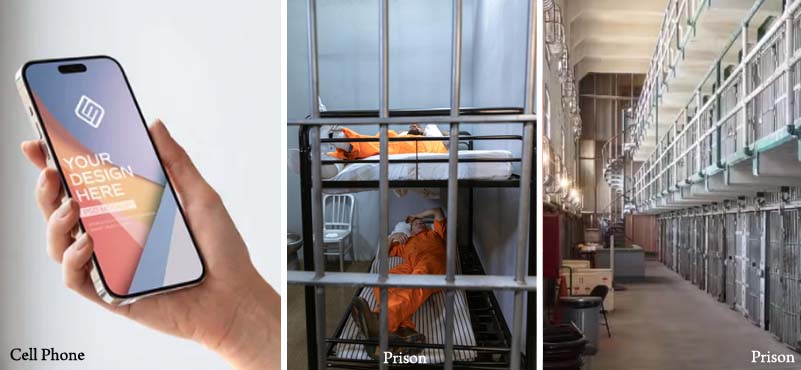
We fuss over our phones all day, clutching them as if we can’t breathe without them. It is almost ironic that we call them “cell phones,” as though we have chosen to step into a tiny, private cell and carry it in our pockets. A buzz or vibration is enough to fracture our attention; the noise of constant alerts steadily erodes our solitude.
Apparently, it seems that our screens imprison us, and in a limited sense, they do. But on a fundamental level, the device is visible; the deeper condition lies in why we keep reaching for it and what it reflects to us.
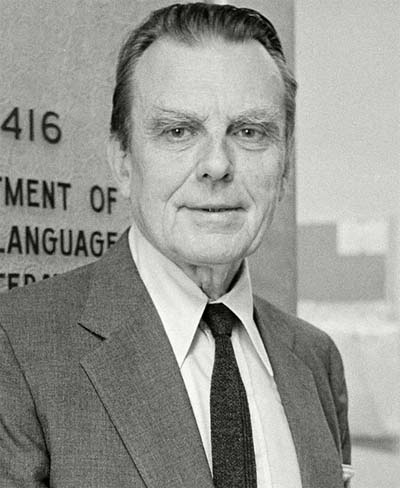
The more unsettling possibility is that we are shaped not only by our devices, but by the sum of our experience. Notifications and feeds distract us, but they succeed because they plug into habits already formed within us. The thought that we never encounter reality in a raw, neutral form, but always through the lens of our past, is central to the work of Czesław Miłosz, one of the most important Polish writers of the 20th century. His poetry and prose grew out of war, exile, and ideological tyranny, and he understood how those pressures distort perception.
For Miłosz, human beings do not meet reality as it is; they meet it as they have been formed. What we have seen and suffered frames what we notice, what we fear, and what we dismiss. A popular Hindi–Urdu line captures this in a different register:
“हर इंसान अपनी ज़िंदगी का खुद ही मुसाफ़िर होता है, और हर सफ़र में थोड़ा दर्द ज़रूर होता है।”
Every person travels his own life, and every journey carries some pain.
This is not a complaint about technology. It is a description of an existential condition. The “prison” is less about a gadget in our hand and more about the way our minds learn to see the world.
The Architecture of the Mind
In practice, we approach the world with expectations already in place. Our past quietly decides what feels important, what can be ignored, and what counts as evidence. Over time, these tendencies become habits of thought. What we have grown used to begins to feel correct, almost by default. Familiar patterns harden into assumptions, and those assumptions start to seem self-evident truths. What we have never seen often becomes what we quietly assume cannot exist.
In this way, experience is both a lens and a limit. It helps us make sense of a confusing world, but it also narrows the range of possibilities we can even imagine. What frightened us once continues to frighten us. What rewarded us in the past continues to dictate what we pursue. Slowly, we come to confuse what is familiar with what is true.
The implications are significant. If our experiences shape our perception, two people in the same room may inhabit very different worlds. Someone who has grown up amid chaos and violence does not merely hold different opinions from someone raised in stability; words like “risk,” “freedom,” or “authority” speak to a different emotional history. They are not abstract ideals; they are condensed, lived experiences.
Different lives produce different ways of seeing. Each of us operates within what might be called an inner zone—a cognitive and emotional frame that feels complete from within yet looks partial from outside. These inner worlds are coherent enough to live in, yet they remain narrow in ways visible only in comparison with others. We all inhabit some version of an echo chamber. From the inside, everything seems to hang together. From the outside, it is marked by what it leaves out.
Centrality of Technology
Seen in this light, the place of technology becomes clearer. Phones and platforms do not create these enclosures, but they strengthen them. Algorithms are designed to keep us engaged, and they do so by learning what we already like and believe. They feed us material that confirms existing emotions and judgments. What is introduced as personalisation slowly becomes insulation. Our digital environment shrinks to fit our preferences. Opinions that trouble or contradict us are pushed out of sight. Over time, we begin to encounter fewer real disagreements and more echoes of ourselves.
Let me use the cell phone analogy again for a reflection on life. This reflection draws on the seminal work of the Nobel Laureate Czeslaw Milosz, particularly the essay collection The Captive Mind (1953), for the formulation and articulation of my views.
That is why the metaphor of the “cell phone” is both useful and deceptive. It is useful because it conveys a sense of confinement. It is deceptive because it suggests that the prison is wholly outside us, located in an object we can switch off. The more dangerous prison lies in our tendency to take the familiar for the true.
We cannot step outside experience altogether. What we can do is stretch it, complicate it, and hold it up for examination. The task is not to escape experience, but to prevent it from hardening into an unquestioned script.
Widening the Walls
One way to do this is through deliberate exposure to difference. Literature offers access to lives that do not resemble our own. It cannot replace experience, but it can supplement it, and in doing so, it widens the field of what we can imagine. Travel, when it is approached as an encounter rather than consumption, can unsettle our assumptions and remind us that what felt universal was often local and contingent. Conversations with people whose histories and beliefs diverge from ours introduce a friction that our inner narrative alone cannot provide. These practices are not escapes from experience but expansions “far from the madding crowd” (Thomas Hardy). They complicate the neat stories we tell ourselves. Miłosz’s insight is not merely diagnostic; it is cautionary.
These practices do not dissolve the prison of experience. They still operate within it. But they can loosen the walls and open small windows. They remind us that our viewpoint is one among many, not the master key to reality. They cultivate a kind of awareness that our understanding is always partial and situated. As Bob Kaufman wrote poignantly in San Francisco City Prison, Cell 3, way back in 1959,
“In a universe of cells—who is not in jail? Jailers.
In a world of hospitals—who is not sick? Doctors.
A golden sardine is swimming in my head.
Oh we know some things, man, about some things
Like jazz and jails and God.
Saturday is a good day to go to jail.”
“Jail Poems” from Collected Poems of Bob Kaufman.
In a deeply divided world—culturally, ideologically, economically—being oblivious of this truth can be dangerous. A citizen of a collapsing state and a citizen of a stable democracy may use the same words— “freedom,” “order,” “security”—while meaning very different things. Geography, history, and circumstance give rise to the form and substance of realities that are each internally coherent and yet incomplete, like the parable of the blind men and the elephant. Each touches a part of the animal and insists that the part is the whole.
Technology amplifies this condition. When our experiential biases are continually reinforced rather than interrogated, dialogue decays into parallel monologues. We become not only confined by our experience, but invested in defending it, quick to dismiss what does not fit. The more our inner narrative is validated, the more reluctant we become to revise it.
Even so, awareness itself is a point of resistance. To recognise that one’s view of the world is shaped by a path is to gain a little distance from it. That distance allows reflection. It lets us ask: why do I see it this way, and what might I be missing?
As I have repeatedly held, exposure to other lives, other histories, other narratives can stretch and transform the boundaries of our inner world. In this kind of environment, our mental prisons aren’t just maintained; they are heavily fortified.
Breaking the walls—or at least testing them
Without experience, our lives would be chaotic. The very thing that constrains us is also our only instrument for making sense of events. We cannot step outside our own skin, but we can test how far it stretches. This calls for modesty. Our perspective is one among billions. A measure of intellectual humility—a quiet admission that our view is incomplete—is not a luxury but a survival skill.
The phone can be turned off or left in another room. The structures of experience cannot be set aside so easily. They travel with us. They shape what we fear, whom we trust, and what we think is possible. If they remain invisible, they also remain unquestioned. Thus, the real issue is not whether we are prisoners of our phones or of our experience. The sharper question is whether we are aware of the cages we inhabit and whether we are willing to press against their bars. The hardest prisons are not made of steel; they are made of assumptions we never question.
Confinement by itself is not the deepest problem. Complacency within confinement is. A prison that is recognised can at least be negotiated with, probed, and perhaps slowly widened. A prison that has come to feel like freedom is far harder to leave.
Human life’s deepest dilemmas are rarely simple. They are shaped by history, memory, culture, emotion, and lived experience, making easy answers impossible. Such questions demand patience, reflection, and the courage to face ambiguity rather than retreat into certainty. In this context, Matthew Arnold’s idea of “the man and the milieu” becomes crucial. The individual is shaped not only by personal character and intellect but also by the social, cultural, and historical forces surrounding them.
Questioning, therefore, becomes essential. It resists passive acceptance of inherited beliefs, rigid systems, and unexamined habits of thought. The question is to challenge assumptions that often appear unquestionable and to recognise that human experience is never singular. Different individuals perceive reality through varied histories, environments, and prejudices, so what seems obvious to one may appear incomplete or contradictory to another.
Such inquiry is demanding because it forces us to examine not only what we believe, but why we believe it. It exposes the hidden influences shaping our thoughts and reveals the fragility of many accepted truths. Yet this discomfort is transformative. Without sustained engagement with complexity and uncertainty, our understanding of life remains superficial. The willingness to reflect, question, and reassess is therefore essential for wisdom, empathy, and a deeper understanding of the human condition.
ABOUT THE AUTHOR
 Dr. Manoranjan Sharma is Chief Economist, Infomerics, India. With a brilliant academic record, he has over 250 publications and six books. His views have been cited in the Associated Press, New York; Dow Jones, New York; International Herald Tribune, New York; Wall Street Journal, New York.