

The Strategic Paradox
India today stands at a rare inflection point in economic history. Home to nearly one-fifth of humanity, it possesses a demographic scale unmatched by most sovereign economies. Yet despite this continental magnitude, India continues to behave like a market-seeking nation—expending diplomatic capital to secure trade agreements, negotiating tariff regimes, and positioning its industries for external consumption. The paradox is striking: why should a country with the population of multiple continents combined search anxiously for buyers beyond its borders when the foundations of demand already exist within?
For decades, export-led growth has been treated as a near-universal pathway to prosperity. From post-war East Asia to reform-era China, the model appeared straightforward—integrate into global supply chains, leverage cost advantages, and capture foreign markets. India, too, absorbed this orthodoxy, orienting large segments of its industrial ambition toward overseas demand. Yet the global environment that once rewarded such strategies is undergoing structural transformation. Trade is no longer frictionless; it is increasingly strategic, guarded, and often politicised.
This article advances the idea of Demand Sovereignty—the proposition that India’s greatest economic leverage lies not beyond its shores but within its own continental-scale marketplace. Rather than viewing domestic consumption as a residual outcome of growth, India can consciously deploy internal demand as an instrument of industrial strategy. The objective is neither isolation nor protectionism, but a calibrated sequencing: saturate domestic markets, achieve cost competitiveness through scale, stabilise industry, and then engage the world from a position of surplus rather than necessity.
Demand Sovereignty is not a retreat from globalisation. It is a maturation of it.
The End of Export-Led Certainty
The late twentieth century cultivated deep faith in export-led growth. Globalisation promised open markets, efficient logistics, and relatively predictable trade relationships. That era is receding. What is emerging instead is a world of negotiated interdependence where economic flows increasingly reflect geopolitical priorities.
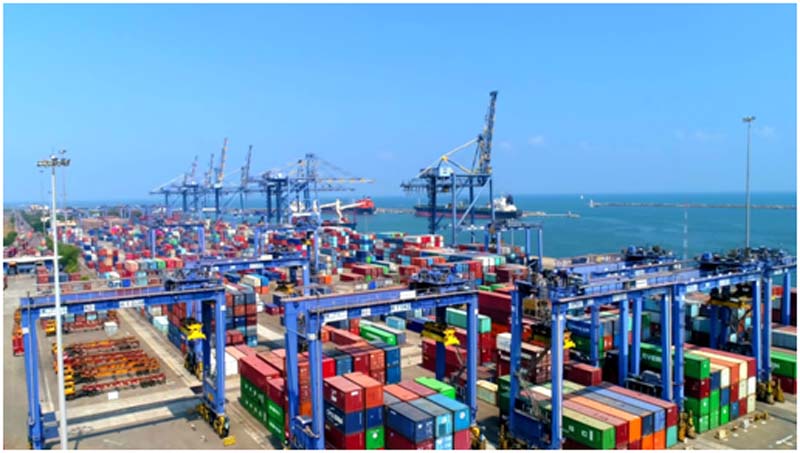
Industrial policy has returned to the forefront even in economies that once championed laissez-faire trade. Strategic subsidies, domestic content requirements, and technology controls are reshaping manufacturing landscapes. Supply chains are being redesigned not merely for efficiency but for resilience. Friend-shoring, near-shoring, and selective decoupling have entered mainstream policy vocabulary. Carbon border mechanisms threaten to function as the next generation of non-tariff barriers. Meanwhile, shipping disruptions and freight volatility have demonstrated how fragile global commerce can be when chokepoints tighten.
In such an environment, overdependence on external markets becomes less a sign of integration and more a source of vulnerability. Nations that hinge their industrial vitality on distant consumers expose themselves to policy shifts beyond their control. Export markets can contract abruptly, regulatory standards can shift without warning, and geopolitical tensions can redraw commercial pathways overnight.
None of this implies that exports are undesirable. Trade remains a powerful engine of productivity and innovation. But the assumption that external demand must serve as the primary locomotive of industrial expansion deserves reconsideration—especially for an economy of India’s size. The question is no longer whether India should export; it is whether exports must precede domestic industrial consolidation.
Demand Sovereignty proposes a reversal of sequence: build depth at home first, and engage abroad from strength.
India as a Continental Economy
To understand the plausibility of such a strategy, one must begin by reframing India not simply as a nation-state but as a continental economy. Only a handful of economic geographies possess sufficient demographic mass, consumption diversity, and spatial scale to sustain broad-based industrial ecosystems internally. The United States and China exemplify this category. India is rapidly joining it.
Several structural shifts support this transition. Private consumption forms the dominant share of India’s economic activity, reflecting a society where household demand drives growth more than export surpluses. Urbanisation is steadily expanding the consuming class, while digital marketplaces are dissolving traditional barriers between producers and buyers. The formalisation of the economy through tax harmonisation has created something historically elusive: a unified national market.
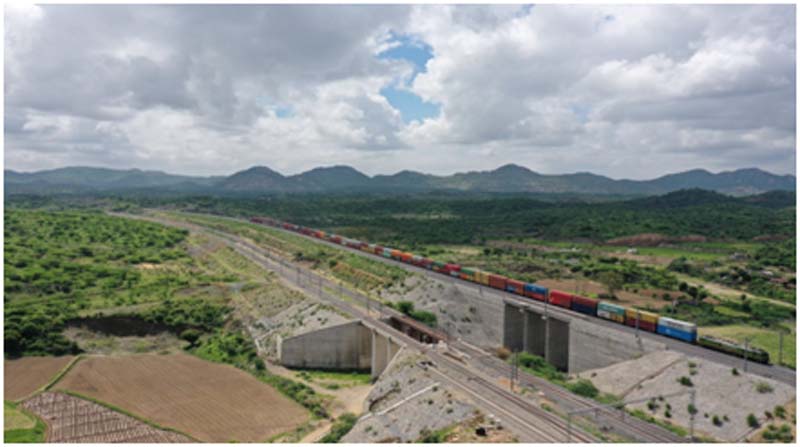
Infrastructure is reinforcing this integration. Freight corridors, modernised ports, expanding highways, and logistics platforms are compressing economic distance. Regions that once functioned as semi-detached markets are being woven into a single commercial fabric. As distribution costs fall and connectivity rises, producers can increasingly treat India as one aggregated demand field rather than a mosaic of fragmented territories.
The implications are profound. A continental market offers what economists often describe as demand gravity—the ability of sheer scale to attract investment, justify capacity creation, and sustain technological upgrading. When firms know that large and relatively predictable consumption exists domestically, their risk calculus changes. Investment horizons lengthen. Productivity-enhancing technologies become viable. Supply chains deepen organically.
India, in other words, is structurally capable of demand-led industrialisation. Recognising this reality is the first step toward harnessing it strategically.
Domestic Absorption as Industrial Strategy
At the core of Demand Sovereignty lies a structured approach that may be described as the Domestic Market Saturation Strategy (DMSS). Its logic unfolds across three mutually reinforcing stages.

Stage One: Absorption. Domestic demand is not left to chance; it is cultivated. Public procurement can serve as an anchor customer for emerging industries. Large-scale infrastructure programmes generate predictable orders for steel, cement, heavy machinery, and advanced materials. Housing expansion stimulates supply chains spanning appliances to electrical equipment. Healthcare investment drives pharmaceutical and medical device ecosystems. By shaping demand deliberately, the state acts less as a controller and more as a market architect.
Stage Two: Cost Compression. Volume is strategy. When firms produce for a vast internal market, unit costs decline through economies of scale, learning effects, and process optimisation. Suppliers cluster, logistics networks mature, and ancillary industries emerge. What begins as domestic orientation gradually transforms into global competitiveness—not through subsidy dependence but through structural efficiency.
Stage Three: Export from Surplus. Once domestic markets approach saturation, excess capacity naturally seeks external outlets. Crucially, exports at this stage are not acts of desperation but expressions of strength. Producers negotiate from confidence, not vulnerability. Nations that export from necessity bargain; those that export from surplus set terms.
This sequencing distinguishes Demand Sovereignty from inward-looking economic doctrines of the past. It does not advocate sealing borders or insulating industry from competition. On the contrary, it assumes continuous benchmarking against global standards. Domestic-first does not mean domestic-only; it means domestic-foundational.
Sectoral Mapping: Where Domestic Saturation Delivers Maximum Gain
Not all industries respond equally to internal demand. The strategic value of Demand Sovereignty lies partly in identifying sectors where domestic absorption can generate transformative effects.
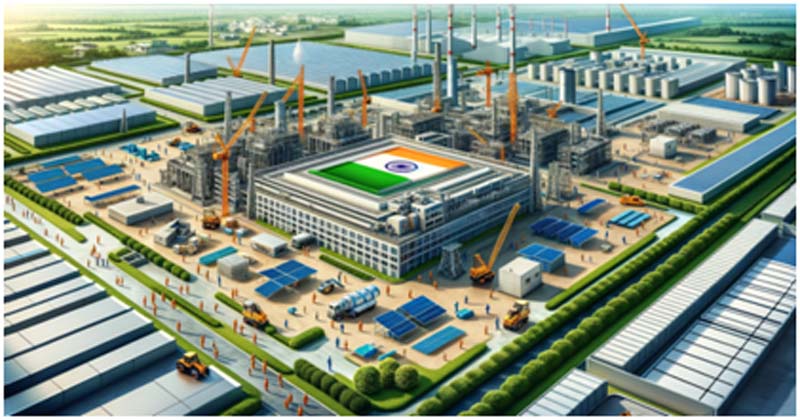
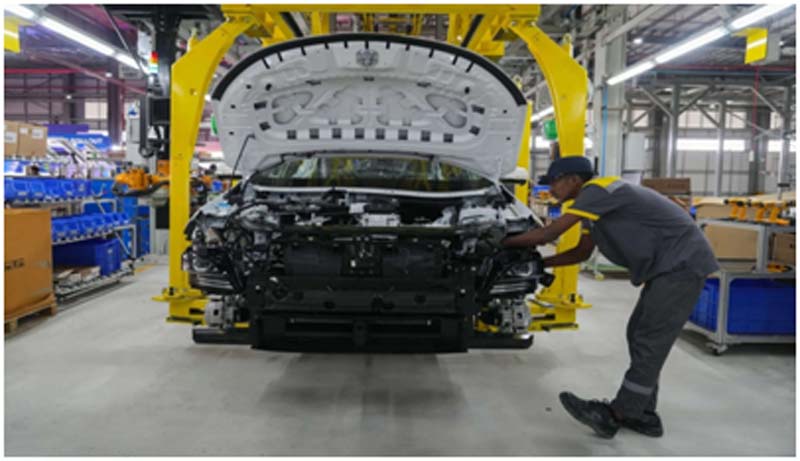
- Automobiles and Electric Mobility. Few markets rival India in long-term mobility demand. As incomes rise and urban design evolves, vehicle ownership patterns will expand across segments—from two-wheelers to electric fleets. A domestically anchored automotive ecosystem can justify deep localisation of components, battery technologies, and design capabilities. Export success, if it follows, will rest on formidable internal scale.
- Consumer Electronics. India is already among the world’s largest electronics consumers, yet manufacturing depth remains uneven. Saturating domestic demand with locally produced devices can catalyse semiconductor packaging, component fabrication, and design services. Scale reduces import dependence while positioning firms for eventual global penetration.
- Pharmaceuticals and Healthcare Manufacturing. An expanding healthcare system creates stable, recurring demand for medicines, diagnostics, and equipment. Domestic absorption encourages research investment and production resilience, ensuring that critical health supply chains are not hostage to external shocks.
- Construction Materials and Capital Goods. Infrastructure itself becomes the market. Highways, rail, renewable installations, and urban redevelopment require enormous material throughput. When industry grows alongside national development, capacity utilisation remains robust even during global downturns.
- Renewable Energy Equipment. The energy transition will require vast deployment of solar modules, storage systems, and grid technologies. Meeting domestic decarbonisation goals can anchor manufacturing ecosystems capable of later serving international markets.
Across these sectors, the pattern is consistent: internal demand lowers volatility, encourages long-term investment, and nurtures technological depth.
Strategic Exceptions: Industries That Must Globalise Early
A credible doctrine must acknowledge its limits. Certain industries cannot achieve viability within even the largest domestic markets because their economics demand planetary scale.
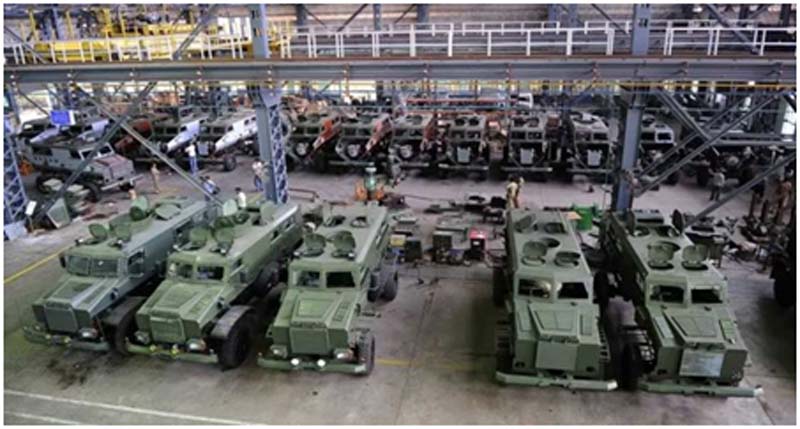
- Defence manufacturing is the most prominent example. Advanced platforms involve immense research costs and long development cycles. Export partnerships distribute these costs, extend production runs, and accelerate innovation. Moreover, defence exports cultivate strategic relationships that transcend commerce.
- Aerospace, advanced semiconductors, shipbuilding, and high-end robotics fall into similar categories. Their capital intensity and technological complexity necessitate early global integration. Attempting to sustain them solely on domestic orders risks inefficiency and stagnation.
Demand Sovereignty therefore does not prescribe uniform inwardness. Instead, it calls for sectoral discrimination—domestic saturation where scale exists, global engagement where scale must be constructed collaboratively.
Some industries achieve viability only at planetary scale. Strategic wisdom lies in recognising which is which.
Guardrails Against Inward Drift
Any strategy that privileges domestic markets must guard against predictable pitfalls.
- The first risk is protectionist drift. Shielding firms excessively can dull competitive instincts and erode quality. The antidote is transparent standards aligned with global benchmarks rather than discretionary barriers.
- The second risk is innovation slowdown. Exposure to international competition often accelerates technological adoption. Domestic orientation must therefore coexist with research incentives, cross-border collaborations, and openness to ideas.
- The third risk is demand inequality. If consumption remains concentrated among higher-income groups, industrial breadth may narrow. Broad-based purchasing power—supported by employment generation and productivity growth—ensures that domestic demand remains both deep and inclusive.
Demand Sovereignty succeeds only when internal scale is matched by external discipline.
The Logistics Moment: Why the Window Is Now
Timing matters in grand strategy. India’s current logistics transformation makes this an unusually opportune moment to pivot toward domestic absorption.
Dedicated freight routes are shrinking transit times. Industrial corridors are aligning manufacturing clusters with transport arteries. Digital platforms are enhancing supply-chain visibility, while unified payment systems simplify transactions across regions. Warehousing capacity is expanding, and multimodal connectivity is gradually lowering distribution costs.
For perhaps the first time in its modern history, India can function operationally as a single economic space. Producers in one region can serve consumers nationwide with increasing efficiency. As logistical friction declines, the economic rationale for treating domestic demand as a strategic asset strengthens correspondingly.
Infrastructure, in this sense, is not merely supportive—it is constitutive of Demand Sovereignty.
Policy Blueprint: Operationalising Demand Sovereignty
Translating doctrine into practice requires a state that shapes markets without smothering them.
Strategic procurement can provide early demand certainty in sectors where private investment hesitates. Standards enforcement ensures that domestic products compete on quality rather than protection. Credit architecture directed toward manufacturing ecosystems lowers entry barriers for firms willing to scale. Supply-chain integration initiatives encourage clustering, reducing input costs and fostering innovation spill-overs.
Equally important is regulatory predictability. Investors commit capital when policy horizons appear stable. A coherent domestic-demand strategy signals precisely that stability.
The goal is not to mandate that citizens buy locally but to ensure that locally produced goods are competitive, reliable, and widely available. When quality aligns with accessibility, preference follows naturally.
This is best understood as market-shaping state capacity—a governance approach that guides economic evolution without dictating its every move.
From Market-Seeker to Market-Maker
India’s economic ascent will not be determined solely by how much the world purchases from it, but by how confidently it can mobilise the purchasing power within. A nation of continental scale need not view itself primarily as a supplier to others; it can become a generator of its own demand gravity.
Demand Sovereignty invites precisely this shift in self-perception—from market-seeker to market-maker. By saturating domestic markets, compressing costs through scale, and exporting from positions of surplus, India can construct an industrial base resilient to external shocks yet fully capable of global engagement.
The choice is not between inwardness and openness. It is between reactive integration and strategic participation. In a world where economic relationships are increasingly shaped by power as much as by price, the ability to rely on one’s own demand becomes a form of sovereignty.
India possesses that possibility today. Harnessing it may well define the next chapter of its economic story—not as an economy searching for its place in global markets, but as one whose internal strength reshapes them.
(The author gratefully acknowledges Mr Navin Berry, Editor Cross Section Conversations, whose evocative idea “Be Indian, Buy Indian” during a group chat sparked the intellectual framing of this article.)
ABOUT THE AUTHOR
 Lt Gen Rajeev Chaudhry (Retd) is a social observer and writes on contemporary national and international issues, strategic implications of infrastructure development towards national power, geo-moral dimension of international relations and leadership nuances in changing social construct.