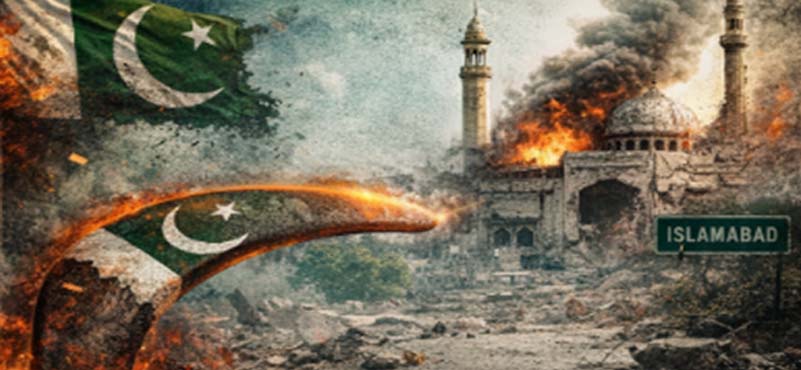
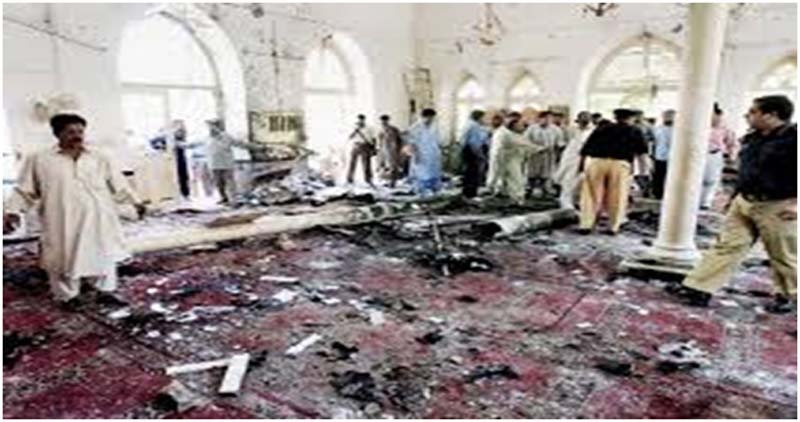
Pakistan’s strategy of wielding extremist proxies to destabilise its neighbours has come full circle. The recent attack created carnage at the Khadija Tul Kubra mosque in Islamabad signals that the state’s distinction between ‘good’ and ‘bad’ jihadists has imploded. When terror reaches the capital, it reveals a state at war with itself; the militancy that it once nurtured is now striking back at its heartland. This is not a failure at the margins but a rupture at the core. What was designed to destabilise others now destabilises Pakistan itself.
Pakistan’s long experiment with proxy warfare was designed to externalise insecurity. What were once harboured as “strategic assets” have become ‘strategic liabilities’ in the most literal sense. They are striking at the authority, cohesion and credibility of the state that midwifed them. It has instead created concentric rings of violence that now close in on the state itself from the tribal belt and Khyber Pakhtunkhwa to Balochistan, and is now hitting the federal capital.
The resurgence of Tehreek-e-Taliban Pakistan (TTP) in Khyber Pakhtunkhwa is the classic blowback. It radicalised a generation of militants, who were trained and armed in the darkness of Pakistan’s Afghanistan policy. They accepted the idea that armed jihad, under the sanction of the state, was a valid political tool. As time went by, this logic became inverted, and the clash of Islamist ideologies and regional aspirations resulted in a state boomeranged by the terrorism they bred. The state now finds itself in the absurd position of seeking cooperation from a Kabul dispensation whose ascent it quietly facilitated, to restrain a movement that grew in the slipstream of its own policies. This is not depth; it is strategic entrapment.
The pattern in Balochistan is different in genealogy but similar in structure. The province was also never allowed to be integrated; it was a space to be controlled and extracted. Crackdowns and brutalities by security forces, dissension in the exploitation of resources without regional benefit, and forced disappearances created a wave of disenchantment. Insurgent groups, such as the Balochistan Liberation Army (BLA), developed, over time, into more networked, symbolically powerful entities, attacking the state forces, infrastructures associated with foreign projects, and political repression to deliver strong messages. The recent surge in attacks in 2026 and their lethality expose the state’s eroding grip over the province.
This is where the fiction of controllability fully unravels. Militancy and terrorism inside Pakistan today are not neatly separable into “good” and “bad” categories, if they ever were. Networks overlap, individuals and factions defect, logistics and ideological ecosystems are shared. A cadre who once fought abroad can, under changed circumstances, find reasons to wage war at home. The ecosystem is fluid; the state’s taxonomies are rigid.
What binds together Khyber Pakhtunkhwa’s violence, the TTP’s cross‑border operations, the BLA’s campaign in Balochistan and Sunni attacks on a Shia mosque in Islamabad is a common structural faultline: the erosion of the state’s monopoly over legitimate violence. That erosion began the day the state decided that armed non‑state actors could be tools of state policy. It deepened with every nod, every selective crackdown, every moment when violence was judged based on “direction” (inward or outward) rather than a dangerous game.
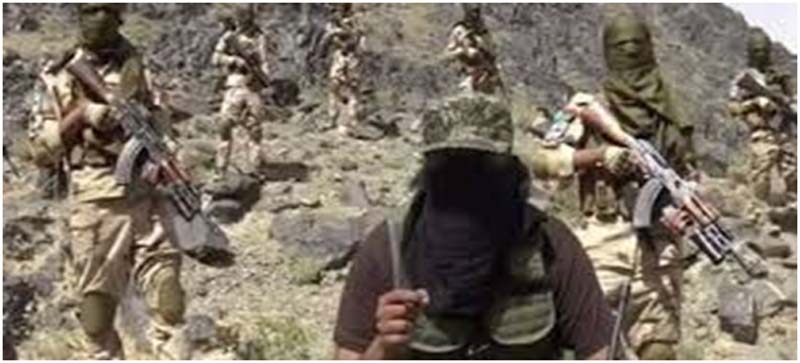
There is a temporal dimension too often ignored. Relationships with armed groups are dynamic, not static. When they are first cultivated, the balance of power appears to favour the state: it controls resources and access, it offers protection and political cover. But each successful operation, each recruitment drive, each financial stream opened to a group shifts that tilt the balance marginally. Over the years, that marginal shift has become structural. The group acquires its own ideological coherence, its own foreign links, its own revenue sources, its own narrative of legitimacy. The original sponsor becomes one interlocutor among many and not always the most important.
This is precisely the situation Islamabad now confronts. The carnage in Islamabad’s mosque is not a solitary outrage but a continuation of a long, escalating Shia Sunni rivalry in Pakistan and the emergence of its militant wing Islamic State Pakistan Province, an affiliate of ISIL. Sectarian discourses were decades inculcated in madrassas, pulpits and pamphlets which projected Shias as suspicious Muslims, even legitimate targets, in the service of a greater ideological and regional interest. What started as a theological difference transformed into violent sectarian clashes.
Meanwhile, Pakistan’s economic and diplomatic bandwidth shrinks. Investors and partners see risk where once they might have seen opportunity. Allies grow weary of repeated cycles of escalation and partial rollback. Adversaries adjust, harden and diversify their own responses.
Breaking this pattern demands more than tactical success. It requires a strategic re‑orientation that begins with an uncomfortable admission: the era of “strategic assets” is over. In an environment of transnational media, financial transparency and regional interdependence, there is no sustainable way to harness non‑state violence as a state instrument without paying the price of domestic fragility and international isolation.
Such a re‑orientation would have several implications. The first step is the abandonment of the good-versus-bad terrorist dichotomy, followed by a sustained political settlement in Balochistan and the tribal belt that treats these regions as integral parts of the federation rather than as buffers, resource corridors, or ideological battlegrounds. Second, a security doctrine that understands strategic depth in Afghanistan is not achievable through finding selective loyalties of some militant faction but rather through a stable, minimally hostile neighbour, whose government is motivated to further Pakistan’s security calculus. Fourthly, comprehend the futility of proxy war against India, which has backfired internally, externally and internationally against Pakistan.
None of this is easy, and conflicts with the institutionalised deep state entrenched policy over decades. It challenges powerful vested interests within a broader security ecosystem. More importantly, it could erode the standing of the Pakistani Army and its key player, the ISI, which would not be acceptable.
For India, the implications are real, not abstract. Historically, any internal turmoil in Pakistan has resulted in a deflection towards India to divert the attention of the nation away from an embarrassing core issue. A security establishment under pressure does not necessarily turn inward; it frequently seeks strategic distraction. Proxy war has been contained, not eliminated, and could rekindle. India cannot assume that Pakistan’s internal pressure will remain internally absorbed.
A state within the state under pressure at home has more incentive to remind its own public that the “real” threat lies outside. New Delhi must assume that internal turbulence in Pakistan can translate into border friction. There is also the risk inherent in a spillover of the terror ecosystem. Semi-autonomous actors operating with ideological zeal and tactical initiative reduce the margin for escalation control. It underscores the importance of intelligence, preparedness and deterrence.
Pakistan is a country condemned to fight, both the shadows it once cast abroad and the fires it lit at home. Strategic assets that no longer obey strategist are not assets; they are the clearest warning a state can receive that the methods it once considered smart have become a threat to its own survival. For India, the implication is straightforward. Instability across the border will continue to generate external friction and internal threats. The response lies in preparedness, intelligence depth and deterrence discipline, not in reaction or rhetoric.
ABOUT THE AUTHOR
 Lieutenant General A B Shivane, is the former Strike Corps Commander and Director General of Mechanised Forces. As a scholar warrior, he has authored over 200 publications on national security and matters defence, besides four books and is an internationally renowned keynote speaker. The General was a Consultant to the Ministry of Defence (Ordnance Factory Board) post-superannuation. He was the Distinguished Fellow and held COAS Chair of Excellence at the Centre for Land Warfare Studies 2021 2022. He is also the Senior Advisor Board Member to several organisations and Think Tanks.