
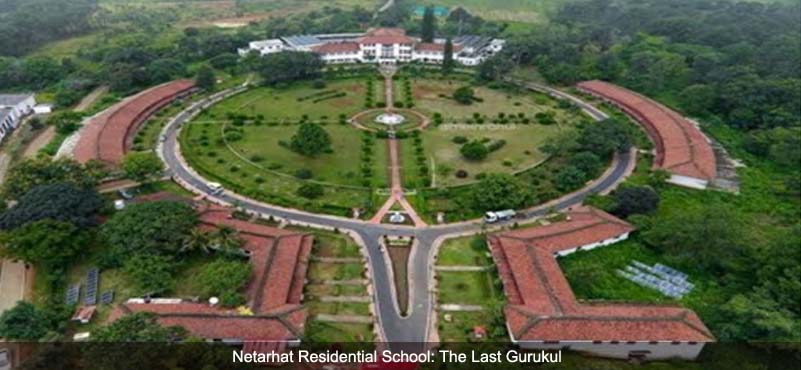
At precisely eight each morning, long before the language of “holistic education” entered policy frameworks, we gathered in the school Assembly Hall. The day did not begin with attendance but with attention — attention to ideas, to conduct, to the responsibilities that come with being part of a larger collective. Newspapers had already been read; the world had already entered our awareness. Then our founding principal, Shri Jeevan Nath Dar, would speak — not about marks or careers, but about integrity, discipline, curiosity, and the obligations of citizenship.
It is only in retrospect that the deeper significance of those mornings becomes clear. A republic is renewed each morning in its classrooms. What we experienced was not merely schooling; it was preparation for participation in a democratic society.
India today debates curriculum reform, digital classrooms, regulatory frameworks, and global competitiveness. These are necessary conversations. Yet beneath them lies a more foundational question: what kind of citizens should our schools cultivate? For ultimately, education is the slow architecture of a nation, and the durability of that architecture depends less on instructional technique than on institutional purpose.
Countries do not decline overnight; they erode when schooling loses moral purpose. Conversely, societies that invest in thoughtful educational ecosystems build reserves of trust, competence, and leadership that sustain them through uncertainty. The true infrastructure of a nation is not visible only in highways or ports; the true infrastructure of a nation is human capability. Budgets reveal priorities; classrooms reveal the future.
Education Beyond Instruction
Shri Jeevan Nath Dar belonged to a generation of educators who viewed schooling as a civilisational responsibility. Associated with the founding of Netarhat School — itself conceived as a centre of academic seriousness and character formation — he helped nurture an institutional culture that drew inspiration from the gurukul while remaining firmly aligned with modern intellectual rigor.

Our school functioned as a day-boarding institution long before the phrase gained currency. From early morning until late afternoon, the campus was less a place we attended than a community we inhabited. Breakfast, lunch, and evening tea were shared; friendships matured across social backgrounds; teachers understood not only our academic strengths but also our temperaments.
Morning assemblies were expansive intellectual spaces. We sang prayers from multiple faith traditions, learning quietly that respect was indivisible. Songs in many Indian languages dissolved hierarchies before we were old enough to recognise them. National and international events were discussed with seriousness, signalling that awareness of the world was part of being educated.
The curriculum extended far beyond textbooks. One of the final periods each day was devoted to work experience — electronics, carpentry, practical crafts — activities that cultivated both dexterity and dignity of labour. Arts, theatre, debate, dance, and recitation were not ornamental; they were integral to expression. Science exhibitions encouraged inquiry; sports instilled resilience. Many students stayed back voluntarily to read or practise, a quiet sign that the institution had succeeded in making learning intrinsically attractive.
The school understood something modern systems sometimes forget: great schools are ecosystems, not instructional factories. Institutional culture educates long after textbooks are forgotten. Character is not taught — it is absorbed from institutional culture, and values become durable only when embedded in daily routine. Schools succeed when discipline is internalised, not imposed. Such formation has consequences. Competence without character is efficiency without direction.
The State as an Enabler of Excellence
Equally significant was the fact that this transformative ecosystem was government-aided. Admission involved a demanding written examination, interviews, and medical fitness. With only ninety seats at the entry level, selection carried prestige — but not exclusivity born of wealth. Children from ordinary families entered through effort and ability.

This model contains an enduring policy lesson. Public education is not welfare spending; it is sovereign investment. When the State funds excellence, social mobility accelerates. Merit must never become a privilege purchasable by wealth. Over the years, the school produced officers for the armed forces, civil servants, scientists, engineers, administrators, entrepreneurs, artists, and journalists. Yet the more striking commonality among its alumni is not professional distinction alone; it is a shared ethical centre — a quiet conviction that competence must be accompanied by responsibility.
The most strategic governments think in generational timelines. Education is nation-building in its longest time frame, and the dividends of schooling are delayed but decisive. India has, at different moments, demonstrated the foresight to build exemplary public institutions — residential schools such as Netarhat, the network of Jawahar Navodaya Vidyalayas, and the Sainik Schools, among others. These institutions widened access while upholding standards, proving an important principle: exemplary public schools are not luxuries; they are national laboratories. Standards rise when institutions prove what is possible.
Bridging Fault Lines Before They Harden
Perhaps the most enduring contribution of such schools lies in their quiet ability to soften social divisions before they calcify into adult prejudices. Children studied, competed, celebrated, and occasionally failed together. Economic differences blurred in shared uniforms and common dining spaces. Leadership rotated through houses and teams, ensuring that authority was experienced as responsibility rather than entitlement.

Children who grow together seldom grow apart as citizens. Shared schooling is democracy in its most formative stage. Classrooms can quietly achieve what politics struggles to repair. Prejudice rarely survives prolonged familiarity.
Nations seldom fracture suddenly; they drift apart when successive generations grow up in parallel educational silos. An education system obsessed with testing risks forgetting how to teach. Information has expanded; wisdom still requires cultivation. Efficiency has entered schooling faster than reflection. In recent decades, segments of schooling have tilted toward relentless examination performance and early academic stratification. Coaching cultures promise precision but rarely cultivate breadth. Yet a nation cannot coach its way to greatness.
The question before us is not whether excellence matters — it does — but whether excellence can be sustained without social trust. A republic ultimately depends not only on skilled professionals but on citizens capable of cooperation.
Education as Long-Gestation Nation Building
India stands at a pivotal historical moment. With a youthful population, technological ambition, and expanding geopolitical presence, the country speaks — rightly — of its potential to shape the twenty-first century. Yet demographic advantage without educational depth becomes a missed century.
Aspiring global powers cannot afford shallow schooling. Human capital precedes geopolitical influence. If India seeks leadership, it must first invest in formation. Can a nation aspire to global stature with schooling that is purely transactional? Can innovation flourish without curiosity? Can democratic resilience endure without moral grounding?
Institutional culture, more than policy rhetoric, determines these outcomes. Leadership in schools is less about administration and more about moral example. The builders of earlier exemplary institutions appeared to understand this instinctively. They thought in decades rather than fiscal cycles, recognising that educational investment must be evaluated across generations. Education is nation-building in its longest time frame, and governments that recognise this truth plan accordingly.
To view schooling merely through the lens of immediate employability is to misunderstand its civilisational role. Schools do not simply prepare individuals for the economy; they prepare societies for continuity. Great nations are imagined first in their classrooms.
Beyond Policy — The Courage to Build Again
The National Education Policy has articulated an ambitious vision, reaffirming the importance of multidisciplinary learning, flexibility, and foundational literacy. Frameworks matter. Yet transformation ultimately requires institutions that embody ideals visibly enough to inspire replication.
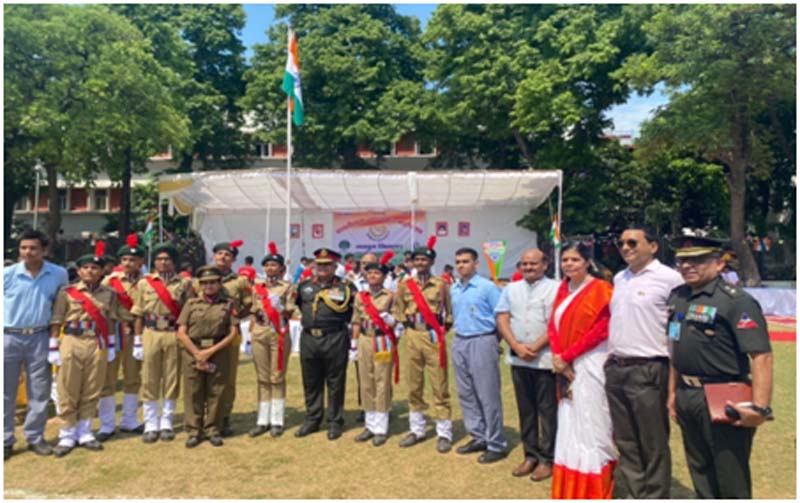
Imagine each State nurturing a network of deeply resourced public schools — day-boarding or residential — where merit coexists with inclusion; where teachers are carefully selected and continuously developed; where arts stand alongside analytics; where physical endurance complements intellectual exploration; and where students encounter diversity as a lived experience rather than a theoretical commitment. This is neither nostalgia nor romanticism. It is strategic pragmatism.
For when education succeeds in shaping balanced individuals — intellectually alert, ethically anchored, socially at ease with difference — it quietly bridges many of the fault lines that otherwise demand political repair. Countries that neglect this dimension often discover, too late, that economic growth alone cannot guarantee cohesion.
The Measure of What Endures
Those of us who passed through such institutions entered as children from unremarkable circumstances. We left with something less visible but infinitely more durable: the belief that we were accountable not only for our own advancement but also for the society that enabled it.
Years later, professional milestones fade into the background; what persists are reflexes — to listen before concluding, to disagree without hostility, to lead without arrogance, and to recognise the dignity of every vocation. These attributes are not incidental. They are the outcomes of deliberate educational design. Institutional culture educates long after textbooks are forgotten.
As India charts its path through an uncertain century, it may find that its most strategic investments are neither the most dramatic nor the most immediate. They are the ones that quietly shape human capability. The future of a republic is rehearsed long before it is governed. And if India wishes to shape its century, it must begin by shaping its schools.
ABOUT THE AUTHOR
 Lt Gen Rajeev Chaudhry (Retd) is a social observer and writes on contemporary national and international issues, strategic implications of infrastructure development towards national power, geo-moral dimension of international relations and leadership nuances in changing social construct.