The agreed interim agreement of February 6, 2026 marks an important step towards a US-India Bilateral Trade Agreement (BTA) but given its interim nature and a lot of gaps in terms of detail and opacity, any analysis of it at this stage can also only be preliminary. While this caveat needs to be stated right at the outset of this article, it is also the case that the direction, if not the end result, of the BTA is already clear, and can be discerned. It seems to suggest a largely one way direction in favour of the US, whether we look at its overall macroeconomic trade deficit, foreign exchange and other likely impacts and implications or its sectoral impact on Indian agriculture, industry and services, the three main sectors of any economy. This BTA “deal” does not, as a result, have the potential to be a serious and balanced trade agreement like the recent January 2026 EU-India Free Trade Agreement (FTA).
At a macroeconomic level, the explicitly stated purpose of President Trump was to eliminate the US’ trade deficit with India on “goods.” That appears to have been achieved even before this BTA after the August 27, 2025 imposition of 50% tariffs on India for most goods exports (25% imposed earlier after April 2, 2025 “Liberation Day” which went into effect from early August and 25% additional tariffs for India’s purchase of Russian oil which went into effect on August 27).
India’s trade surplus of a little over US Dollar (USD) 40 billion before these increased tariffs was essentially eliminated before end-2025 as a result of their unilateral imposition by the US government even before the February 6, 2026 announcement which includes a formidable USD 500 billion that India has committed to import from the US over the next 5 year period till 2030 (USD 100 billion per year starting in 2026). This is more than double the value of current Indian imports from the US. While some of these proposed imports (eg. some Boeing purchase, certain defence equipment) may well have happened in any case and be desirable, as in the case of defence equipment, so as to reduce dependency on legacy defence equipment and spare parts from the Russian Federation, a lot of the now proposed imports to make up the annual and cumulative totals will either be forced (eg. hundreds of Boeings, higher cost crude oil, agricultural imports, high-end luxury cars and motorcycles, bourbon whisky), or not realized since such a doubling of annual import value in such a short period of time is likely to be unfeasible.
Quite apart from the significant overall trade deficit implications of this 5-year import commitment (it should be noted that before August 27, 2026, the US was the only major country with which India actually had a trade surplus in “goods,” given its significant current trade deficits with China and ASEAN in particular), there are also very likely to be negative flow-on impacts of increased imports on India’s foreign exchange reserves, inflation, interest rates and the value of the Indian rupee which should also be taken into account.
For instance, India’s precious foreign exchange, always a scarce commodity in relation to growing needs, will, partly, be frittered away as a result of zero tariffs on the import of large luxury automobiles, Harley Davidson motorcycles and bourbon whisky which only a few Indians can afford to buy and which do not benefit the common man or woman in any manner. Zero tariffs on these products are also likely to bring in imported inflation and risk further rupee depreciation under pressure of an increased overall trade deficit.They will also lead to more visible conspicuous consumption and increase already extreme inequalities in Indian society.
In summary, India’s pledge to buy USD 500 billion of US imports over 5 years is likely to be unrealistic, deficit enhancing and “strategic autonomy” compromising. It also rests on the private sector’s decisions which are well beyond the government’s ability to guarantee (eg. number of Boeings purchased). As a result, much of this amount may remain aspirational unless Government coercion is employed on the private sector to increase India’s US imports from the current 45 billion per annum to 100 billion per year.
Moreover, the Indian government’s and its Chief Economic Adviser’s publicly expressed wishful thinking that the BTA will automatically crowd in both significant amounts of foreign direct investment (FDI) and and foreign portfolio invesment (FPI), as well as induce domestic investors to increase manufacturing capacity in India rather than invest overseas as they have been doing for years now for a variety of reasons remains to be seen. This is unlikely in significant enough quantities, however, since many root causes impacting all three types of flows remain unaddressed. Such flows are normally impacted by a range and multitude of fundamental issues and concerns which a single BTA cannot realistically resolve or address.

At a sectoral level, much self-congratulation is taking place because of the slightly lower US tariffs (18% vs. 19 or 20%) on India compared to some of its main competitors in labour intensive manufacturing exports such as Vietnam, Bangladesh, Thailand and Indonesia. However this self-congratulation misses the larger point that tariff costs are only one ingredient in the overall competitiveness cost bundle of labour-intensive exports. The reduced Indian US import tariff level of 18%, even if 1-2% lower compared to India’s main competitors, especially Vietnam which has 20% tariffs, is highly unlikely to make India either more competitive than Vietnam on labour intensive exports such as garments, textiles and leather or even enable it to regain its lost labour-intensive exports to the US in the second half of 2025 when tariffs on them were 50%. Building competitive advantage over India’s major competitors in these areas for the lasting future is a medium to long-term undertaking requiring many domestic reforms to be in place, not just marginally lower US import tariffs, compared to its major export competitors. Vietnam, for example, will continue to have a significant overall cost-advantage over India regardless of its slightly higher US import tariffs, despite its unfair “non-market economy” classification by the US simply because it is better integrated into the relevant global supply chains, is more efficient, has lower domestic infrastructure (eg, water, electricity, storage, transportation and port related) costs and a more suitable overall economic enabling environment. As a consequence, its labour intensive and other exports are likely to remain more globally competitive than India’s to the US in the forceable future. The same is probably true for Indonesia, Thailand and Mexico in terms of labour-intensive manufacturing exports to the US and maybe, even for Bangladesh, despite its current internal problems. As a UN classified Least Developed Country (LDC) set to graduate in November 2026, Bangladesh has provided the US with a critical, low-cost sourcing hub, primarily in apparel, footwear and textiles, and is likely to continue to do so.
India is also handicapped vis-à-vis some other labour-intensive export competitors to the US since they still have preferential access to that market through the Generalized System of Preferences (GSP) which the US terminated for India on June 5, 2019 during Trump 1.0, removing duty-free access for over USD 5.6 billion in such Indian exports to the US at that time. While India seeks restoration, the GSP program remains inactive for it.
More broadly, India’s acceptance of zero tariffs on all industrial products are an abandonment of the World Trade Organization’s (WTOs) Most-Favoured Nation (MFN) tariffs in a range of critical manufacturing sectors (eg. automobiles, electronics,smartphones, solar panels). This risks weaking India’s overall domestic manufacturing performance since zero import tariffs are the equivalent of reverse and perverse Special and Differential Treatment (S&DT) in WTO terms, something that India has been at the forefront of the Global South in resisting for decades, but now appears to have capitulated on with the US. This is a recipe for de-industrialization, not Atmanirbhar or Make in India. It is important to note, in this context, that the US has not abandoned its MFN tariffs, offering only partial relief from reciprocal tariffs on Indian exports to it.
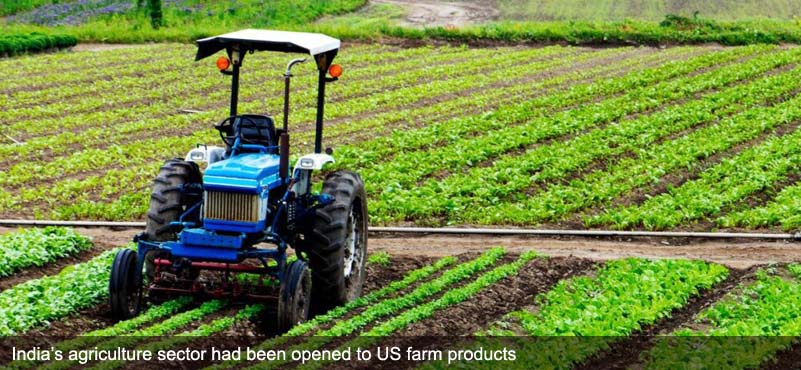
India’s MFN concessions in agriculture, its most sensitive sector, remain opaque and not fully transparent yet. Notwithstanding this, India’s agreed tariff reductions on fresh fruit such as apples and oranges as well as soyabean oil are likely to hurt Indian farmers and face strong nationwide protests from farmer groups once the details become clearer. Additional agricultural and dairy products for which tariff cuts or quotas have been agreed or will be agreed over the next few months remain purposely unclear, perhaps because of their highly contentious domestic nature. These critical and very sensitive details will only emerge over the course of the year, so very little can be responsibly said about them in this article, given the time of its writing.
While the BTA was supposed to focus only on “goods”, services have surreptitiously increasingly crept in, with outcomes almost totally favouring US based companies, both through Union Budget tax concessions/tax holidays for 20 years till 2047 and through the February 6, 2026 statement——with more to come over the next six months.
This was the area in which the US has traditionally had trade surpluses not just with India but with all countries, hence it was purposely left out of President Trump’s April 2 “Liberation Day” announcements.
Neverthless, as stated, it has now crept into the BTA with potential for even more surpluses in services trade for the US. The Indian government appears to have reconciled itself to significant lost revenue through taxes from US global tech firms. It also seems to have agreed to abandon many of its regulatory tools which it has not been willing to do in the past. Indeed, the Indian Union Budget announcements for both Fiscal years 2025-26 and 2026-27 had presaged this and given a preview of what was to come even before the February 6, 2026 Interim BTA Agreement.
This requires some elaboration in this article since most people appear to have been focused on “goods” exports, forgetting services which account for a much larger share of Indian trade and exports, especially to the US.
In the services trade context, the US has been pushing for greater access to Indian data, challenging India’s strict data localisation norms which require such data to be stored within the country. This was a major source of friction between India and the US during Trump 1.0. In anticipation of US pressure and retaliation during Trump 2.0 which began on January 20, 2025, India pre-emptively eliminated its so called 6% “Google Tax” on payments exceeding Rs 1 lakh (USD 1086) per annum to a non-resident services provider for online advertisements effective April 2025 (i.e. this refers to the equalization levy on online digital ads in force since 2016). This was part of India’s amendments to the Finance Bill 2025 and was further reinforced in the most recent Union Budget announcement of February 1, 2026 in which Union Finance Minister Nirmala Seetharaman announced a 20-year tax holiday till 2047 for foreign companies which provide cloud services globally. This will only be available for foreign companies who have established a MeitY-notified data center in India. The global income for such foreign entities will, henceforth, no longer, be at any risk of taxation in India.
This will, no doubt, disproportionately benefit US companies working in this area and is consistent with one of the US’ demands before which it was unwilling to agree the US-India BTA. Given all of the above, it is no coincidence that the conclusion of the BTA was announced only shortly after the 2026-27 Union Budget announcement.
All of the concessions described above suggest a one-way direction in favour of US companies such as Google, META, Amazon and other similar digital service providers.
In addition, as per the just released (February 6, 2026) United States-India Joint Statement on the BTA from the US White House, India has agreed to “….eliminate restrictive import licensing procedures that delay market access for, or impose quantitative restrictions on US Information and Communications Technology (ICT) goods;….” and “the United States and India commit to address discriminatory or burdensome practices and other barriers to digital trade and to set a clear pathway to achieve robust, ambitious and mutually beneficial digital trade rules as part of the BTA….”
The elimination of the “Google Tax” is similar to Canada, which under Trump’s threats in 2025, removed all taxes on Google, Meta, Amazon and other similar US companies even though Prime Minister Carney, despite the coincidental timing, insisted then that he was planning to do so on his own, not because of US pressure. Given his impressive record on diversifying Canada’s trade since then, and his willingness to stand up and say what is needed as he did in his speech at the recent January 2026 World Economic Forum (WEF) in Davos, Switzerland, this may well be true.
The European Union (EU) has also stood up more valiantly in this area which appears to be a regulatory red line for it, despite its one-sided trade deal with the US in the latter’s favour which is now stuck for ratification in the European Parliament (EP). This was illustrated by it placing a heavy fine on Google in September 2025 for its anti-trust violations in the AdTech market and potential breaches of the EUs Digital Markets Act (DMA). The latest fine of Euro 2.95 billion on Google for abusing its dominant place in the online advertising technology sector is the fourth such European Commission (EC) fine on the company. While the Commission is still reviewing Google’s corrective actions, the EU reserves the right to order the break-up of Google’s advertising business if the EC considers Google’s corrective actions insufficient. However, thus far, it is clear that the EU and EC correctly remain committed to their regulatory framework in this area.
To further demonstrate their resolve in this area, their regulators hit Elon Musk’s X with a Euro 120 million fine in early December 2025 for “disinformation” — the first major enforcement test case strike under the EUs Digital Services Act (DSA). This Act gives the EU power to demand content removals, algorithmic changes and data access with million or even billion Euro fines for defiance. This sent libertarian techno-feudalist Musk on a berserk rant against the very existence of the EU, alleging censorship of free speech, an irresponsible and unbridled version of which X under Musk has promoted after his takeover of Twitter.
India would be wise to learn from the EU and EC in these critical areas and uphold standards similar to them in the BTA if these sections are not finalized yet.
Another major area which often does not get enough attention are trade commitments on standards and non-tariff barriers (NTBs) which have often been even more important in the newer generation of bilateral, plurilateral and multilateral trade agreements than tariffs, especially in the last three decades since the WTOs establishment. In this context, some of the US-India BTA paragraphs which still have to be finalized in terms of their specific content, if interpreted in terms of their direction and intent, risk subordinating India’s regulatory autonomy to US standards and certification systems.
India’s agreement to dismantle long-standing NTBs such as price caps on the import of medical devices (eg. stents), suggest that it is also now willing, under US pressure, to discard public interest measures which have frustrated US exporters but have historically been a red line for India. Removing price caps on imported US medical devices are an important and sensitive example, given that this is likely to result in huge increases in health care costs. While India appears to have maintained its ban on genetically modified (GM) food crops to protect the interests of its farmers, continuing US pressure on revisiting this red line for India before the BTAs conclusion later this year, can be expected.
A very big overall emerging implication for India from all of the above is its weakened “strategic autonomy.” While, arguably, that had in any case, hollowed out over the last few years in a range of political, security, diplomatic and economic areas, the BTA provides explicit new evidence on its weakening.
This is best exemplified in the BTA context by India’s agreement, at the highest political levels, not to buy Russian oil. Adding fuel to this fire, the White House issued a new US Presidential Executive Order (EO), dated the same day as the Interim Agreement, February 6, 2026, titled “Modifying Duties to Address Threats to the United States by the Government of the Russian Federation.” Section 4 of this EO on Monitoring and Recommendations explicitly states “ the Secretary of Commerce, in coordination with the Secretary of State, the Secretary of Treasury, and any other senior official that the Secretary of Commerce deems appropriate, shall monitor whether India resumes, directly or indirectly, importing Russian Federation oil…… and shall recommend whether and to what extent I (the US President) should take additional action as to India, including whether I should reimpose the additional ad valorem rate of duty of 25 percent on imports of articles of India….”
So the threat of reimposition of these duties has been left hanging by President Trump like a Damoceles’ sword and can have real serious consequences since it is unlikely India can or will reduce its huge dependence of Russian oil, still over 30% of its total crude oil imports, in the forseeable future.
India would be wise to take this EO seriously not least because its Russian Federation purchases will now be monitored under the overall responsibility of Howard Lutnick, the US Secretary of Commerce who has made a number of hostile and critical comments about India over the last few months. Given the February 6, 2026 EO and the timing of its issuance, it is also hard to come to any other conclusion but that India’s energy security policy is now influenced and even compromised by the US, since President Trump has demanded that India replace Russian crude oil with US and Venezuelan crude oil.
Apart from differences in their composition and grades from West Asian and Russian crude oil which have historically been closer to India’s needs, US crude oil’s shipment cost is expected to be double the cost of transporting West Asian crude oil to India. Significant quantities of Venezuelan crude oil, apart from most of it being unsuitable in terms of content heaviness, is likely to cost much more and be available much later, if at all, because of the prohibitive infrastructure costs needed to drill large quantities of it. If the Liquefied Natural Gas (LNG) imports that India has also agreed to purchase in much larger amounts are added (around 10% of India’s import needs), its energy dependency on the US further increases.
When questioned about the new February 6, 2026 EO on restrictions of Russian Federation oil imports by India by a pro-BJP TV host, Arnab Goswami recently, the Indian Minister of Commerce, Piyush Goyal disingenuously and shockingly replied that he knew nothing about it. When pushed further, he incredulously stated that the purchase of Russian oil was not a trade matter but a geopolitical issue in the domain of the Ministry of External Affairs, contrary to what India has been saying since 2022 (ie. that its oil import purchases are purely determined by private and public sector importers on price and market considerations). Even more shockingly, it appears that Mr Goyal was neither taken into confidence on these critical trade sovereignity matters, nor consulted or even informed about the timing of the announcement of the BTA “deal” which apparently took him by surprise even though he is India’s Minister of Commerce, responsible for the “deal’s” conclusion and implementation.
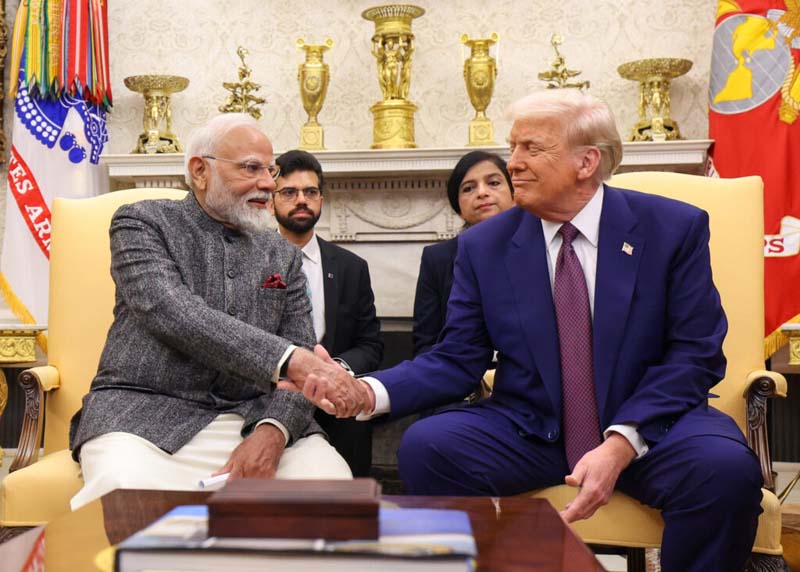
It would appear from these remarks that critical parts of the deal, especially the abandonment of Russian oil purchases, has clearly resulted from a political decision by the Prime Minister and that he likely agreed to this with President Trump during their early February 2026 tepehone call, immediately after the “deal” was announced by President Trump in one of his tweets.
A serious issue worth pondering for India as we go forward is whether the political call on key elements of the US-India BTA will have long-lasting and damaging economic, “strategic autonomy” and geopolitical consequences for India.
ABOUT THE AUTHOR

Kamal Malhotra is Distinguished Visiting Professor of Global Trade Policy and Sustainable Human Development at the NALSAR University of Law, Hyderabad, India and a Non-Resident Senior Fellow at TEPAV, The Economic Policy Research Foundation of Turkiye. He was a Non-Resident Senior Fellow at the Global Economic Governance Initiative of Boston University’s Global Development Policy Center between June 2022-May 2025. He has degrees in Economics (Hons.) from the University of Delhi, the Indian Institute of Management (Economics, Finance) and Columbia University, New York, USA (Master’s in Public and International Affairs with specializations in Economic and Political Development and South Asia).
Prior to his retirement (September 2021), Mr. Malhotra had a rich career of over four decades including in the United Nations as its Head in Malaysia, Turkiye and Vietnam (2008-21). He was Senior Adviser on Inclusive Globalization for the United Nations Development Programme (UNDP), New York, USA, for most of the prior decade, leading major work on global finance, trade, debt and development economics and financing issues.
Mr. Malhotra is widely published on geopolitics, geo-economics and other related issues. These include 6 books, chapters in 10 additional books and authoring or co-authoring over 150 journal and other articles. The books include conceptualizing and leading UNDPs “Making Global Trade Work for People” (Earthscan, London, 2003) and “Making Globalization Work for the Least Developed Countries (UNDP, Republic of Turkey, UN-OHRLLS, 2008).