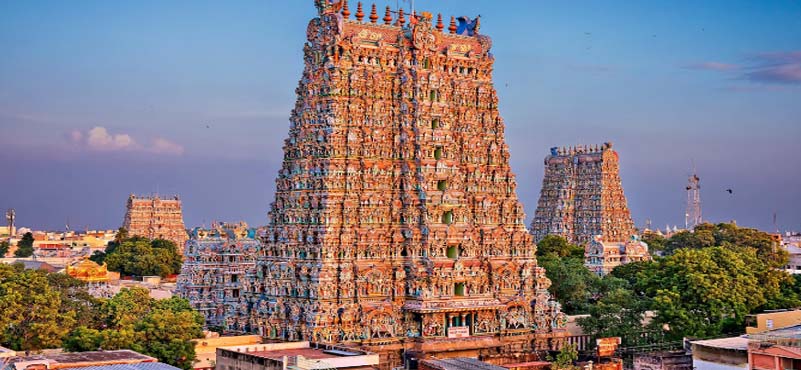
Madurai greets you long before you enter it.
The skyline begins to change subtly — temple towers rising above dense neighbourhoods, streets humming with scooters and vendors, jasmine sellers threading garlands with practised ease. Often called the City of Temples, Madurai carries centuries lightly; here, history is not preserved behind glass but lived daily.
I had arrived expecting architecture, spirituality, and the familiar rhythm of an ancient Tamil city. What I did not expect was a conversation that would lead me toward what a local resident described, with quiet pride, as “the newest temple in Madurai — a temple of health.”
“Visit the Meenakshi Temple,” he told me, “but if you want to see the future, go to Thoppur. AIIMS is coming up there. It will change everything.” Curiosity, more than itinerary, guided the rest of my day.
Thoppur: Where the Future Is Under Construction
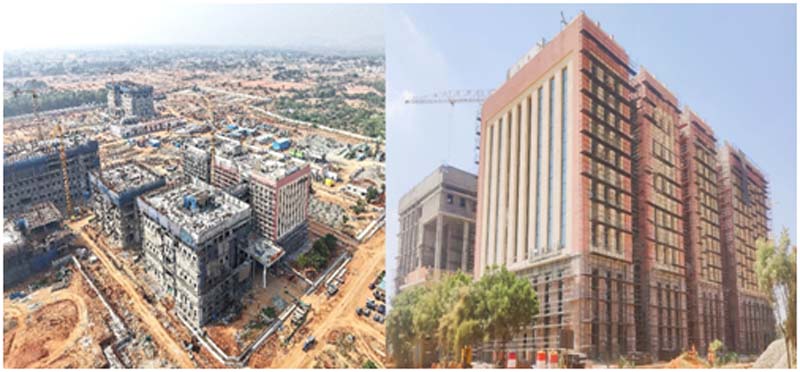
The drive out of Madurai gradually trades temple lanes for open highways. Urban density loosens its grip, giving way to stretches of land that seem to anticipate growth. And then, almost abruptly, the landscape transforms into a vast construction theatre — cranes pivoting in slow arcs, skeletal structures rising confidently, trucks tracing purposeful paths across freshly carved roads.
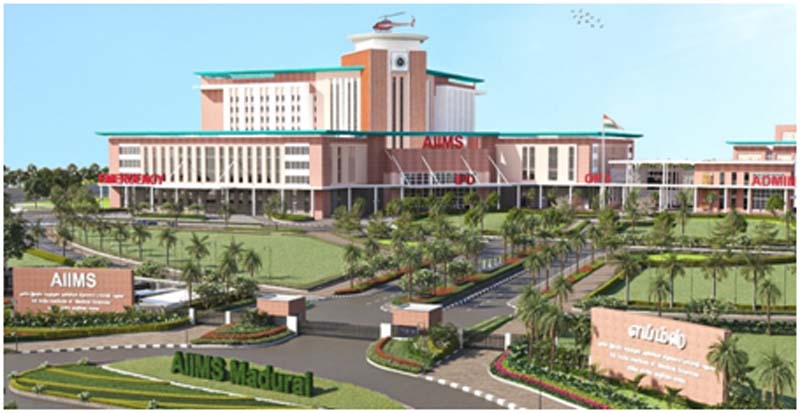
This is where AIIMS Madurai is taking shape across nearly 222 acres. Standing at the edge of the site, it is difficult not to feel the scale of ambition. India has been expanding its network of All India Institutes of Medical Sciences at an unprecedented pace — 22 new AIIMS approved in recent years — driven by a national commitment to bring advanced healthcare closer to citizens.
For decades, AIIMS New Delhi represented the gold standard, but also the challenge of centralisation. Patients travelled across states; access depended heavily on geography. The emerging vision — often articulated as “One AIIMS per State” — seeks to change that equation. The strategy aims to correct regional imbalances in tertiary healthcare while strengthening medical education and research. Yet policies and blueprints rarely convey the human dimension of such transformation. For that, conversations matter.
Mine began inside a temporary project office.
Meeting the Team Steering the Project
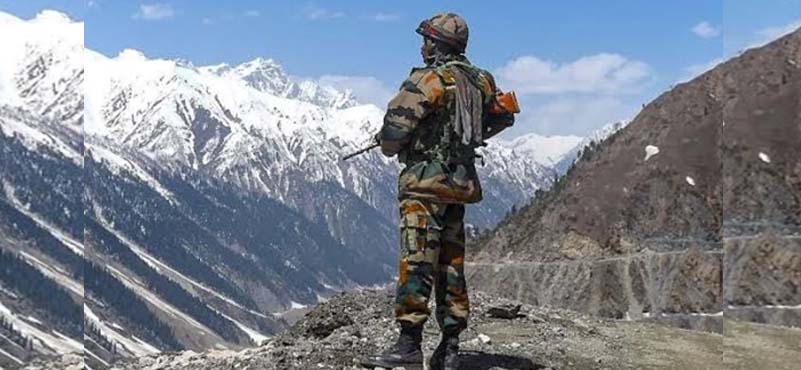
Colonel Alok Devrani welcomed me with the composed efficiency one associates with the Armed Forces — measured words, clear explanations, and a gaze that seemed always aware of timelines.
As the Superintending Engineer heading the project’s Engineering Division, he has been closely involved in translating vision into structure.
“This is not just another hospital,” he said, gesturing toward the expanse outside. “It is part of a national effort to redesign healthcare access.”
Over the next hour, the project unfolded through his narration — not as a set of statistics, but as a living, evolving enterprise. Tamil Nadu, despite strong health indicators, still witnesses regional disparities, particularly in its Southern districts. Locating the state’s first AIIMS near Madurai was therefore both strategic and socially consequential.
“Healthcare should not demand migration,” he remarked. “Institutions like this reduce the distance between illness and treatment.”
Designed Around Regional Needs
As we walked through the master plan, the institute began to reveal its deeper intelligence — it was being designed not generically, but contextually. Not far from Madurai lies Sivakasi, globally known for its firecracker industry. Industrial accidents, though infrequent, often demand highly specialised burn care.
“AIIMS Madurai has been planned with a dedicated burns centre within the trauma wing,” Colonel Devrani explained. “In such cases, time saved is life saved.”
Cancer treatment is another major focus, reflecting the nationwide rise in non-communicable diseases. Equally striking is the planned 150-bed infectious diseases block, a reminder that the lessons of recent pandemics are being structurally embedded into future healthcare infrastructure.
When complete, AIIMS Madurai will include:
- About 900 inpatient beds.
- Capacity for nearly 5,000 outpatient visits daily.
- Training for roughly 1,500 healthcare professionals each year.
Madurai’s existing government hospital operates near capacity, largely serving economically vulnerable populations. AIIMS is expected to complement — not compete with — this ecosystem.
“It will function as a healthcare and research hub for Southern India,” he said. “The ripple effects will travel far beyond this campus.”
A Partnership That Crosses Oceans
One of the project’s defining features is its collaboration with the Japan International Cooperation Agency (JICA) — the first such partnership for an AIIMS institution. Implementation under internationally recognised FIDIC guidelines has strengthened transparency and procurement standards, while Japanese project-management practices have introduced a culture of precision.
“Global collaboration accelerates learning,” Devrani noted. “But the institution remains deeply Indian in its purpose — accessible, inclusive, and future-ready.”
Quiet Leadership Behind the Momentum
“People often judge a project only by what they see above ground. But it’s the unseen groundwork — administrative, logistical, political — that defines whether it succeeds,” he said, reflecting candidly on the journey so far during a quiet conversation amid the hum of construction activity. He further added “No project of this scale moves without friction.”
Approved by Cabinet in 2018, and inaugurated with a foundation stone in 2019, AIIMS Madurai had to weather its share of turbulence — land acquisition challenges, cost revisions, pandemic-related delays. Predictably, as timelines stretched, so did public scepticism and political noise. “But infrastructure is ultimately a test of endurance,” Devrani noted with quiet conviction.
He was quick to deflect attention from his own role, instead pointing to the ecosystem of leadership that helped revive momentum. “It was the commitment from above that truly made the difference,” he said. He recounted how the Health Ministry’s PMSSY Division became the operational fulcrum — aligning JICA consultants, architects, state authorities, and contractors into a coordinated whole.
The then Union Health Secretary, Shri Rajesh Bhushan, he recalled, was instrumental in breaking the logjam. “When things were slowing down, he stepped in personally. He knew the project needed an on-ground nucleus — and pushed for early appointment of the Executive Director and core team,” Devrani explained. Soon after, Executive Director, Prof (Dr) M. Hanumantha Rao was deployed to Madurai, laying the administrative foundation for the institute even before bricks and mortar took form. That top-level intervention also resulted in enhanced funding and key design additions — including the infectious diseases hospital block — which would later prove critical in a post-COVID world.
Equally decisive, he added, was the role of Ms. Ankita Mishra Bundela, Project Director and Joint Secretary, PMSSY Division. “She brought structure to chaos,” he said. Her ability to coordinate across ministries, anticipate procedural chokepoints, and escalate issues tactfully yet decisively gave the project its much-needed thrust. Those efforts began to yield results. AIIMS Madurai was declared an Institute of National Importance in 2020, and by 2022, the first MBBS batch had begun academic sessions from a temporary campus — signalling that the mission was alive and advancing.
A significant inflection point came in March 2024, with the award of the construction contract to Larsen & Toubro. By 2025, work on the ground had accelerated to the extent that nearly 50 percent of the infrastructure was already in place. As of early 2026, Phase I stands on the brink of completion, with early hospital services expected to launch soon, and full operations targeted by 2027–28.
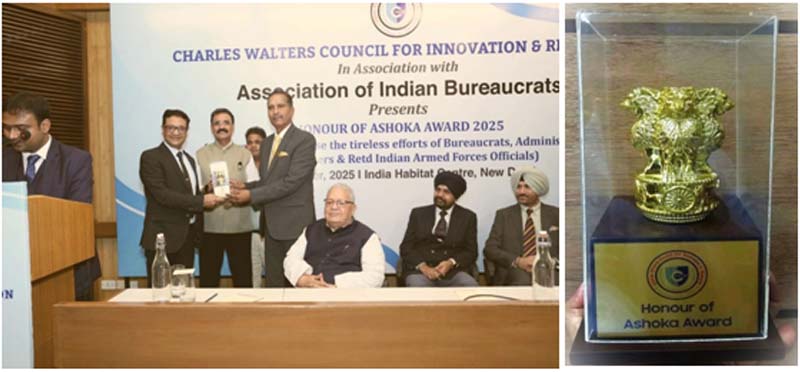
Col Devrani himself has remained a constant presence throughout this timeline — quietly leading on-site coordination, resolving technical challenges and ensuring alignment between JICA protocols and Indian execution realities. In passing, he mentioned that his work had been recently recognized — he was conferred the prestigious Honour of Ashoka Award by Lt Gen SK Saini, PVSM, AVSM, YSM, VSM (Retd), former Vice Chief of Army Staff. He downplayed it with a characteristic shrug. “It’s not about awards,” he said. “Public confidence returns when progress becomes visible.” Outside his office, the skeletal outlines of hospital blocks rising from red soil offered silent affirmation.
Beyond Healthcare — A Regional Transformation
AIIMS Madurai is expected to serve 15–20 million people within its catchment area, dramatically improving access to specialised surgeries, diagnostics, and cancer care. But institutions of this scale reshape more than healthcare.
Construction has already generated employment, and long-term operations will create professional opportunities across sectors. Local businesses — from medical suppliers to transport and housing — are likely to expand alongside the institute. Equally important is its research potential. By focusing on regional health challenges while collaborating with academic institutions, AIIMS Madurai could evolve into a significant knowledge hub, attracting doctors, scientists, and researchers.
“It is not just about treating illness,” Devrani reflected as our conversation drew to a close. “It is about building capacity — human, institutional, and national.”
Walking Away with a Different Understanding
As I prepared to leave, the late afternoon sun cast long shadows across the construction site. Workers moved with practised rhythm; concrete mixers hummed steadily. What I had first seen as an infrastructure project now appeared as something far more symbolic — a structural promise.
For the people of Southern Tamil Nadu, this institute will mean shorter journeys in moments of vulnerability. For young students, it will open pathways into medical careers. For researchers, it will offer a platform to innovate. More broadly, it reflects India’s expanding commitment to equitable healthcare — a recognition that excellence must travel outward, not remain concentrated. Driving back toward the temple-lined streets of Madurai, I found myself recalling the local resident’s words.
Visit the temples, he had said. But do not miss the new temple of health. He was right. In a city celebrated for its ancient sanctuaries, another kind of sanctuary is rising — one dedicated not to ritual, but to healing; not to the past, but to the future.
And when its doors finally open, AIIMS Madurai will stand as more than an institution. It will stand as evidence that a nation’s progress is ultimately measured in the wellbeing of its people.
ABOUT THE AUTHOR
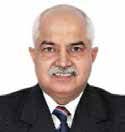 Lt Gen Rajeev Chaudhry (Retd) is a social observer and writes on contemporary national and international issues, strategic implications of infrastructure development towards national power, geo-moral dimension of international relations and leadership nuances in changing social construct.