Trump’s Board of Peace and the Moral Future of Global Governance
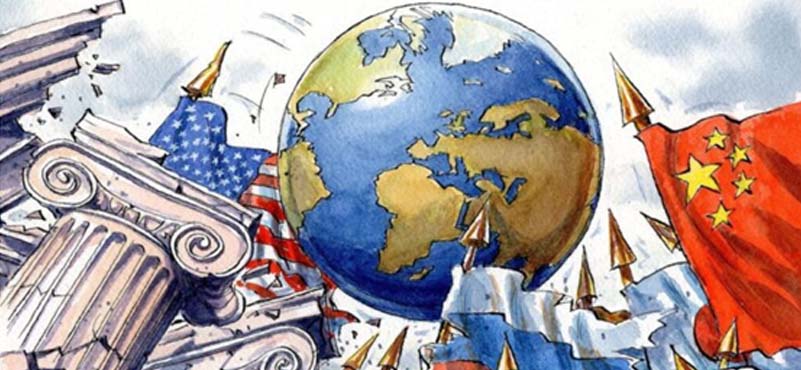
The contemporary world stands unsettled, not merely by conflict but by confusion over authority, legitimacy, and moral direction. Wars persist, alliances fray, institutions weaken—and into this turbulence steps Donald Trump with a proposal as audacious as it is disruptive: the creation of a “Board of Peace.” Framed as a corrective to the failures of global multilateralism, the initiative claims to offer decisiveness where delay has become endemic.
The Board of Peace: Promise and Provocation. Trump’s Board of Peace was publicly announced in January 2026 as a new international organization to supervise post-conflict reconstruction — initially in Gaza — and potentially other global hotspots. Invited countries include Argentina, Turkey, Canada, India, Greece, Jordan, and Pakistan among others.
Under its draft charter:
- Permanent membership requires a $1 billion contribution.
- Temporary membership is possible for three-year terms without payment.
- Trump retains ultimate authority as lifetime chair.
- Leadership includes political allies like Marco Rubio, Jared Kushner, Tony Blair, and economic figures like World Bank President Ajay Banga.
Officially, its mission is to rebuild conflict zones, support governance, and foster peace — starting in Gaza. However, critics characterize it as an alternative power centre to the United Nations, with a governance structure that concentrates strategic decisions in a U.S.-dominated cadre rather than in a broadly representative multilateral forum. Beneath its reformist language lies a deeper contest over who governs peace, who pays for it, and whose rules prevail.
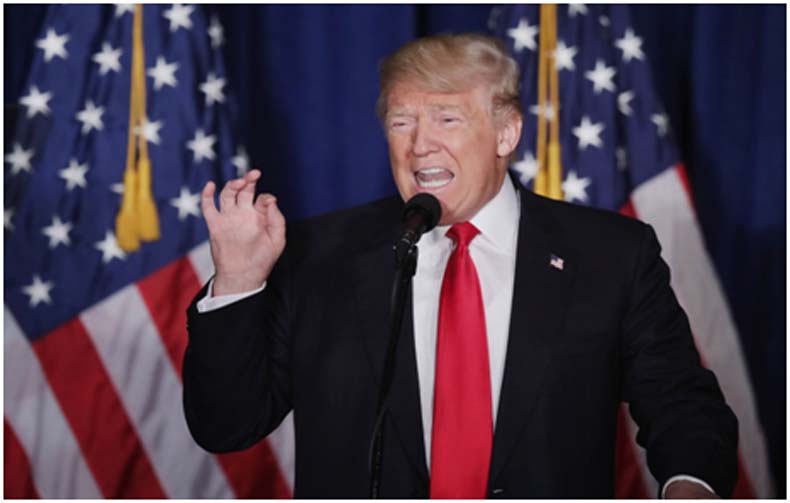
Trump’s argument resonates with a frustrated world: multilateral institutions are slow, divided, and often ineffective. But efficiency alone cannot substitute for legitimacy. The Board’s design—centralized control, high financial thresholds for permanent membership, and the absence of universal representation—signals a shift away from peace as a collective moral responsibility toward peace as a managed outcome imposed by power. The concern is not simply about efficiency, but about legitimacy. This is not reform. It is replacement.
Thus, the Board of Peace is not simply an administrative innovation. It is a normative rupture—one that forces the international community, and especially India, to confront a deeper question: Is peace merely a product of power, or does it require moral legitimacy?
A World Unmoored: Chaos as a Governing Method
The Board of Peace cannot be separated from the broader pattern of Trump-era decision-making that has unsettled global norms. His renewed interest in Greenland—accompanied by overt tariff threats against European states—has reintroduced coercion into territorial diplomacy. Economic instruments have become tools of pressure rather than cooperation.
Similarly, confrontational policies towards Venezuela and Iran reveal a worldview where force, sanctions, and regime outcomes are privileged over dialogue and international consensus. Tariffs are no longer trade tools; they are instruments of political obedience. Alliances are no longer partnerships; they are transactions.
The cumulative effect has been global disorientation, including within the United States itself—polarised politics, institutional distrust, and moral exhaustion. The Board of Peace emerges from this chaos not as a corrective, but as its institutional extension: a world where outcomes matter more than processes, and power outranks principle. It offers reconstruction and stability only after political outcomes align with U.S. preferences. Peace, in such a model, is conditional—not universal.
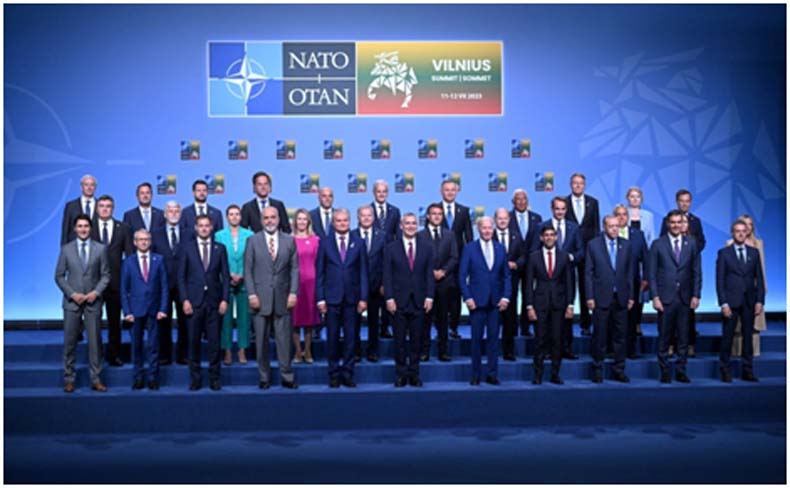
NATO, Fragmentation, and the Rise of Parallel Orders. This moral vacuum has not gone unnoticed. Even established alliances such as NATO show signs of strain. Increased defence spending demands, coupled with transactional diplomacy, have weakened trust among allies. Strategic solidarity is being replaced by conditional commitment.
Outside the Western framework, new security alignments are emerging. Informally described as an “Islamic NATO,” defence cooperation among several Muslim-majority states reflects a desire for autonomy from Western-dominated security architectures. These parallel orders are not inherently destabilising—but they are symptomatic of a world where no single moral centre holds.
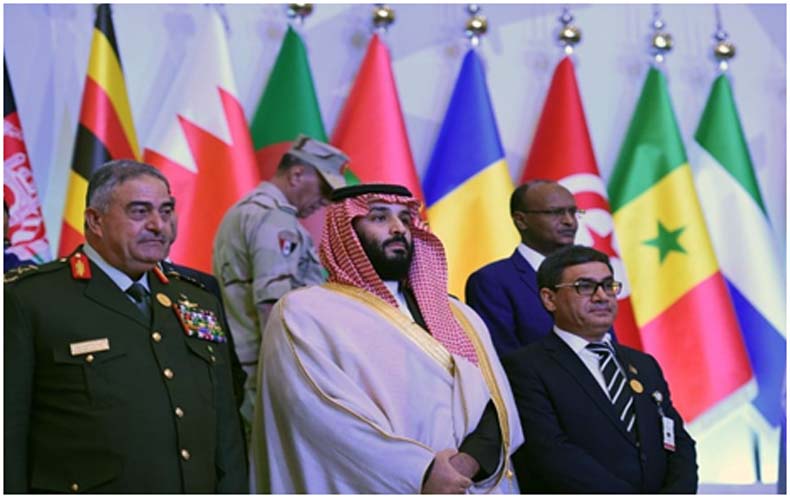
The Board of Peace risks accelerating this fragmentation by legitimising governance without consensus. In attempting to impose order, it may deepen disorder. Unlike peace operations under the United Nations, the Board would bypass veto constraints, rely on selective membership, and concentrate authority in a narrow leadership structure.
The United Nations: Imperfect but Indispensable
The failures of the UN are real—but they are failures of political will, not of moral design. To bypass the UN rather than reform it is to abandon the only forum where power is constrained by legitimacy.
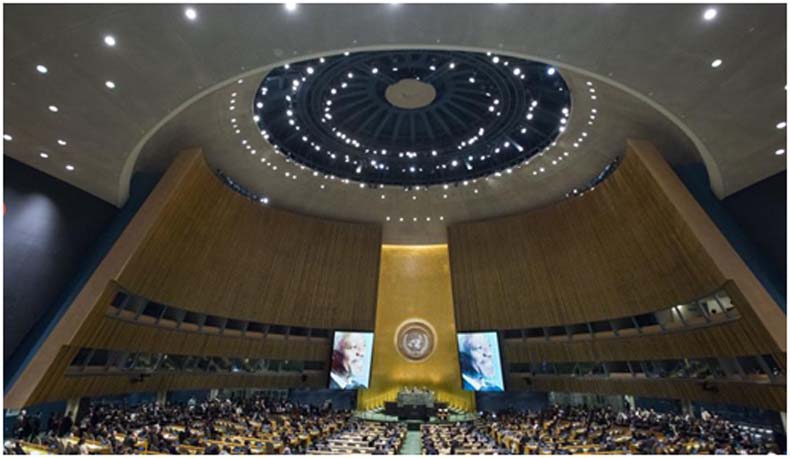
Parallel institutions backed by dominant states have historically weakened global order. The Board of Peace risks doing precisely that—drawing resources, attention, and authority away from the UN, leaving behind a hollow shell of multilateralism.
India, which has consistently advocated UN reform rather than abandonment, must resist this erosion.
Reforming Peace Without Replacing the UN
- Restrict veto use in humanitarian crises.
- Empower UN peace-building commissions with executive authority.
- Ensure predictable funding for reconstruction.
- Formalise the role of emerging powers in peace operations.
- Strengthen regional-UN coordination mechanisms.
India’s Strategic Dilemma—and Its Moral Depth
For India, the Board of Peace presents an unmistakable dilemma. Participation could enhance India’s global profile, offer influence in reconstruction frameworks, and align India with emerging power structures. But such gains are superficial if they come at the cost of normative consistency.
India has never been merely another power. Its international conduct has historically rested on an intuition that order without legitimacy is unstable, and peace without justice is temporary. This intuition is not weakness; it is strategic wisdom refined over millennia.
India’s Civilizational Compass: Geo-Moral Statecraft. At this crossroads, India’s choice is illuminated by its civilizational inheritance. Indian political thought has never denied the reality of power, but it has always sought to discipline power with responsibility. Dharma, in its statecraft sense, is not moral idealism—it is contextual duty, balance, and restraint. Kautilya acknowledged realpolitik but warned against overreach; Ashoka transformed conquest into moral authority; independent India’s non-alignment rejected binary orders not out of indecision, but ethical clarity.
In today’s fractured world, this geo-moral tradition acquires renewed relevance. It urges India to ask not only what serves national interest, but what sustains global order. The Board of Peace forces India to confront a profound question: Should peace be administered by dominance, or anchored in consent? India’s answer will signal whether rising powers intend to replicate old hierarchies or re-humanise global governance. This is not withdrawal from power—it is the ethical maturation of power.
India’s Moral Red Lines on the Board of Peace
- No legitimisation of peace frameworks outside UN Charter principles.
- Rejection of lifetime leadership or unilateral authority.
- Peace-building must be separated from regime engineering.
- Decisions must rest on consent, not coercion.
- Institutions must strengthen, not supplant, multilateral norms.
Conclusion: India’s Moment of Moral Leadership
The Board of Peace is not merely about Gaza, or post-war reconstruction, or administrative efficiency. It is about the kind of world that will emerge from today’s disorder. Trump’s decisions—erratic, unilateral, and often coercive—have accelerated chaos across continents, including within the United States. In such a moment, restraint becomes leadership.
India stands at a crossroads where silence is endorsement and participation confers legitimacy. This is not a time for ambiguity. India’s foreign policy tradition has consistently favoured rule-based order over power-based order. Any departure must therefore be carefully calibrated. India must articulate, clearly and calmly, that peace divorced from morality is domination by another name. At this historical juncture, India’s choice is less strategic than moral. In a world increasingly disoriented by unilateralism, transactional diplomacy, and institutional bypassing, India must decide whether to lend credibility to a parallel order shaped by power—or to anchor global governance once again in restraint, legitimacy, and consent.
History remembers not only those who rose—but those who guided. If India chooses wisely, it can become not merely a pole of power, but a pillar of conscience in a fractured world.
ABOUT THE AUTHOR
 LLt Gen Rajeev Chaudhry, a former DGBR, is a writer and social observer. He also pursues his passion for the creative arts in his free time.