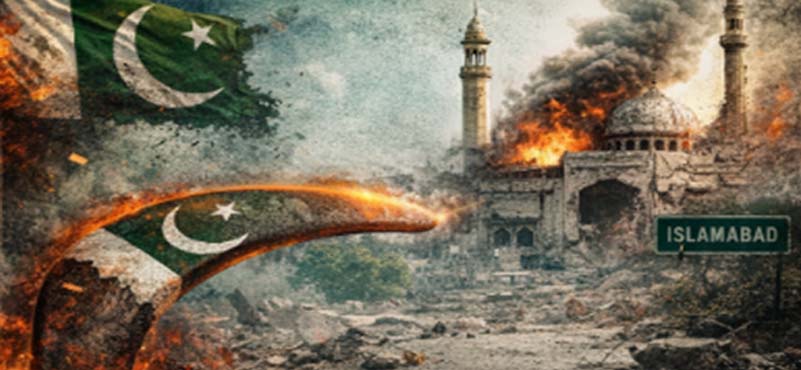
China’s rise, America’s disruptions, the dominance of Artificial Intelligence, the rise of right-wing populism, Europe divided with the Coalition of the Willing forging its own path on Ukraine, a possible conflict in Venezuela, a fragile truce in Gaza, and south Asia in turmoil, 2026 promises to be a turbulent year.
 In the Chinese Zodiac, 2026 will be the Year of the Horse, which, in China’s case, could well represent its galloping ascendancy in world affairs even as it bares its military muscle over Taiwan and Japan in the South China Seas. Tensions are high due to China’s assertive island-building and naval presence, clashing with other nations’ claims and international law, with the US also conducting “freedom of navigation” operations, raising fears of a regional conflict. However, China’s dominant position in terms of its possession of rare earth materials and as Made in China goods increase their reach in markets across the globe, its clout in world affairs will be enhanced. President Xi Jingpin has become a key player in most multilateral forums, apart from the UN Security Council. He is also easing tensions with neighbour India, knowing that if China’s rise is to continue, he cannot afford any distractions in his own backyard. He is forging closer ties with Russia, with China-Russia relations described as a “no limits” strategic partnership, characterized by strong political alignment against Western influence and growing military cooperation, with both nations supporting each other’s core interests like Russia’s stance on Ukraine and China’s on Taiwan, making them key partners in challenging US global leadership. Other regional blocs face differing challenges.
Europe
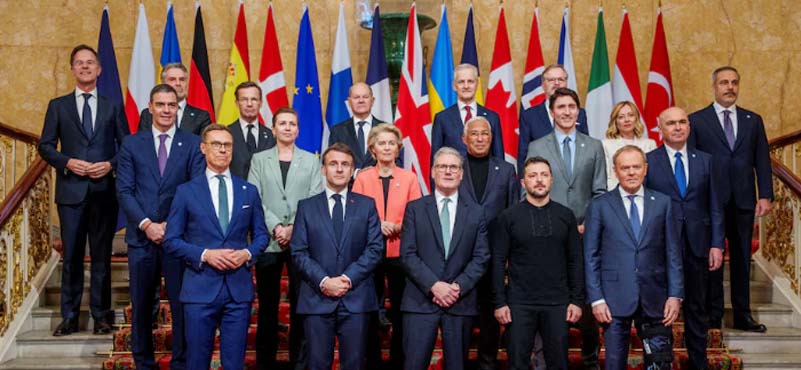
 Its geopolitical role will be defined by its pursuit of “strategic autonomy,” a more robust, independent voice amid significant global volatility, shifting US posture, and ongoing regional crises. Europe is significantly increasing its focus and spending on defence, driven by the continuing war in Ukraine and uncertainty over U.S. security guarantees. Initiatives include a focus on joint procurement, boosting the European defence industry, and the new Security Action for Europe (SAFE) loan instrument to fund investments in areas like missile defence and drones. The EU is also striving to reduce its dependence on non-European (especially U.S. and Chinese) technology and supply chains, particularly in cloud services, semiconductors, and clean technology and protect key industries from economic coercion. Policymakers are concerned about external influence on European elections and critical infrastructure via AI, cyberattacks, and disinformation campaigns, leading to a confrontation with American tech giants. The EU is also actively engaging with rising powers like India as an alternative partner to the US or Russia. High-stakes bilateral and multilateral summits, including a major EU-India summit in early 2026, will be key diplomatic moments to strengthen these ties. At the same time, rising political polarization and the growth of populist parties within Europe create challenges for immigrants and defence spending. In essence, Europe is moving toward a more pragmatic, independent, and self-reliant geopolitical stance, driven by a growing awareness of its vulnerabilities in a multipolar world. Showing a united face still remains a divisive issue, leading to the birth of the Coalition of the Willing a recently formed group of over 30 nations supporting Ukraine against Russian aggression, led by France and the UK, focusing on long-term security, military aid and ensuring its sovereignty. This bloc will be distinct from NATO and its stance on Ukraine may not always be in sync with the mandarins in Brussels.
Asia
In contrast, Asia’s geopolitics will revolve around managing US-China competition, deepening economic nationalism (subsidies, tariffs), navigating flashpoints like the South China Sea and Taiwan Strait, and dealing with internal instability (Myanmar, Thailand, Vietnam) and climate impacts, all while pursuing tech dominance (AI, critical minerals) and managing shifting global supply chains, testing ASEAN’s role and regional resilience.
Asia will remain the core of US-China competition. The bloc faces pressures involving US-China tensions which will challenge its centrality.
India, as the world’s fastest growing economy and likely to overtake Japan in 2026 as the fourth largest in the world, will play an increasingly important role which will revolve around leveraging its BRICS presidency to champion the Global South and push for multipolarity, balancing its strategic autonomy with strong ties to the West, especially the European Union, while deepening ties with Africa and Latin America.
The US
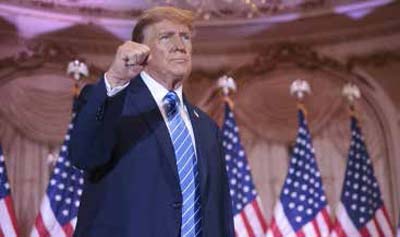 The year will be dominated by historic celebrations of its 250th anniversary, marking the signing of the Declaration of Independence on July 4, 1776, with nationwide festivities and events planned throughout the year, culminating on July 4, 2026, for the biggest bash. Freedom 250 is the funding arm of Task Force 250; the White House group Trump created in January 2024 to plan events outside of those run by the official America 250 Commission.
Since its creation, the Task Force has been criticized by Democratic lawmakers as an effort to politicize America’s grand birthday bash. As the world’s leading power, under Donald Trump, America will continue to dominate major global developments, as evidenced by the turmoil caused by his trade tariffs. Trump is also preparing for a more aggressive immigration crackdown in 2026 with billions in new funding, including by raiding more workplaces, even as backlash builds ahead of the looming midterm elections.
 A backlash is also expected in regard to the economy, with most Americans consistently voicing negative views amid rising concerns about costs of basics like food, housing and medical care. Trump’s approval ratings have reflected those concerns, dipping to its lowest level since he took office. Trump’s transactional approach means that American policies on a variety of issues could change overnight, leaving the rest of the world in limbo.
Africa
Africa is set to be the world’s fastest-growing region in 2026—but the road ahead is strewn with obstacles. While East and West Africa emerge as growth hotspots, debt distress, geopolitical tensions, and contested elections present ongoing risks. Parts of Africa still remain the world’s greatest trouble spots, with Sudan’s Civil War heading the list followed by Ethiopia and the Democratic Republic of the Congo (DRC). However, with the IMF projecting Africa as the fastest growing region in 2026, external powers like the US, EU, BRICS nations, and Gulf states are increasing their engagement and competing for influence.
South Asia
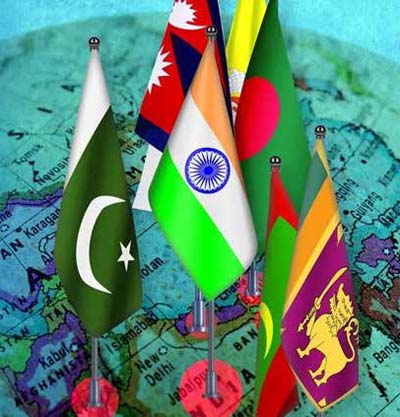
The region has seen rapid political changes and poses serious challenges to India’s diplomatic outreach and its Neighbourhood First policy. The starkest example of that is the heightening tensions with Bangladesh. The killing of a Hindu man during recent violent protests in Bangladesh has pushed already strained ties between Dhaka and Delhi into a deeper crisis. The neighbours accuse each other of destabilising relations and questions are growing over whether their once close, time-tested relationship is fraying beyond repair. Anti-India sentiment in Muslim-majority Bangladesh has been further fuelled by deposed prime minister Sheikh Hasina having been given refuge in India.
Tensions are equally high with another perennial rival Pakistan after Operation Sindoor, the brief conflict last May which also seems to have indirectly drawn Islamabad closer to Washington. With Field Marshall Asin Munir calling the shots, sidelining the elected civilian government, India is gearing up for heightened security challenges. Persistent issues like Pakistan-sponsored terror acts, unresolved border disputes with China, drug trafficking (Myanmar border) and the anti-government Gen Z protests in Nepal which has led to endemic political instability in that country, remain perennial bugbears.
The one bright spot is Sri Lanka where India’s humanitarian efforts after the devastating cyclone has been widely praised by the government in Colombo.
Overall, however, Indian diplomacy, and its leadership, will need to negotiate a tightrope walk in 2026.
In global terms, questions remain while we segue into a new year as to where the wider world is headed. Many analysts say it is headed rightward, as evidenced by the global rise of right wing, populist movements, driven by economic anxieties (globalization, inequality), cultural fears (immigration, national identity), and a rejection of mainstream politics. These are further amplified by social media creating transnational networks. These movements are promoting nationalism, anti-immigrant rhetoric and a return to traditional values, leading to increased electoral popularity (Italy, Hungary, Germany, US, UK, Netherlands), demanding a cultural shift alongside political power. The threat to liberal democracies is real and increasingly global.
ABOUT THE AUTHOR
 Dilip Bobb is a former senior managing editor, India Today (1975 -2010), and Group Editor, Features and Special Projects, Indian Express (February 2011-October 2014)