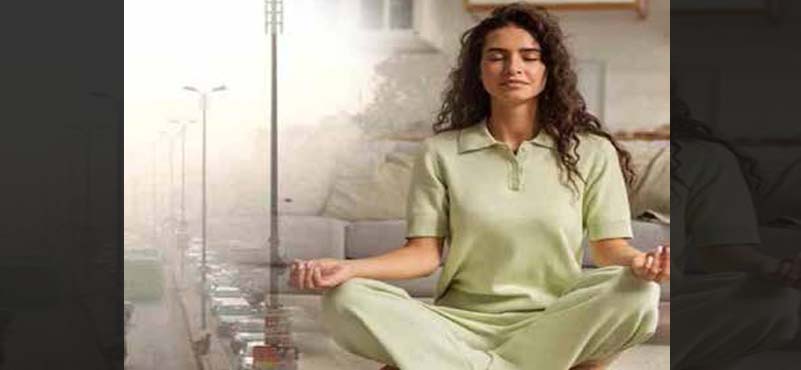
On December 21st, the world observed the second United Nations-designated World Meditation Day. For India, the primary co-sponsor of this resolution, the day is more than a spiritual milestone; it is a mirror reflecting a profound national paradox. As the sun reaches its southernmost point on the winter solstice, millions across the country sit in silence, seeking inner stillness. Yet, outside their windows, the reality of the Common Man is a cacophony of relentless construction, toxic air, and the gridlock of crumbling urban infrastructure.
India currently stands at a crossroads. On one hand, the nation is aggressively positioning itself as the global destination for religious, cultural, and modern tourism. On the other, the very lungs of these destinations—our cities—are falling into an abyss of intolerable pollution and logistical chaos.
The Aspiration: A Global Magnet for Seekers. India’s tourism vision for 2026 is ambitious and multifaceted. The government has identified spiritual tourism as a cornerstone of national growth, with nearly 60% of domestic travel now falling into this category. From the Ghats of Varanasi to the Monasteries of Ladakh, the intent is clear: to offer the world a Bio-Reset. The aspiration extends beyond the ancient. Modern India seeks to showcase its Smart Cities, its digital transformation via the India Stack, and its world-class airports. The goal is to create a seamless experience where a tourist can pay for a 10-rupee chai using UPI in a 5,000-year-old city, embodying a Modern-Historic hybrid that no other nation can replicate.
The Issue: The Abyss of Pollution and Gridlock. However, this vibrant aspiration is being choked by a grim reality. As we enter 2026, the National Clean Air Programme (NCAP) is facing its moment of truth. While the target was a 40% reduction in particulate matter (PM10) by this year, progress has been uneven at best.
The Common Man does not need an AQI monitor to know the crisis is real. In cities like Delhi (NCR), Mumbai, and Bengaluru, the daily commute has morphed into a battle for survival.
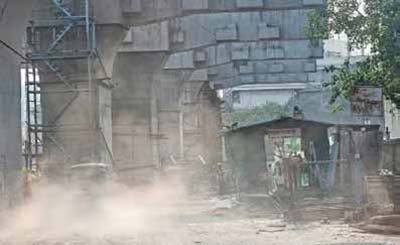
The Smog of Progress. The very infrastructure projects meant to modernize India—the metro expansions, the flyovers, and the high-speed rails—are currently major contributors to the PM2.5 levels that make breathing a hazard during the winter months.
The Infrastructure Lag. While 60% of India’s GDP is generated in its cities, nearly 65% of its urban settlements still lack a comprehensive master plan. This leads to haphazard urbanization, where luxury high-rises overlook open drains, and world-class office parks are inaccessible due to five-mile traffic jams.
The Tourism Toll. Pollution is no longer just a health crisis; it is an economic thief. Studies suggest that air pollution costs the Indian tourism sector upwards of Rs 15225 crore annually. Travellers are increasingly cutting their stays short in the Golden Triangle (Delhi-Agra-Jaipur) because the Taj Mahal is often veiled in a grey shroud of smog.
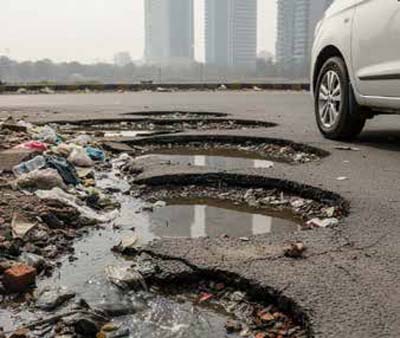
The Daily Struggle: Infrastructure and the Individual. For the resident, the crumbling infrastructure is not an abstract policy failure; it is a spinal injury from a pothole on the way to work. It is the three hours lost daily in traffic that could have been spent with family or, ironically, in meditation. The India Stack has solved the problem of digital connectivity, but the Physical Stack—roads, waste management, and public transport—remains broken. The paradox of World Meditation Day is most visible here: we are taught to find peace within, perhaps because the world outside has become too loud and too dirty to inhabit comfortably.
 A Blueprint for 2026 and Beyond. To bridge the gap between our high-minded aspirations and our hazy reality, the way ahead requires a shift from reactive to regenerative urbanism.
Mandatory Miyawaki Zones. Every infrastructure project must be bundled with a Green Mitigation mandate of converting at least 5% of real estate plots into Miyawaki mini-forests. These act as “dust-traps” and lower the local temperature (Urban Heat Island effect).
The Green Credit Economy. As suggested by recent policy shifts in late 2025, the government must incentivize private capital to enter the pollution-control space. Industrial units and developers should earn Green Credits for deploying advanced air-filtration technologies, which can then be traded, creating a market for clean air.
The Clean Air Credit. Introduce a tax rebate for housing societies that install solar panels or maintain a specific density of tree cover. Every residential area should have a digital Air Scoreboard at the entrance, making the invisible threat visible and putting pressure on local representatives to act.
Vertical Gardening on Public Infrastructure. Every Metro pillar and flyover column should be covered in vertical greenery to absorb CO2 and filter PM2.5 at the breathing level of commuters.
AI-Monitored Construction Sites. Use low-cost sensors at every site. If dust levels exceed a threshold, work must stop automatically until water sprinklers/smog guns are activated.
Vacuum Cleaning of Roads. Move away from manual sweeping (which just kicks dust back into the air) to mechanical vacuum sweeping and washing roads with treated wastewater.
The 15-Minute City Model. Redesign neighbourhoods so that essentials (schools, groceries, clinics) are within a 15-minute walk or cycle. This reduces the need for the common man to take out a vehicle for every small task.
The Last Mile Revolution. The success of the Metro in cities like Delhi and Bengaluru is undeniable, but it fails the common man if the last mile to their doorstep involves a walk through a garbage-strewn, unlit lane. Investment must shift from Mega-Projects to Micro-Infrastructure—pavements, cycle tracks, and electric feeder buses.
Hyper-local Electric Feeders. Replace fossil-fuel rickshaws with a massive fleet of government-subsidized electric Last Mile Feeders that connect every colony to the nearest Metro station.
Low-Emission Zones (LEZs). Identify historical or high-traffic areas (like Old Delhi or T-Nagar in Chennai) and ban non-electric commercial vehicles during peak hours.
 Biogas from Mandis. Convert the massive organic waste from vegetable markets (Sabzi Mandis) into biogas to power local streetlights or public transport, preventing the open burning of waste.
E-Waste Collection Drives. Establish Digital Health Hubs in every ward where citizens can drop off old phones and batteries, preventing toxic heavy metals from leaching into the soil and air via landfill fires.
Decentralized Tourism. To save our historic cities from over-tourism, India must promote its Lesser-Known Gems. By diverting the flow of tourists to well-planned, sustainable hubs in the Northeast or the Western Ghats, we can reduce the load on the traditional, crumbling urban centres.
Way Ahead: Finding the Silence. World Meditation Day reminds us that silence is a resource. In the Indian context, silence is now a luxury that the common man cannot afford because of the noise of a generator or the honking of a car stuck in a jam. If India is to truly become the spiritual and cultural capital of the world, its cities must reflect its philosophy. We cannot invite the world to find “inner peace” in a country where the “outer environment” is in turmoil. The path forward is not just through more concrete, but through smarter, cleaner, and more human-centric design. Only then will the Breath of Life mentioned in our ancient texts be something we can actually, safely, inhale in our modern streets.