
IHCL’s landmark hotel acquisitions that redefined luxury hospitality and boosted real estate values from Bandra to Santacruz
When we talk of North and South Mumbai, we often overlook the centre, in between, this long flowing city, equally iconic and memorable in numerous ways. This is Bandra area, with its palatial homes and apartments, where the old and new czars of Mumbai’s film industry lived and still do, the industrialists, the who’s who among the elite. It is literally the bridge between the North and the South, now with the sea link establishing easy mobility. IHCL makes it move to rebuild the Taj Bandstand, at this historic moment for the city.
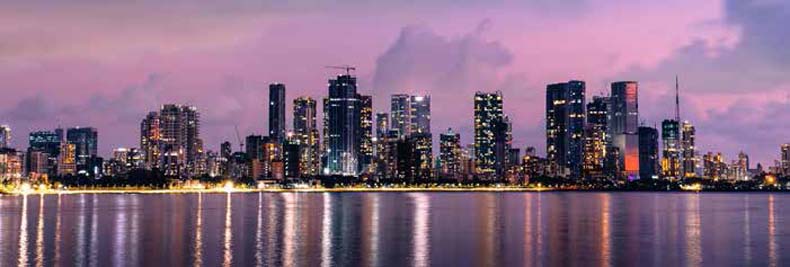
Few parts of Mumbai carry as much narrative weight as the Bandstand waterfront in Bandra. Here, side by side, stand two Taj (IHCL) properties each born of a completely different journey, yet together shaping the city’s luxury hospitality landscape and contributing to a significant rise in real estate values across Bandra, Khar, and Santacruz.
One is a case study in sharp, strategic acquisition. The other is a story of resilience and rebirth after tragedy.
A. Strategy in Motion: How the Regent Became Taj Lands End
Taj Lands End did not begin as a Taj property. It opened as the Regent Hotel, developed by the Lokhandwala Group, a 25-storey tower set on 9.25 acres at the edge of Bandra’s historic peninsula. The location alone was unmatched: sweeping views of the Arabian Sea and front-row access to what would become the Bandra–Worli Sea Link corridor.
In 2002, IHCL made a decisive move. Seeing the surge of demand in North Mumbai, the group acquired the fully operational 300-room Regent for a strategic ₹415 crore, widely considered a masterstroke, costing less than building an equivalent luxury hotel from scratch.
The rebranded Taj Lands End quickly grew into one of IHCL’s strongest financial engines. Today, with nearly 500 rooms and consistently high occupancy of 90%+, the hotel is estimated to generate approx. ₹500+ crore in annual revenue with ARR in the ₹16,000–18,000 range and an EBITDA contribution well above ₹200 crore.
Beyond performance, the hotel remains culturally relevant—whether through iconic design spaces like the Maharaja Suite by Bobby Mukherji Architects or its ongoing role in Mumbai’s social, entertainment, and corporate life.
Taj LandsEnd remains one of IHCL’s clearest examples of turning a strategic acquisition into a long-term powerhouse.
B. Resilience & Renewal: The Rebirth of the Sea Rock Site
Right next door, the story takes a very different turn.
The Sea Rock Hotel, opened in 1978, was once suburban Mumbai’s first five-star deluxe landmark, famous for its revolving rooftop restaurant and its status as a magnet for Bollywood celebrities and the city’s elite.
Everything changed on March 12, 1993, when one of the serial bomb blasts caused severe structural damage. The hotel had to shut down immediately and remained abandoned for almost two decades. Legal battles, structural instability, and environmental hurdles kept the once-iconic property frozen in time.
The long journey toward revival began when IHCL acquired controlling interest in 2009 for a reported ₹680 crore, after an earlier sale to The Claridges Group. The damaged structure was finally demolished, clearing the way for a new vision for the site.
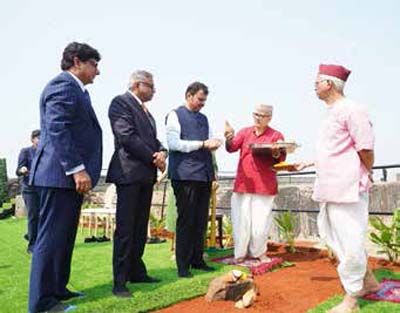
After years of regulatory delays, construction has now begun on Taj Bandstand, envisioned as a 330-room luxury hotel with 85 serviced apartments. Importantly, IHCL has also committed to developing and maintaining 4 acres of the adjoining seafront as public space transforming what was once a symbol of tragedy into a new civic and hospitality landmark.
Taj Bandstand is not just about expanding IHCL’s presence, it’s a symbol of urban renewal and a reminder of Mumbai’s ability to rebuild with dignity and ambition.
Together, Taj Lands End and the upcoming Taj Bandstand form a unique hospitality “duopoly” on Bandstand each built on a completely different foundation, yet equally influential in shaping the luxury landscape of Mumbai for the decades ahead.
The location now enjoys a decisive strategic advantage with the Bandra–Worli Sea Link, making it one of Mumbai’s most connected luxury waterfront zones. The iconic bridge has not only elevated its visibility but also fueled demand, placing the property at the intersection of business, lifestyle, and effortless access linking it swiftly to South Mumbai today, and soon to the northern corridor once the Coastal Road is completed.
ABOUT THE AUTHOR
 Nikhil Shah is Managing Director, Hospitality & Alternatives, Colliers India