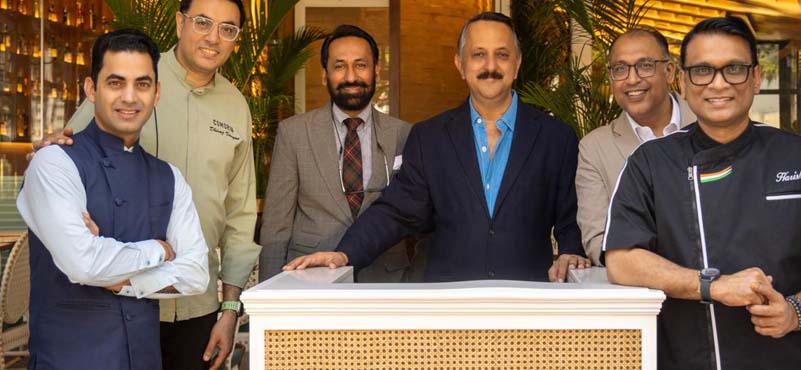
Rohit Khattar carries with him an enviable charm, mindfulness to detail and to the person he is conversing with, a rare honesty in expression; over the years, he has only increased his passion for success.
Founder of Old World Hospitality, he ran Hotel Broadway, where he opened the iconic Chor Bizarre, later won the contract to manage and run India Habitat Centre, the landmark cultural hub centre in South Delhi, which he did for over 20 years. Pursuing his passions, he ventured into film production and distribution while sticking to the core, i.e. opening branded restaurants, which he has now diversified, much like the successful hotel chains, looking at different aspects of lifestyles and price points. Those have been put in another company, EHV International, while Old World Hospitality owns majority.
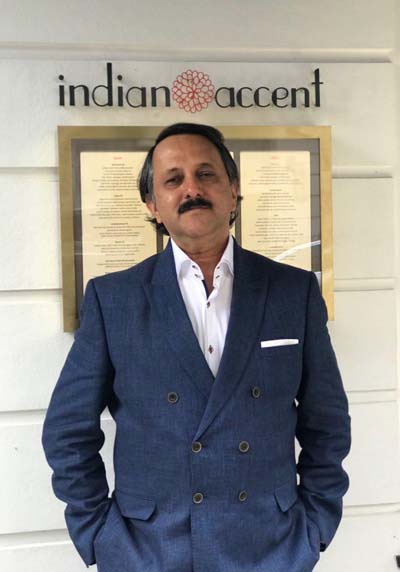 Navin: Great to be here with you, Rohit. Upstairs at Indian Accent; intimate bar, amazing food! What does this ‘Upstairs’ represent in your journey as an entrepreneur in the food, fun, frolic zone? How did the idea come about, an outlet within an outlet?
Rohit: When I created Indian Accent, I really didn’t think it would become as iconic as it has and we owe that to my team first and then, of course, to our guests. However, we felt that this space, one flight up, was not being utilized fully. For a number of reasons – the kitchen here was small, we could not take the Indian Accent diners upstairs because we could not serve them the full menu. We were left only doing parties. And parties, as you know, happen typically on a Friday, Saturday, maybe a Sunday lunch. Once in a while, mid -week.
I figured we weren’t fully utilizing a beautiful space on Lodhi Road, above a very successful restaurant. The question was how do we utilize it all seven evenings? And because of the handicap of the small kitchen, the logical thing was to do a bar with a smaller menu.
Navin: How do you anticipate Upstairs to complement the main restaurant, Indian Accent, which is just below it?
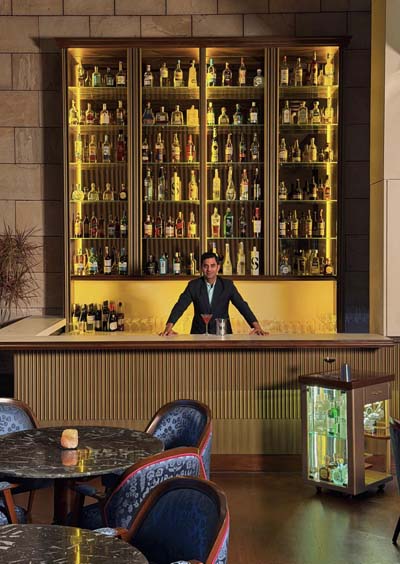
Rohit: As you know, Indian Accent is celebrating its 16th year by God’s grace. There isn’t a table available in either of the evening seatings – a testament to our great team. So for the last couple of years, I have been toying with the idea of setting up a Bar Upstairs. We were waiting for the lift to be installed, but there were some issues. We just decided to take a call and open this old-style Martini and Jazz Bar which is a welcome addition to the city in general and the right fit for Indian Accent regulars, whom we intend to turn into members in the long run.
Many a times, Indian Accent guests do not vacate their tables by 9:30 pm, so we may move them Upstairs for desserts as well as liquor flights. Similarly, many of our guests, especially foreigners, arrive as early as 6 pm, when the restaurant is not yet ready, so they will go Upstairs and begin with their first round of cocktails. We then have a third wave of member patrons for after hours who shall come in post 10 pm and stay on longer. Currently, we have a license till 1 am, which we intend to extend to 4 am going forward. All of this is hugely synergistic with the Indian Accent clientele.
Navin: I must say, even if it’s a smaller menu Upstairs, from whatever we have seen in the last hour or so, each item is an amazing new concoction. There’s every bit about discovery. Not going back to a traditional dish, let’s say tandoori kebabs. Even with Comorin, one has to go through the menu to understand its nuances. Even here, each dish that has come to me has a bit of a story behind it. How do you do this? You keep inventing. Is there some limit?
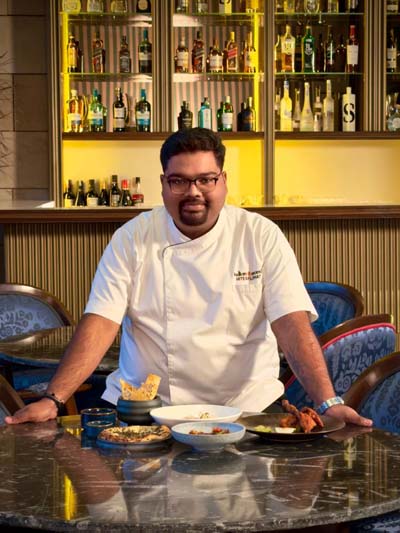
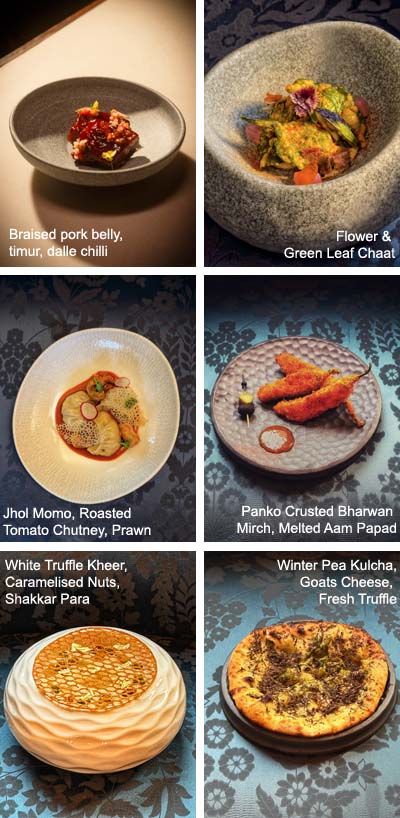
Rohit: I will not take undue credit. Hitesh Lohat, Head Chef of Indian Accent, is the brain behind this. I sat with him and we agreed that we need a theme every quarter. He decided to first begin at home with the “Markets of Delhi”. Hitesh crafted this menu.
Says Head Chef Hitesh Lohat, “Designing this menu has been incredibly personal- we drew from the colours, aromas, and stories of Delhi’s markets and paired them with global techniques and playful nostalgia. I wanted every dish to spark a sense of familiarity and make guests recall something from their own lives, even if subtly.”
Navin: What about the amazing drinks menu?
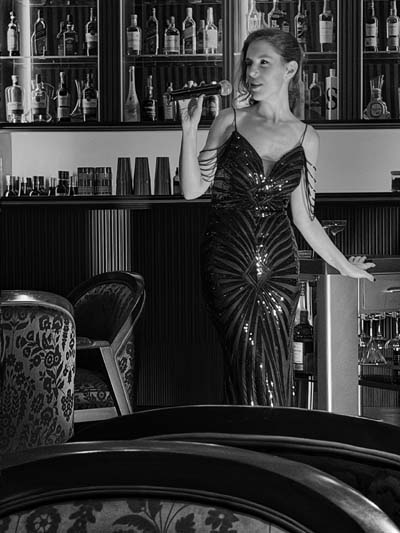
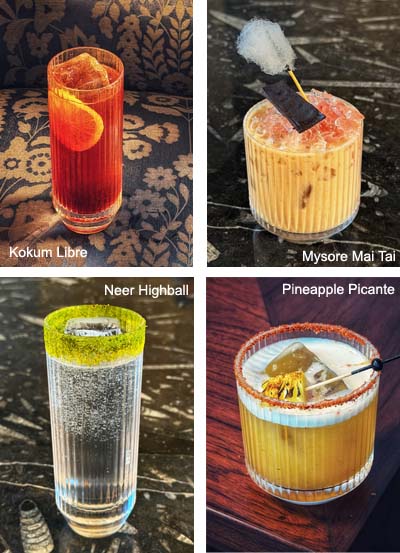
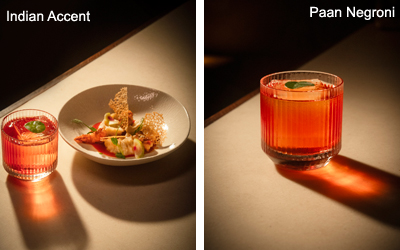
Rohit: The credit for that goes to our Head of Bars, Varun Sharma, who, of course, is a maestro at drinks. I had wanted an old fashioned Martini & Jazz Bar. Overseas Martinis are back in a big way. That got me excited and I started thinking Martini & Jazz. Then I remembered Alyse, a talented singer with a beautiful gentle voice, who had performed at Hosa Goa and she completes the trio of the team in addition to Chef Hitesh and Varun and, of course, the very talented Ravi Rai, who is the Bar Manager. People said this space would never work as a Bar. Sabyasachi did the fabrics and wallpaper. And you just dim the lights and use candles, and the space is now a Bar. So Varun’s drinks naturally take centre stage.
Says Varun Sharma, Head of Bars, “We’re thrilled to introduce a new bar experience to Delhi – Martinis and cocktails crafted around Indian ingredients, all brought to life with precise technique and modern flair. Pair that with the sophistication of live jazz, and we’re creating a drinks-led space we can’t wait for guests to discover.”
Navin: So, how many brands do you have now?
Rohit: We have 7 restaurant concepts currently and 2 more are under development.
Navin: And how do you differentiate these brands?
Rohit: So, we have luxury dining with Indian Accent. I feel we don’t really have a fine dining brand even though we get awards in that category for Comorin and Hosa. I would, therefore, put Comorin, Fireback and Hosa in the premium casual category, because the average check is less than Rs 2000 a head. Fine dining will go to Rs 3000-3500, Indian Accent Delhi is at Rs 7000 a head, so that’s luxury dining.
Hosa is an imaginative South Indian restaurant. Fireback is authentic Thai with David Thompson, the world’s foremost Thai chef, as the Culinary Director. And Comorin has regional and comfort food served in a modern pre-plated manner. I would say these three are our premium restaurants. Chor Bizarre and All American Diner are a notch below in pricing and fit into casual dining.
Navin: What about design? You do impart a very distinctive aura to your outlets?
Rohit: Yes, we create a concept, hire the best team of architects and the ideal designer for it and put a lot of effort in getting the concept translated properly. Rashmi, my wife, is our Director of Design. No restaurant is readied without her final touches, and all designers respect her eye for detail. Vikas Bhasin, our Director Development, builds them and Nitin Mathur, our COO, operates them. Rashmi was in New York and I immediately needed the bar. Didn’t really want a designer since Sabyasachi had already done the fabrics. So, here at Upstairs, I asked my sister, Rohini Kapur to quickly design a Bar counter, which she did beautifully. There was urgency to execute once we had identified what to do. Rohini is an Interior Designer, who also designed Hosa Goa, which has won awards for its design, and now the Hosa Gurugram design too is Rohini’s. Barring these 2 restaurants, whoever the designer may be, Rashmi has the final oversight in ensuring that it is true to concept and delivers.
Navin: A larger generic question, where is food going?
Rohit: I think food is going into a more and more approachable and casual direction. We keep on getting offers for Indian Accent in other cities, but I am not sure which city is ready for it.
Navin; I’m surprised because I thought that Indian Accent, knowing how premium Indian food is, it should have been otherwise?
Rohit: I feel Rs. 7000 per head is not a really tenable long term prospect in India other than at established eateries like Indian Accent. We have two iconic ones, this one and the one in Mumbai. In Mumbai itself we have seen the average check is lower. There are more vegetarians in Mumbai, so the tab becomes less.
Navin: How much is the average check in Bombay?
Rohit: Just about Rs. 6000. 1000 less than Delhi. Still a pretty expensive meal, although not too high for an international diner used to paying over $100 per head.
Navin: In Delhi?
Rohit: About Rs. 6800-7000.
Navin: Coming back to the bar here, as we sit, tell me when you talk about these dishes being from different parts of Delhi, are we under-selling what you are offering, because I got to know of them only by accident?
Rohit: It’s an interesting menu and is there only for a few months, after which the menu will completely change because our regular members will get tired. Moreover, all these dishes are detailed in the menu, which you never got to see. You are being served dishes which the team wants to showcase. This is an extensive menu, even though it is on one page.
 Downstairs at Indian Accent, we have a great new menu too. Chef Shantanu has done a superb job. That’s what is growing from strength to strength. Busier than it’s ever been.
Navin: So, how many outlets do you have today?
Rohit: We have Indian Accent in Delhi, Mumbai and New York; Comorin Gurugram & Mumbai, Fireback Goa & Mumbai, Hosa Goa & Gurugram, Drift in Mumbai and Chor Bizarre in Delhi. That’s 11. We have 5 under development in Hyderabad and are finalizing another 5 in Bengaluru. So, next year will be very busy. We also have Chor Bizarre Jaipur under construction.
Navin: I recently read you have done something to Broadway, your hotel in Old Delhi. Now Broadway is very close to everyone’s heart.
Rohit: Yes, Navin, you already know the story. My grandfather, the legendary Tirath Ram Amla from Kashmir, bought this piece of land ostensibly for a winter home for the family. He did not read the small print and realised that he had to build a 4-storey building. Cornered, he had no choice. So somebody told him to build a hotel. Through sheer grit and passion, he made a beautiful Art Deco property, where 3 generations of guests have been visiting. He had hired a just returned-from-Harvard young architect called AP Kanvinde, who then went on to make some of the greatest landmarks in Delhi.
In the early 70s, when my parents moved to Delhi from Srinagar, he gifted it to my mother, who then led the renovations and took the hotel to greater glory, running it with a lot of elegance for over 40 years. When I returned from the US in 1986, this was my first job. Thereafter, my wife Rashmi and I scoured all the Chor Bazaars of the country, which led to India’s first themed restaurant – Chor Bizarre. We are celebrating 35 years of Chor Bizarre and 70 years of Broadway.
Navin: So, at the Broadway, in your new arrangement, the management is your own? And the staff is your own?
 Rohit: Since we are opening a restaurant a month, I realised I could not focus anymore on the sales and marketing of Broadway. Operationally, the team is strong and can operate anything. We therefore selected the dynamic Vikramjit Ahluwalia’s Alivaa Hotels as our Sales & Marketing partner. So it is now called – “Broadway – an Alivaa Collection Hotel”. Rashmi has redone the rooms beautifully, and I am delighted that the 3rd and even the 4th generation of guests are returning to Broadway.
Navin: So, what is the model of starting these restaurants?
Rohit: We look at the cities, so we’ve identified five cities and the best locations but in recent years developers have been approaching us to sign up.
Navin: When you say you’re signed up, means you’re collaborating with somebody?
Rohit: Yes, but not an equity collaboration. The developer / landlords put in the capex or part of it. In fact, in most cases, landlords invest substantially, and we may put in a little bit on a case to case basis. That is a model that we have been lucky to scale up.
Navin: No, but these are your own or they are franchised?
Rohit: We are licensing Chor Bizarre to hotels because every hotel usually needs one specialty Indian restaurant. And Chor Bizarre is an imaginative Indian restaurant and therefore an ideal fit. Plus other than regional Indian food, it has a signature offering, which is Kashmiri, which nobody else can do. We are also reviving The All American Diner soon.
Navin: So, who looks after your operations and how are you managing this scale up?
Rohit: Nitin, our COO, who you just met. He has been with the group for 22 years now and is a meticulous operator. He has a large team supporting him. The head office in Delhi has about 30 people. Then in every city we have a hub and spoke model – Area GM under whom are each unit’s Head Chef and Managers. The Head Chefs also report through a dotted line to the Brand Chef of the concept who controls the menu and innovations.
 Navin: What’s happening to the restaurant business in India at the moment? Where do you see India unfolding?
Rohit: I would say that the India story is unstoppable. The appetite for good food is incredible. Also for innovative, experiential dining. Food is Theatre.
Navin: How about spending power?
Rohit: Getting better and better. But people are willing to pay substantially for experiences like at Indian Accent. Not everywhere. They’re not willing to pay exorbitantly for repeat dining. Which is why, if you see, barring Indian Accent, almost every restaurant of ours is below Rs 2000 per head.
Navin: Your Goa experience? Tell us more about the space too.
Rohit: Hosa does very well – now our third year. However, it was extremely difficult in the first and second years since Goa saw far too many restaurants opening. It’s a beautiful Portuguese bungalow. Rohini Kapur, my sister, designed it. Then there was a deck available. The owner got permission to build, and we made a small Fireback. Mainly outdoors. Very pretty. It’s on an even keel, but it was the first year and a half that was tough.
And now Hosa has become a cult restaurant too and you need to see the rush at Hosa Gurugram. It is packed. We were thinking we would do 150 -200 people. We do 350 every day. We can’t cope up. The kitchen is too small. Because turn around, turn around, turn around, it becomes maddening for the staff. Fireback also is in its second year now and we can see it turning and getting better.
Comorin Gurugram again we’ve been doing 550 people a day – in a 120-seater.
Navin: Looking at the big picture, by now, you’re opening how many new outlets in 2026?
Rohit: By the end of 2026, we would have opened 10-12.
Navin: There is also the other question, of hotels outsourcing their outlets to established brands? How is that happening for you?
Rohit: So, we’ve signed three right now and are talking to three other hotels.
Navin: What about any chain which says, like, X chain says, that I’ve got so many hotels. Between them, let us pick your brands and develop a dozen or more?
Rohit: That too may happen, though not yet. Hands full with the 7 we have plus 2 more being developed.
Navin: How is the differentiation happening in food business in India as you see it? Differentiation. Are we also segmenting it like in the hotel industry? We’ve got this huge diversification happening. How is that happening in the restaurant business?
Rohit: I would say restaurants typically used to be segmented into QSR (quick service restaurant), CDR (casual dining) and FDR (fine dining). I’ve already told you that in our category, we have premium casual, casual and luxury dining (Indian Accent) too.
Navin: A personal question, some of this work can be stressful. How are you handling those moments of stress in your life?
Rohit: I watch movies every night. Well, almost every night. If I’m opening this bar, then I’m here till late. I might still go home and watch a film or put on Netflix. No better way to zone out…
ABOUT THE AUTHOR
 Navin Berry, Editor, CS Conversations, over five decades has edited publications like CityScan, India Debates and Travel Trends Today. He is the founder of SATTE, India’s first inbound tourism mart, biggest in Asia.
Blogs at: https://www.csconversations.in/nb-blogs