Navin: Rather the most obvious question to begin with, but still worth it. What prompted you to set up a National Heritage Museum? Did you visualize it the way it is today? Or did you start small, not knowing where it will go?
Tarun: I’m going back to 2005 – 2008. I used to keep thinking that why doesn’t India have a transport museum?
Navin: But why transport? You are a hotelier.
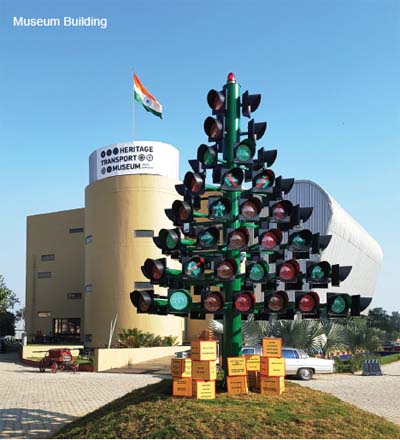 Tarun: I already had a collection of various transport artifacts that included a rail saloon from the 1930s. I had about 40 -50 vintage and classic cars at that time. I had a couple of carriages. When you look at a transport museum, after seeing various transport museums all over the world, you get an emotional connection with them. I mean my first scooter, my first car. Transport is also very much aspirational. In India, typically, we all started with scooters and motorcycles. Leading on to our first Maruti car or maybe an Ambassador and a Fiat. Now it’s aspirational again today, we want to ride from a Honda to a Mercedes.
Navin: So, would you say you had a passion for cars and that is what brought you to this?
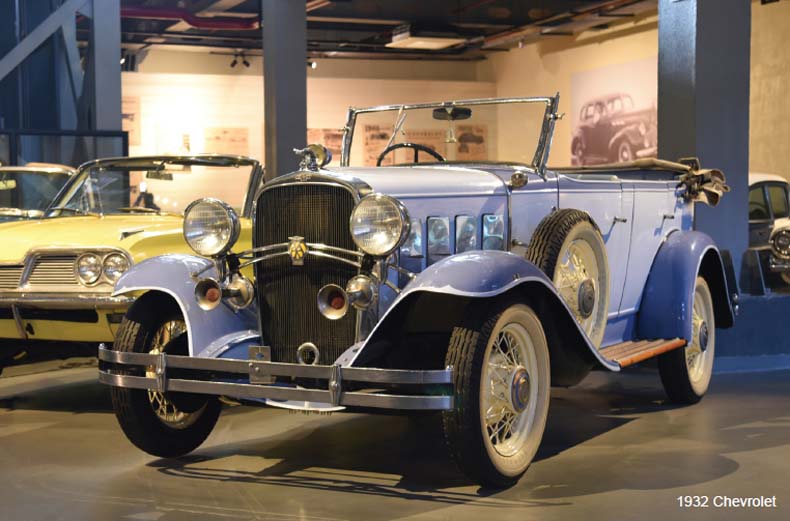
Tarun: Yes, once I came back from Paris in 1992. I went to Ramgarh, Shekhawati region at that time just on a drive. Somebody told me it’s a nice place, go and have a look. There are a lot of beautiful havelis and a lot of interesting stuff. I went there and I found this, the first of one of my buys, a 1932 Chevrolet Phaeton from Ramgarh Shekhawati and that car, because it was standing outside in the heat of Rajasthan for years, there was nothing left in it, except the bare metal shell. It had the engine, but all the rubber parts were burnt out – it was basically just a piece of scrap metal in the car that I got fascinated with and I brought it to Delhi.
Navin: What was the price of that car when you bought it?
 Tarun: 5,000 rupees.
Navin: What is the price of that vehicle now after you’ve restored it?
Tarun: Should be close to 50 lakhs.
Navin: So, going back to when you set up this Museum, but then how came this museum?
Tarun: For me, each car is a story. From where I got it, how much negotiation I had to do, what was the story behind that particular vehicle, or even for any other artifact, a carriage or a palki for that matter. For me, everything is a story. I’m very emotionally connected with all these objects that are currently on display. At that time, I thought whether my children like it or not, let me make a trust, a not-for -profit trust, loan everything to the trust, and then try and create something which India has not seen before, or India did not have till then.
Navin: What made you choose this location?
Tarun: I scouted for locations close to Gurgaon, but unfortunately the pricing of the land was way beyond my budget. I wanted a decent size, minimum three acres and above. And so here we have five acres of land with us. Three acres is where the museum is built and two acres of land where we do activities outside, especially in the winter months, carnivals, corporate events. But having said that, most private museums abroad, whether you look at America or you look at the UK, are out of city limits.
Within city limits are those museums which the government owns. And the government leases its land. Because, mind you, you have to invest that kind of money in a project that probably will never make money in your lifetime. You can get a little bit of fame. You can get a little bit of positivity around you. Okay, this guy has created a museum. But when you look purely from a money point of view or what will happen with this investment. It’s something which I guess will just be a legacy that so and so created this thing and is long gone now to that effect.
Navin: When you started to know quickly what has been the journey; what kind of climbing you did when you started, how many vehicles did you have, how many do you have now?
Tarun: We have about a hundred vehicles. And out of which 55-60 are on display, fully restored. And you can take them for a drive, any of those 60. 40 are under various stages of restoration. I can’t do everything at one go. I have to do it one by one. I have recently restored an old standard Herald which was on display but it was a very old restoration which I had bought almost 15 years back. There’s another car which is a very rare one. Probably India has just two of them. And that’s a 1935 Buick limousine. It’s a 90 liter one. It’s a very rare one. I think there are only about 400-500 in the world. So that’s in the process of restoration and hopefully by February or March that car will be back to us fully restored and I promise you, I’ll take you for a ride in that.
Navin: What else have you added now because it’s not just vehicles.
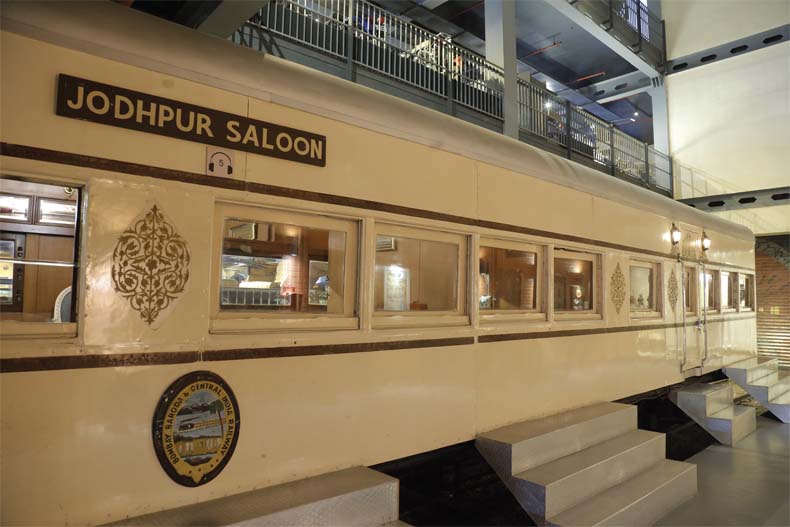
Tarun: See, when I started it was cars but then I got bored with cars. Because there were many collectors who were collecting and I thought, let me be a little different than them. That’s the time I approached the Indian Railways, courtesy Ashwini Lohani. I told them that I want an old railway saloon. I used to have this old piece of old land in Gurgaon itself, a small one-acre plot of land, and this saloon I got from Ajmer Carriage Workshops. A 1930s railway saloon used initially by BBCI which is Bombay Baroda Central India Railways used for their senior officials and VVIPs for travel. Then, when Palace on Wheels started, it was rechristened as Jodhpur Saloon and the interiors were changed with all the artefacts and the interiors of the coach. But it was metre gauge. And Palace on Wheels used it only for one year. And then the railways decided to convert that train into a broad gauge. So, these coaches were left to rot. And then I heard that they are going to be scrapped. Now, these were wood-bodied ones. And the actual body is made out of wood. It’s only the metal which has been stuck onto it to prevent the wood from getting damaged. So, I approached the railways and it took me almost a year to convince them. They were ready to sell it as scrap, but not give it to me.
Navin: Very interesting.
Tarun: And I had to sign a bond with them that I will preserve it and not mess around with it or anything. So finally, they gave it to me at a princely sum of Rs. 5,25,000 rupees. But I still think it was worth it. So, when I got it, the princess of Bikaner, Siddhi Kumari, MLA from Bikaner helped me with artisans from Bikaner to restore the coach. So, the coach as it stands today has been fully restored. Not messing up with the original style but just enhancing the original.
Navin: So, are you going to say the coach is called Jodhpur but it has artifacts inside from Bikaner?
Tarun: For example, the handles, okay the handles which the railways had put were very cheap quality, whereas what she shared were from her palace. It is not that Jodhpur has become Bikaner but it has it’s just it’s still called the Jodhpur saloon we have the full registration details of this vehicle; it was built in the 30s by Sheffield and Company UK in India, which were probably a UK based company, operating out of India. And then certain modifications were done by Indian Railways to adapt it to Palace on Wheels.
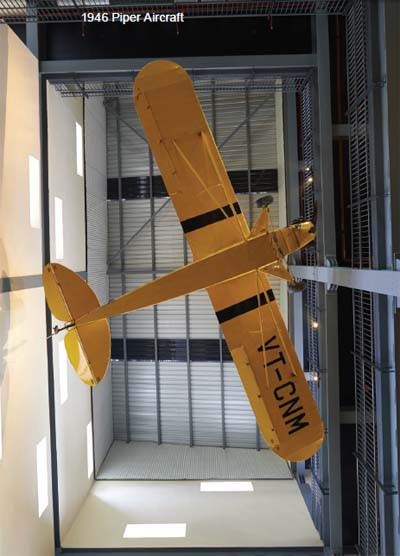 Navin: So, some of these historical legends, I don’t recall seeing them at the museum.
Tarun: These are all there. We have recreated an old railway station. How a railway station looks and this coach is there inside the museum and it’s almost about 70 feet long and it’s got two bedrooms and one living room and a kitchen and one bathroom.
Navin: I remember the last time I came to the museum you were trying to restore some engine?
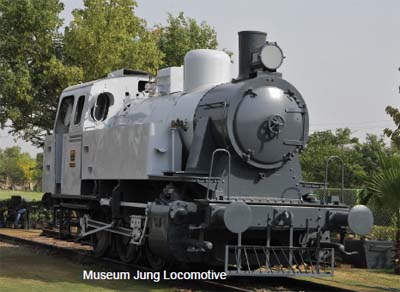
Tarun: Yes, that has been done. We have three steam locomotives. One of them is fully functional now. And that was the one which you were, you actually saw it functioning, going up and down. So that is a 1953 Jung locomotive from Germany. Now again, I approached the Indian Railways, because as a museum we were lacking steam engines. We had a railway saloon but we didn’t have any other solid objects from a railway’s perspective.
So, they guided me to this place called Rohtas Industries. Again, these were lying there, both these engines, and both these steam locomotives, and they said, if you want it, we will give it to you. Just go have a look at it and see if you are interested in it. This time, because this was a little more expensive venture, I actually took a mechanic from Chennai, who used to service these engines at some point in time, and he had retired. So he went through the boiler, he opened the boiler chamber, saw the tubes, saw the whole structure, and he said, yes, we can do this, we can get this functional. The other one had a little more work to do, so we had stopped it because it does cost, these restorations cost a bomb.
Navin: Right.
Tarun: So, eventually, five years after the existence of the museum, we were able to fully make this engine run. Again, because of limited resources, we just laid 100 feet of track. So, the locomotive goes up and down.
Navin: Coming back to now, the Museum, 12 years old, where do you think you have arrived?
Tarun: Purely from a museum point of view, the entire India and the world knows about us. Over the years, we have created interest far and wide. I think there is also an aspirational perspective, that if one Tarun Thakral could make a museum and make it run, they too can. And why not?
Navin: Not everybody is a Tarun Thakral and not everybody can make a museum like you have made. So aspiration wise, I think if I can own one of the vehicles on display, that itself would be a treasure. So not everybody can do it. And I think full marks must come to you for having achieved this single handedly.
Tarun: It’s not easy at all.
Navin: So, tell me when you say that everybody in the country at least knows of the museum. How do you advertise or how do you promote?
Tarun: Initially, it was all through word-of-mouth publicity. I combined the way hotels market themselves. That’s where my hospitality background came into being, that you need clean toilets, you need basic cleanliness, and that’s half the battle won. I just looked at two elements, a warm welcome, a smiling welcome to visitors, and an open atmosphere, the artifacts are all open. We don’t have any walls, no partitioning. We wanted people to be as close as possible to the vehicles.
Navin: Incidentally, I went to one of the toilets and I took photographs of the soap dish. And I loved the mirrors there because those were the rear-view mirrors of vehicles, I suppose. So, you have been very imaginative, I would say, in pushing your museum.
Tarun: That’s the fun part. I wanted to make it quirky.
Navin: But tell me, how are the footfalls?
Tarun: Till now, in 12years, we have roughly done about 30 lakh visitors which is not bad. 50-55% of them have been school children, through organized groups. Like today also, we had 450 children in the morning, the first half. And then, although we don’t make accommodate them on a Saturday, they do make business for us. They were having lunch there, they were having simulator rides also, they were having activities also. With a total billing of roughly 4 – 4.5lakhs of rupees. So, for me, that really counts a lot, for the museum it counts a lot.
The marketing initially, like in hospitality we do, we focus on a satisfied visitor. So, it’s more word of mouth, which is how we grew. Every time we used to ask any visitor, very nice to see you here and how did you learn about the museum? He said so and so had come and he was praising it. So, we decided to come. So that way is, I think, if you have a satisfied visitor, he goes and talks to his family or friends or wherever, or associates.
Then in a year’s time, History Channel did a very nice review of the museum. And after that, we suddenly heard that people were coming – they said we saw this museum on the History Channel. I didn’t know that the History Channel had such viewership and then within a year we got a certificate from History Channel. Your program has been liked by over a million viewers. We started using social media and all that. We’ve never had the money to go in for hardcore advertising in the newspapers or magazines. And we have magazines like yours, they have time and again written about the museum in some form or the other.
Navin: So where do you stand today, 12 years?
Tarun: Yes, I mean, we made a profit of about 15 lakhs last year for a museum, that’s unheard of, by any museum in the world.
Navin: And what’s the kind of investment that has gone in, if you don’t mind sharing that?
Tarun: Initially, when we opened the museum, it was about Rs13.5 crores. And that Rs 13 .5 crores, if I simply divide it, Rs 6 crores came from the Government of India, Ministry of Culture as a grant. Rs 4 crores were raised through donations. You see plaques at the entrance of the museum. That four crores came from them and to balance three and a half crores I loaned my own money to the trust to get the museum going.
Navin: What is your understanding of the museum world in our country today? You say the government gave you a grant of Rs 6 crores. I am very impressed with your presentation and the understanding of the officials whom you interacted with. But I normally would have thought that the government would be cagey in giving grants to a private individual. But what is your sense of the museum ecosystem amongst the government and then with the consuming public like me or others, do you see an interest in museums?
Tarun: Okay, let me put it this way. Let me go back 12 years. When we approached the government, the government was impressed with our presentations for sure and our collection. They did send two members of an expert committee to have a look at our collections. And my focus to the expert committee was that why doesn’t India have a transport museum? And here I have the collection, which I’m ready to give to the trust. So, the money didn’t come to me as an individual. It came to the trust. They give the grants to trusts or societies, never to a private individual. That was the government part.
But socially, when you look at it, the culture of going to museums, again 10-12 years back, had died. Indians never really looked at our museums to go for an outing or to go and just spend some time and learn something or just have an interaction. And there was a reason for that: 98 % of the museums 12 years back were all government museums or state-owned museums. And nothing had changed over time there. Nothing.
You can see, an artifact which was put there when the museum was initiated continues to remain there. The descriptions of those artifacts were very boring and museums the world over, are generations ahead. We were still in the 70s and 60s. We have a good artifact but it’s about how you present that artifact. How do you make it interesting enough? If you put Indian museum artifacts in a foreign museum, I think people will still go and see them. But here, we don’t go. And although the government is, the pricing is hardly anything, 50 rupees or something for Indians. So that’s not that the money is a problem.
Navin: So maybe we haven’t sold our story around our museums.
Tarun: And for me today, Museums are experience centers.
Navin: So, when you said 98%, when you started, were in government, how much has that figure changed today?
Tarun: You can add 3-4% on the private side.
Navin: So, it means probably if it was 2%, it’ll become 5%. So, do you think there is a scope for either PPP or privatization of museums?
Tarun: I’ve been talking to the government about PPP models. You reserve all the rights but let them be driven by sector. And I think the government has started doing this. Now, they are talking to the Louvre management. I think the National Museum is going to be shifted to the South Block and North Block soon.
Navin: Yeah, but that would still not be a PPP in my understanding. It’s more to do with India and French governments.
Tarun: Yes, but when you collaborate with Louvre, you’re talking about millions and millions of dollars as an investment. I personally feel even 10 to 15% of that amount, you can still make a museum very attractive. You don’t have to look at these international players. You can also look at what the private players of India have done. Constitute a committee or take the lead and say, okay, let’s do this. Maybe not at a national museum level, but let’s give a test case for a smaller museum somewhere. Ideally we should have a mix of both, where Indian players also command their own heights.
Navin: Do you see the entry now of private sector enthusiasts, like there is obviously the Kiran Nadar Museum on its way. How many more such ventures are around the country?
Tarun: The Bihar Museum opened a couple of years back, fully done by private individuals with the government of Bihar. It’s come out very well, very well. But they took help. Fortunately, they did not stick on to their typical government way of doing things. And that’s the reason for it being so beautiful. I would rate it as one of the better museums amongst all the museums that are prevalent in India today.
Kiran Nader is focused on contemporary arts because that’s what her core collection is. And she probably will also have an extension of arts and crafts like dance performances and cultural events besides, of course, the museum side.
Navin: What are your plans going forward? Are you going to have some more museums?
Tarun: We did try and approach the Indian Railways because railways have smaller museums spread all across India. So, they took out a tender for Ajmer Rail Museum. We did go and we personally did not like the space. My team went there. We thought that this place could have been created in a far better way. But they’ve done all the investments. So, we told them that we would like to make certain changes at your expense, not at our expense. We will manage it. Or you give it to us on a lease and we will manage it for you. And we will ensure that you get bigger footfalls because railways, you know, for them marketing a museum is very different from running trains. They themselves said that ‘jo yahan aata hai, wo hamara staff hi aata hai. Aur wo staff ke liye entry free hai’. They were hardly making any money out of it and they are in a prime location.
Navin: So would you say somewhere that the entire ecosystem needs a revamp.
Tarun: Yes it does. It definitely does.
Navin: You know, the way we build them, the way we excite our own people to come and visit them, the experience of it all. So, any steps in that direction at all that you see?
Tarun: I’ve not seen it so far.
Navin: But I would have thought that there’s a major consciousness today, more visible than before, that we need to showcase our heritage and I think the Prime Minister is leading this charge personally. So how much of that vision you see is getting translated into action. Particularly, between the North and South blocks obviously is being said to be the biggest museum in the world when it is completed. But we probably need that message to go across the length and breadth of the country.
Tarun: That’s right. Now there are some projects which are being undertaken by the Ministry of Culture and I have not seen those projects. I am not in a position to comment on them. There is one maritime museum that is coming in the south.
Navin: What would be your formula to push for a museum-centric Indian population? What will make them stimulated?
Tarun: I think, number one, people need to focus that they are not museums. They are visitor-centric attractions. They may be a museum in the literal sense, but they all should be welcoming. That’s the biggest problem.
Some of our museums are really one of the worst places to visit. You don’t get a sense of being welcomed. Secondly, you need to have clean toilets and basic cleanliness. You should have an open atmosphere when you enter a museum. India is typical about this caged thing. There’s a reception counter in some corner, you have to go reach out to him and then he’ll cut a ‘parchi’ and give it to you with the no smile on his face.
Then the government has some very old rules that they cannot have functions outside or inside the museum premises. You devote areas. The government first has to say, if I’m investing so much money in a museum, what are my returns? Or it’s going to be taxpayers’ money for the rest of the next 10 decades. It has to earn back. How is it going to earn back? That question needs to be addressed before you start investing, even for governments.
Navin: So somewhere, it also needs to be having a business plan.
Tarun: Yes, that is very important. Which is missing. And then there are no challenges to the employees or the curators or the management of that museum to do something different, do an event which will bring in more visitors, market it in some form or the other.
Navin: You got a grant of Rs. 6 crores when you started. Now Rs 6 crores 12 years ago, would roughly, let’s say, hypothetically translate to rs 20 crores today. Now, if you got a grant of 20 crores today, what would you do with it?
Tarun: I can make another museum, nothing to do with transport. I can do it with many other things that I collect. It’s a catch -22 situation. I can open a museum in the middle of Delhi-Jaipur. Or around where the land prices are still reasonable because a grant is only given if you have the land already. The grant is given for your construction of the museum, not for anything else. They are not interested in artifacts; they are not interested in land. All that has to be borne by the person who’s wanting the grant.
But the government gives grants to its own museums. or maybe a library, but those grants are very little. But it’s a difficult thing. I’ll take a little time to think over this. What am I going to do with 20 crores? The problem happens is that we all, many, like the story of this grant was over the first time when I got it for 6 crores, all the other grants that the government had given prior to my grant, none of those museums were ever built up.
Navin: Oh lord, this is a big problem, too. People say that you will get free money from here. But I guess cases would be going on.
Tarun: But we were the first museum that actually opened. And they were so impressed. The government officials were very impressed that they gave a grant to one, and at least this trust opened the museum.
Navin: Tarun sincerely, seriously, what would be your advice to other entrepreneurs like you? What is the secret sauce of your success?
Tarun: There’s no secret. I think you need to constantly devote your time. As collectors, you see, we are all very proud about what we collect, okay? You should always look at what you don’t have.
You can never be satisfied with what you have if you’re looking at it purely from a collector’s point of view. You always have to venture out, see other places, see what the world is doing and then sit and decide what your budgets are because invariably what happens is we aim for the moon but we don’t have the money so that thing falls flat.
I know of people who been struggling with a museum for the last 20 years, have raised money like Rs 5 crores more, but yet not taking off. People don’t realize that every rupee at the end of the day is going to be important for the objective of creating that museum. But you need to have a plan!
Navin: Would you say clarity of purpose.
Tarun: Yes, clarity of purpose and also honesty to your purpose and a proper business sense.
Navin: In all this passion for cars and heritage transport where has your hoteliering gone?
Tarun: My hoteliering is there, where it was, as always. I still devote more time in the hotel than in the museum, which is what I’ve always done. My hotel owners actually were very pleased when they saw the museum. They say here’s somebody who’s actually, while he was working, has created something which no other person has been able to do.
Navin: Have you brought some of that entrepreneurship which you have imbibed in the last 10-15 years through the museum to your hoteliering as a CEO of the Le Meridien and CG International.
Tarun: Yeah, of course. It’s always a cross thing. And I think museums, if you have a hospitality background, I think you’re bound to succeed even more than a non-hospitality person, because at the end of the day, they’re also your welcoming visitors. You’re ensuring that the visitors have a good time. You’re looking forward to those feedbacks on Google and on TripAdvisor and all that.