A World Rewrites Command
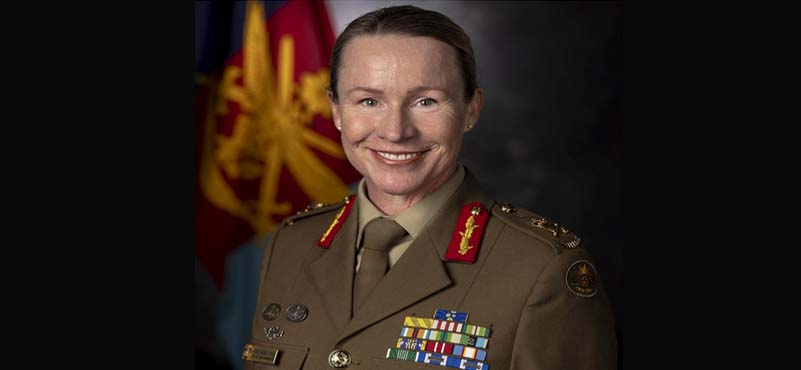
History does not always erupt—it often evolves. Quietly, almost imperceptibly, until a moment arrives that reveals the shift. The rise of Susan Coyle as Chief of Army in Australia is one such moment. Across continents, leaders like Alenka Ermenc have begun to occupy positions once guarded by tradition. This is not tokenism. It is transformation.
Modern warfare no longer rests solely on physical strength. It demands intellectual clarity, technological mastery, emotional resilience, and strategic depth. These qualities have never belonged to one gender alone. And yet, for India, this global shift raises a deeper question.
How does a civilisation that reveres the feminine as Shakti hesitate to fully entrust women with command? Why does a culture that celebrates warrior queens in legend and memory approach their modern counterparts with caution? The paradox is not institutional alone. It is civilisational.
India is not stepping into unfamiliar territory—it is, in truth, trying to remember something it once knew effortlessly.
The Ancient Ethos: When War Was Dharma, Not Gender

Long before modern frameworks of equality emerged, the Indian civilisational imagination had already resolved the question of women in warfare.
During Rigvedic period, Vishpala stands as a symbol of unyielding resilience—returning to battle with an iron leg after grievous injury. Her story is not told as an exception, but as a continuation of duty. In the Ramayana, Kaikeyi is remembered not only for palace intrigue but as a warrior who accompanied King Dasharatha into battle, skilled in chariot warfare. The Mahabharata introduces figures like Chitrangada, whose identity seamlessly blends royalty and martial strength. And above all rise the cosmic embodiments of power—Durga and Kali—not passive figures, but forces of destruction and restoration.
In this worldview, war was not a gendered domain. It was governed by dharma. And dharma recognised only one criterion—duty. The Indian tradition did not debate whether women could fight. It assumed they would.
The Age of Warrior Queens: Authority Without Apology
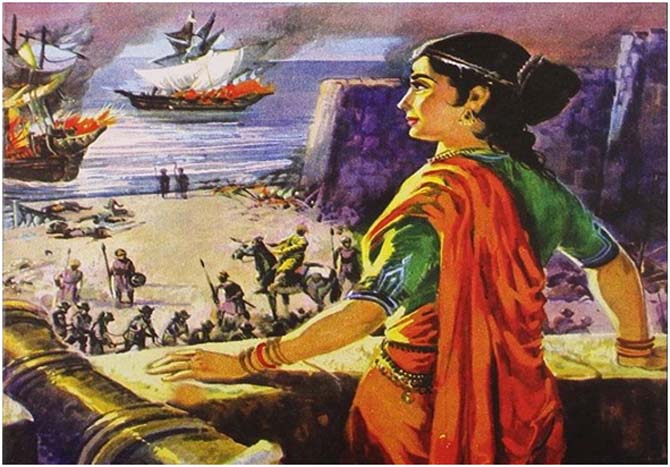
If ancient India established the philosophy, medieval India demonstrated the practice. Rudrama Devi ruled and commanded in a deeply patriarchal age, asserting authority through competence rather than concession. Her reign stands as a testament to governance anchored in strength. On the western coast, Rani Abbakka Chowta defied Portuguese expansion with naval brilliance and relentless resistance. In central India, Rani Durgavati chose death over surrender, transforming her final battle into a declaration of sovereignty. And in the Maratha struggle, Tarabai sustained resistance against Aurangzeb with remarkable strategic acumen.
These women were not symbols placed at the frontlines. They were commanders. Their authority did not need justification. It was self-evident in their leadership. And yet, as history progressed, this seamless legitimacy began to fade—its memory preserved, but its practice diluted.
The Fire of Resistance: Women in the Freedom Struggle
The colonial era reignited this tradition—not as rule, but as resistance. At its heart stands Rani Lakshmibai—not merely an icon, but a strategist who organised armies and led from the front in 1857.
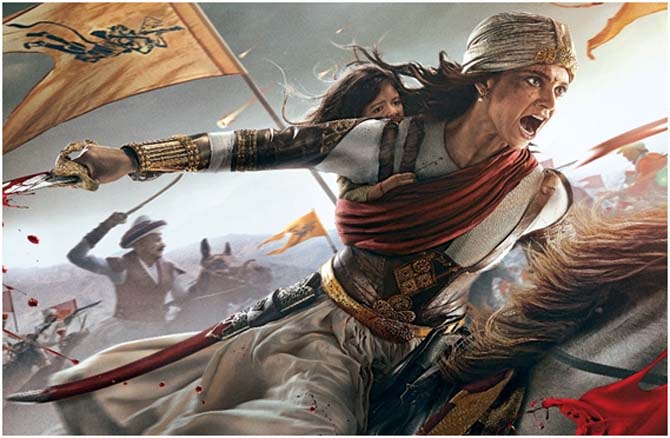
Before her, Velu Nachiyar had already challenged colonial power, reclaiming her kingdom through calculated resistance. Kittur Chennamma rose against annexation policies, while Jhalkari Bai displayed extraordinary courage by deceiving enemy forces to protect her queen. In Sikh history, Mai Bhago led soldiers back into battle, embodying both faith and ferocity.
- These were not exceptions shaped by crisis.
- They were continuations of a deeper truth.
- The battlefield never asked their gender.
Only their resolve.
Post-Independence Paradox: Memory Without Translation
Independence brought with it the promise of equality. Yet, in the armed forces, that promise unfolded cautiously. Women entered—but within limits. They served in medical corps, education, and administrative roles—domains of contribution, but not command. Combat remained closed. Career progression was restricted through Short Service Commissions. Permanent roles were rare. The hesitation was not always explicit. It lived in concerns—about physical endurance, about field conditions, about cohesion.
- Some were operational.
- Many were cultural.
- And so emerged a paradox.
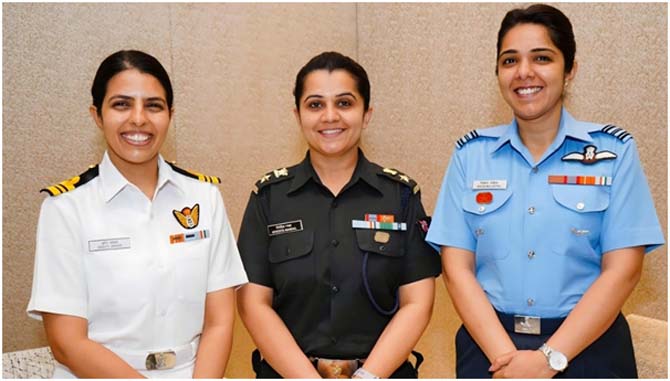
A nation that celebrated Rani Lakshmibai hesitated to imagine her in uniform. A society that worshipped Durga struggled to translate that reverence into policy.
- The past inspired pride.
- The present demanded caution.
- Somewhere between the two, continuity was lost.
Breaking Barriers: NDA and the Architecture of Equality
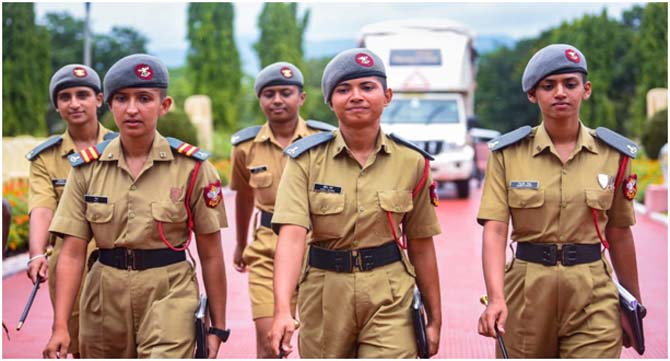
Change in institutions rarely comes as a sudden revolution. It arrives through persistence, correction, and the slow dismantling of inherited assumptions. A defining moment in this journey came with the 2020 judgment of the Supreme Court of India, which granted women officers the right to permanent commission across multiple branches. It was not merely a legal pronouncement—it was an institutional acknowledgement that equality could no longer remain conditional.
But the deeper transformation began when the gates of the National Defence Academy opened to women.
For the first time, young women entered the same crucible that has shaped India’s military leadership for decades. They marched on the same parade grounds, endured the same rigours, and absorbed the same ethos. This was not symbolic inclusion—it was foundational equality.
Simultaneously, the armed forces began expanding roles—women in fighter cockpits, on naval decks, and gradually within combat-support arms. These changes are often described as reforms.
In truth, they are a return—a realignment with a civilisational instinct that once saw no contradiction between femininity and force.
Beyond the Battlefield: Women in BRO as Strategic Warriors
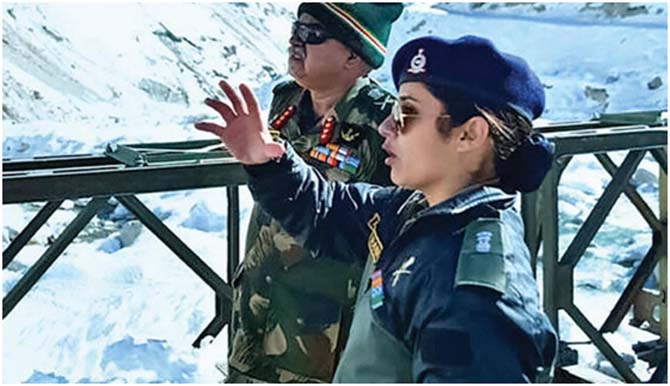
The idea of a “warrior” is often confined to the battlefield.
But wars are not won only where bullets are fired. They are won where roads are laid, bridges are built, and supply lines are sustained. In this larger theatre of national security, the Border Roads Organisation plays a role as critical as any combat unit. And here too, women have begun to carve their presence—quite literally—into the mountains.
Working in some of the harshest terrains on earth—Ladakh’s icy altitudes, Arunachal’s dense frontiers, Sikkim’s fragile slopes—women in BRO are not merely participants. They are enablers of military readiness.
- Every road they build shortens response time.
- Every bridge they construct strengthens logistics.
- Every tunnel they carve alters strategic calculus.
Their work expands the very definition of warfare. They may not stand at the frontlines of combat, but they shape the conditions under which combat is fought—and often won. In this sense, they are not outside the narrative of women warriors. They are central to it.
She who builds the road shapes the battle before it begins.
Ground Realities: The Unseen Struggles
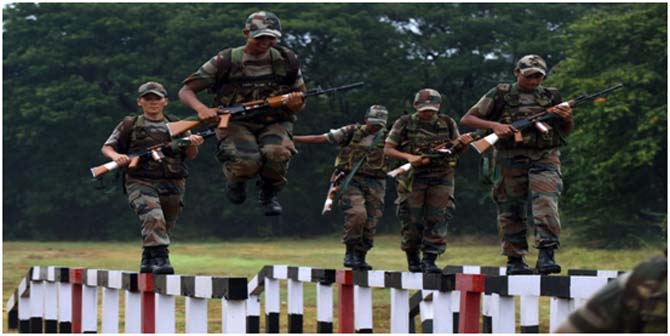
Yet, even as doors open, the journey within remains complex.
For women officers and personnel, the challenges are not always visible—but they are deeply structural. Infrastructure, historically designed for an all-male force, continues to adapt. In remote postings, basic facilities—from accommodation to sanitation—often lag behind evolving realities. Career progression, though improved, still navigates institutional inertia. Opportunities are expanding, but not always evenly.
More subtle, however, are the cultural dimensions. Military units depend on cohesion and trust. The integration of women into these tightly knit ecosystems has, at times, encountered hesitation—rarely overt, often implicit. Questions persist about roles, endurance, and dynamics. And so, women frequently carry an additional burden.
- To be competent is not enough—they must be exceptional.
- To perform is not enough—they must validate presence.
This is the invisible battle.
Not against an adversary across borders—but against perceptions within. The challenge is not capability. It is acceptance.
The Way Ahead: Completing the Civilisational Circle
Every civilisation carries within it certain enduring truths—ideas that may fade, but never disappear.
For India, one such truth is the recognition of feminine power—not as symbolism, but as force. The journey from Vishpala to the parade grounds of the National Defence Academy is not merely historical. It is cyclical—a return to an older clarity. The way ahead does not demand dilution of standards. It demands precision.
Standards must be role-based, not gender-based. Infrastructure must evolve—not as concession, but as necessity. Leadership must shift—not through directives alone, but through lived example.
Most importantly, the narrative must transform.
Women in uniform cannot remain “exceptions” to be celebrated occasionally. They must become what they truly are—officers, defined by competence, commitment, and character. For as long as their presence feels extraordinary, integration will remain incomplete. The goal is not to create women warriors. India has never lacked them.
The goal is to remember—to reclaim a civilisational confidence that once saw no contradiction between grace and grit, between Shakti and shastra.
And when that memory is fully restored, the sight of a woman leading troops—or building the road to battle—will not feel like a milestone. It will feel like continuity.
India does not need to create women warriors—it only needs to remember them.
ABOUT THE AUTHOR

Lt Gen Rajeev Chaudhry (Retd) is a social observer and writes on contemporary national and international issues, strategic implications of infrastructure development towards national power, geo-moral dimension of international relations and leadership nuances in changing social construct.