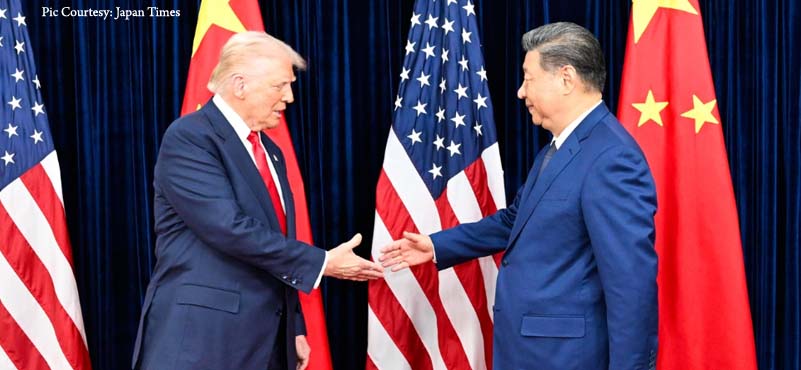
The United States President, Donald Trump, is coming to China for his talks with the Chinese President Xi on 14-15 May 2026 this week, but the visit will be about more than stated tariffs or symbolism. The visit is taking place at a time when the world is facing an unstable order, with wars in West Asia, a global energy crisis, uncertainty in financial markets, disputes over technology, and uncertainty over Taiwan. These factors have created an atmosphere of strategic instability.
This is not just a meeting point of two competing factions of power, but an attempt to avoid a direct confrontation between the world’s most powerful nations.
The timing of the visit is important. Trump is back in Beijing almost 10 years after his first visit in 2017, and the dynamics have shifted considerably since then. China today is more tech-savvy and strategic, and less inclined to buckle under pressure from the United States. China has greater political leverage at home and is more confident that history is on Xi’s side.
The United States, on the other hand, is open for business despite undeniable weaknesses. The current crisis in Iran has tested America’s military and diplomatic limits and has resulted in a strategic embarrassment. Inflationary fears have been heightened worldwide due to rising tariffs and supply chain disruptions. Even some of Washington’s traditional allies in Europe and Asia now wonder whether the United States is still capable of the strategic patience and consistency needed to lead the international system.
In this context, Trump’s trip is not a grand bargain but an effort to cope with a potential competitor.
The main focus will be on trade. Washington and Beijing have been locked in a tariff stand-off whose repercussions have already altered the course of global trade. Both sides imposed punitive tariffs over the past year before temporary truces were negotiated. In turn, China responded with export restrictions, anti-sanctions policies, and restrictions on technology and rare earths.
Economic impacts are worldwide. Production chains in Asia have been thrown into disarray and put to the test. The prices of commodities have become unstable. Geopolitics is now a more important driver of investment flows than efficiency. Multinational companies are not even sure whether to decouple from China, diversify supply chains, or rely on dual manufacturing.
That’s why a number of top American business leaders are scheduled to join Trump on the trip. Major corporations realise that the US-China relationship is not just a diplomatic matter. Today, it shapes the future of technology standards, semiconductor access, energy security, AI governance and industrial competitiveness.
But this is just one aspect of the discussion. Taiwan is at the centre of the strategic rivalry. Beijing is said to be pressing the issue hard with Trump during the summit. Chinese leaders have come to see Taiwan as more than a territorial matter. It is the very symbol of national rejuvenation and political legitimacy. However, Washington views Taiwan as a key element in preserving its credibility and strategic presence in the Indo-Pacific region.
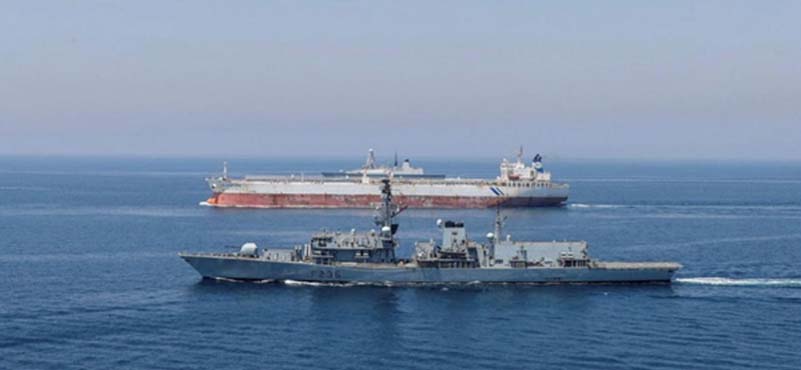
The risk is miscalculation. Both sides seem reluctant to go to war, yet they are nonetheless preparing for it. The past year has seen military exercises, naval deployments and strategic signals in the waters of the Taiwan Strait become more frequent. Even a better way to communicate or a decrease in rhetorical escalation would be a major outcome if the summit can achieve that.
Artificial Intelligence and emerging technologies are another crucial aspect. AI governance is expected to come to the forefront at a Trump-Xi summit for the first time. Both countries realise that the next stage of strategic competition will not be defined by traditional military power but by algorithmic dominance, chip superiority, cyber power and data infrastructure.
The technological competition will affect not only military deterrence but also economic development. Whoever dominates the advanced semiconductor and AI standards will dominate the world in the twenty-first century, just as industrial production dictated the twentieth century.
These have far-reaching implications for India.
The US-China rivalry has been good for New Delhi. Western corporations looking to diversify their manufacturing processes to alternative countries have now started to focus on India. Manufacturing diversification to alternative countries has been underway, and western companies have increasingly turned to India for this purpose. Concerns about dependence on China have led to India’s participation in semiconductor plans, digital infrastructure, and defence ties. India has grown more involved in semiconductor plans, digital infrastructure, and defence partnerships due to these concerns. This competition has thus created a geopolitical opening for India in economic and strategic terms.
Simultaneously, India cannot afford a breakdown in US-China relations. India’s economy is closely linked to global trade flows, which depend on peace between the two biggest economies. Washington and Beijing are on a collision course that would have a significant impact on exports, oil prices, financial markets and even India’s development path.
Concurrently, there’s a strategic issue. India is challenged by an assertive China in the north and is developing close relations with the U.S. through mechanisms like the Quad. If Trump is too transactional in dealing with Beijing, doubts could creep into New Delhi about America’s long-term commitment to Asia. Some have already expressed concern that unpredictable diplomacy could reduce regional deterrence.
Hence, there is a need for strategic balance in India. It needs to keep developing relationships with the United States without relying on the ebb and flow of American policy. At the same time, it needs to remain in touch with China to avoid any unnecessary clash with China on the LAC.
The bigger lesson we all have to learn from India is that economic resilience and strategic autonomy are now synonymous. The security of the supply chain, indigenous technological capability, semiconductor production, cyber preparedness, and maritime strength are no longer distant dreams. They are integral to a country’s power in a highly polarised world.
Trump’s China trip is unlikely to result in big deals. Expectations are kept low to begin with. Most analysts expect symbolic gestures, not breakthroughs.
But the significance of the summit is not reliant on signed documents. Sustained dialogue is valuable in times of increased mistrust between major powers. The meeting is part of a move to put a lid on a competition that is increasingly defining the future of international politics.
The summit will be a test for the world of whether great powers can continue to compete in a manageable fashion.
It will be a reminder to India that a new global order is coming, and that countries that can bring together economic power, strategic vision and diplomatic skills will be rewarded.
Globalisation is no longer a constant. The answer lies in the ways Washington and Beijing compete and coexist in the years to come.
The summit signifies a greater shift in world politics. The post-Cold War era, dominated by uncontested American primacy, is fading. The future beyond that remains to be determined. Some analysts believe the dawn of a bipolar world arrangement between Washington and Beijing. Others predict a multipolar world with a greater role for the middle powers. There is no doubt that the precepts of globalisation, consigned to the dustbin of history, are being undermined.
ABOUT THE AUTHOR
 Lieutenant General A B Shivane, is the former Strike Corps Commander and Director General of Mechanised Forces. As a scholar warrior, he has authored over 200 publications on national security and matters defence, besides four books and is an internationally renowned keynote speaker. The General was a Consultant to the Ministry of Defence (Ordnance Factory Board) post-superannuation. He was the Distinguished Fellow and held COAS Chair of Excellence at the Centre for Land Warfare Studies 2021 2022. He is also the Senior Advisor Board Member to several organisations and Think Tanks.