“Do we see rays of hope or is it just a mirage?”
I just love the way some people can create a problem and then work so hard to resolve it. The current Gulf imbroglio is a classic example. The US is indeed working overtime to get the Hormuz strait opened which was not closed in the first instance. They are certainly in a bind after the collapse of the hurriedly arranged talks in Islamabad.
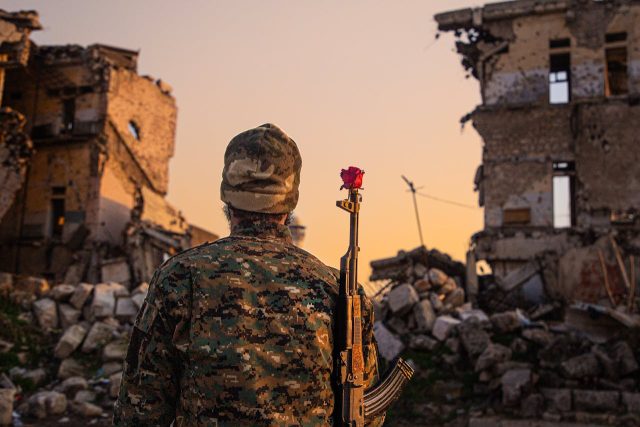
Pakistan: A peace mediator?
The fact that Pakistan was able to host the talks appears to have earned them a few brownie points in diplomatic circles. They have all along been badly and rightfully maligned for their involvement in state-sponsored terrorism. So, this event came as a God-send opportunity for them to somewhat redeem themselves as a peace mediator.
In this context, not many people may be aware of the concept of ‘Protecting power’. Well, I certainly was not, till very recently.
Ever since the relations between the US and Iran soured in 1979 due to the US embassy hostage crisis, there have been no direct diplomatic relations between the two. Both use intermediary countries called ‘protecting powers’ to manage their diplomatic interests and communication.
Accordingly, the arrangement is that Switzerland represents US interests in Iran, and Pakistan represents Iranian interests in the US. There are special cells in the Swiss and Pakistan embassies to undertake this task.
So, given Pakistan’s existing proximity to both Iran and the US, their emergence as a convenient peace-broker of sorts, was not surprising. Social media memes have however been mocking Pakistan on this count, and the failure of the talks has created a sense of déjà vu.

Facilitation, mediation or just a preliminary foray?
The fact of the matter is that facilitation and mediation are two entirely different concepts. Given the status of the US as a leading superpower, and Iran’s dominating status in the Gulf, they were not looking at Pakistan as a classic mediator.
In realistic terms, this was a case of bipartite negotiation at a neutral venue and not mediation by any stretch of imagination. I am personally convinced that no official from Pakistan was even present during the closed-door meeting between the two major protagonists.
The world waited optimistically with bated breath whilst the 22 hours-long meeting was on. The hype created by the media was as if a triumphant Hallelujah moment was round the corner.
It may seem like a soothsayer talking, but frankly there was no chance of even a quasi-permanent conflict resolution emerging from such a short interaction. Let us briefly reflect on the why part of it.
A History to Reckon with
USA and Iran have had a blow-hot, blow-cold relationship ever since 1953, when the US replaced Britain and Russia as the dominating influence in Iranian politics. This was following the CIA-orchestrated coup that overthrew Prime Minister Mosaddeq and consolidated power in the hands of Shah Reza Pahlavi.
The next major turning point came in 1979 when the Islamic revolutionaries overthrew the Shah and Ayatollah Khomeini came to power. Since then, barring the rare breathers, their animosity has only continued to increase.

The World from their Eyes
Israel, which has been the eternal thorn in the relationship, sees Iran’s nuclear ambitions as an existential threat. Israel is USA’s most critical proxy in the world and there is no way the US is going to abandon it.
Israel also realises its own importance in the scheme of things and has very cleverly exploited the USA this time to launch a military offensive towards a deemed final solution.
The US sees the Gulf dominoes from lenses gone hazy with oil fumes. At no cost would they like to cede their strategic space in the Gulf. Iran just cannot be allowed to become powerful beyond a point as that would create a gross imbalance.
The US believes that an Iranian rise with Russian and Chinese assistance will embolden many others as well, in the OPEC. The petro-dollar concept will undoubtedly feel the heat and all linked economies including the US could go into a never-before slump.
Further, more than any other development, Iran’s acquisition of a nuclear weapon will change the geopolitics of not only the region but of the entire world.
A very interesting piece of history is that it was the United States which provided Iran, its first nuclear reactor in 1967 under an Atoms for Peace program. Much has changed ever since those heady days of mutual warmth.
Iran, a proud but unsettled nation in denial, has not been able to shrug off the American vice-like hold on their oil-based economy. Despite sitting on 12% of the world’s oil reserves or a quarter of the Gulf’s total, they are embroiled in aggressive geopolitics, half of it imposed and the other half, of their own making.
Till the time significant energy resources remain underneath them, the world is not going to let them rest in peace. The ‘fortunate unfortunates’ can’t even choose between the three possible states of existence ordained for them viz, simmering, boiling or scorching.
Was the failure of the Talks inevitable?
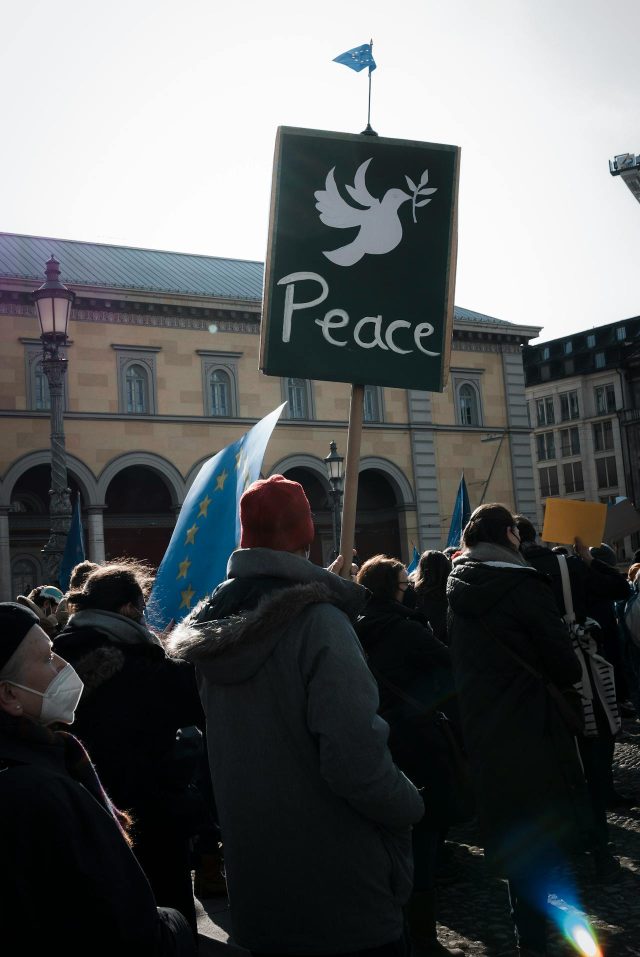
With such a volatile backdrop, the knots in the US-Iran relationship have increased multi fold over time. So much so, the ‘trust and credibility’ deficit is currently at an all-time high. It is ripe ground for never-ending conspiracy theories and negotiations can rarely succeed in such a toxic environment.
When it comes to negotiations, a vehement NO is just an opening gambit, and the present outcome must be taken in that spirit. However, the very fact that the two parties had agreed to come to the table is reason to be thankful enough, if not exactly happy about.
Whether they did so in good faith, is anybody’s guess. The possibility that the meeting was just to test waters or to cater for logistics reinforcements cannot be ruled out.
Both nations know that there is a great deal of history to negate, egos to be shed and economic realities to be accepted. All this will take time, effort and statesmanship from both sides for tangible results to surface. Till that end state is achieved, there will be parleys, games and hesitant brinkmanship.
Each party has got its Plan Bs, Plan Cs and even beyond in place. The Naval blockade of the strait announced by the US navy yesterday is just one component of such a plan.
Another facet which often lends to failure of negotiations is that the representatives from either side were not the ultimate decision makers. They just didn’t have the authority to commit on the spot beyond a point. For the hard calls, they had to go back to the highest power back home.
Thirdly, there are a whole lot of unseen stakeholders from the region whose voice and clout matters. They were noticeably physically absent, but their influence was not. Israel, Saudi Arabia, Lebanon, Palestine, Syria, UAE, Quatar, Jordan, Turkey to name just a few. Any resolution which does not take them on board is bound to be fragile.
Similarly, we must not forget the external players from outside the region, majorly, China, Russia, the EU and India. Their stakes are no less, although their visibility may be.
The region has always been sensitive and vulnerable from the discovery of oil days. Far too many vested interests indeed. Then where lie the solutions, if at all they do?
What lies ahead?
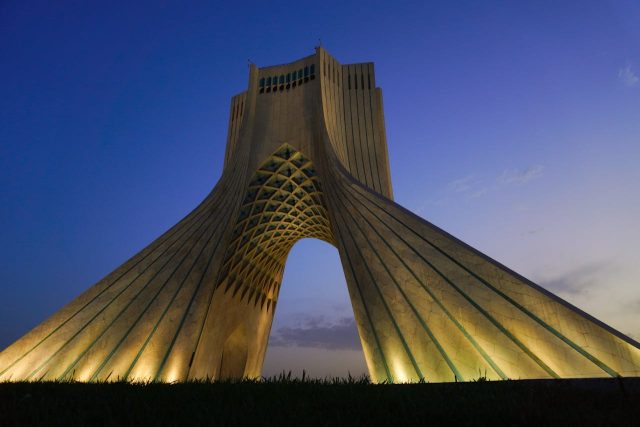
As is being attempted, temporary relief and restraint can possibly be achieved by a mix of diplomacy and coercion. The correct approach therefore would be to start with baby steps of confidence building measures.
However, long-term stability is nowhere visible, and the world must prepare for a constant-flux scenario. That is not going to change since the intentions of the major players are not and never will be in convergence.
As it appears disappointingly, lasting amity will only arrive when the honey pot is exhausted. Till that happens, peace in the region will only remain a mirage or a figment of imagination.
For the rest of the world, frequent tremors of instability will be the new normal, a tragic fact to be reconciled with.
Wistfully longing for better times,
Horax (Casper)
ABOUT THE AUTHOR
 Air Vice Marshal Rajeev Hora is a Qualified Flying Instructor and an Experimental Test Pilot with over 3800 flying hours on multiple types of aircraft. His last appointment was as AOC HQ MAO at Mumbai. Previously held appointments are AOC Adv HQ WAC (Jaipur), Comdt Aircraft and Systems Testing Establishment (ASTE), Deputy Comdt AFA, AOC AFS Bidar and Deputy Technical Manager (Air) in the Acquisition Wing of MoD. He has earlier commanded a Jaguar squadron and was also the Team Leader of the IAF’s Hawk Aircraft Project Team in the UK.