Women’s economic empowerment in India remains a pressing concern. Traditionally, Indian society accorded women a position of great respect. Yet, over the past few centuries, women in India have often been denied the status and opportunities they deserve. Despite notable progress in recent decades, women have historically faced systemic barriers, including restricted access to education, employment, healthcare, and economic resources. Hillary Clinton, former First Lady of the USA, observed: “In country after country women have demonstrated that when given the tools of opportunity – education, health care, access to credit, political participation and legal rights – they can lift themselves out of poverty, and as women realize their potential, they lift their families, communities and nations as well”.
Despite some changes in the status and role of women, no society treats its women as well as its men. Consequently, gender mainstreaming continues to be elusive, and women continue to suffer from diverse deprivations from kitchens to keyboards, from the cradle to the grave, across nations.
With constitutional reforms and the launch of targeted government initiatives, the status of women in India has gradually improved. Women’s empowerment today is recognised not merely as a developmental objective but as a cornerstone of social justice and inclusive growth. In a society long shaped by patriarchal norms, the gender equality path has been complex, marked by a transition from ancient reverence to periods of marginalisation, and more recently, to renewed efforts at empowerment.
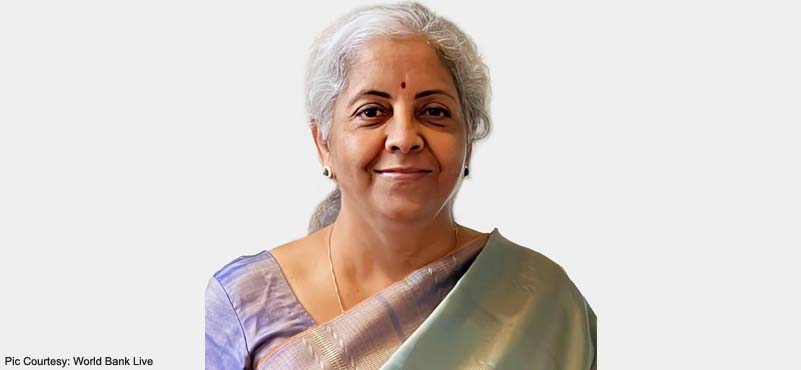
The Union Budget for FY 2026–27, to be presented in Parliament on 1 February 2026 by Finance Minister Mrs Nirmala Sitharaman, assumes particular significance. There is a growing expectation that Budget 2026 will place a stronger emphasis on women’s empowerment and gender equity by deepening financial inclusion, promoting women-led entrepreneurship, and strengthening social protection mechanisms. Building on recent gains, an expanded gender budget and women-centric measures in areas such as credit, insurance, and livelihood support could consolidate progress toward a more equitable and inclusive economy.
Why a Women-Centred Approach?
Women face structural and entrenched financial access barriers across geographies. A World Bank report demonstrated that societies that discriminate based on gender lead to greater poverty, slower economic growth, weaker governance, and a lower living standard for all people. At the macro level, 70 per cent of the world’s poor are women. Women, despite some notable exceptions, are also grossly under-represented in decision-making in both government and business sectors, particularly at senior levels. Women have a higher unemployment rate than men across countries and form most of the informal sector, necessitating a thrust on health, education and employment of women.
Women account for nearly half of India’s population, yet significant gaps persist in their participation in the labour market, access to credit, financial independence, and coverage under social protection systems. While around 40 per cent of women are part of the labour force, largely engaged in unpaid agricultural work, nearly 60 per cent remain outside it, primarily due to domestic and caregiving responsibilities (Periodic Labour Force Survey data).
Public policy, particularly fiscal policy, has a critical role in narrowing these gender gaps. Through targeted expenditures, incentives, and structural reforms, it can encourage women’s participation in the workforce, expand access to education and skills, promote financial inclusion, address disparities in health and nutrition, and strengthen social security and safety nets.
Budgetary priorities and incentives shape economic behaviour and influence long-term development outcomes. Embedding women-responsive measures at the planning stage not only addresses systemic inequalities but also supports more inclusive growth, generating positive multiplier effects across the economy.
Catalytic Role of the Government-Outlay to Outcome
The government of India has played a crucial role in promoting women’s economic empowerment through policy formulation, legal support, and targeted welfare schemes. It implements strategic initiatives such as skill development programs, entrepreneurship support, and financial inclusion measures to enhance women’s participation in the workforce. Schemes like self-help groups, microfinance programs, and women-focused credit facilities encourage income generation and self-employment, particularly in rural areas. The government also enacts and enforces laws related to equal wages, maternity benefits, and workplace safety to create a more inclusive and secure economic environment for women. By investing in education, digital literacy, and social protection, the Indian government aims to reduce gender disparities and enable women to contribute meaningfully to economic growth and national development. These initiatives, spanning tax incentives, social security, entrepreneurship support, skill development, healthcare, and digital inclusion, now must move to the next level in creating meaning and value in the lives of women.
Income Tax & Financial Incentives for Women
Enhanced Tax Deductions for Women Taxpayers
Special tax deductions or rebates for women taxpayers, particularly for those in formal employment or self-employment, could include higher deduction limits for women’s retirement savings or investment instruments, special rebates on income tax for women entrepreneurs, and tax benefits on childcare expenditures, which disproportionately affect women’s workforce participation. There is a manifest need to make the tax regime more favourable for female taxpayers to encourage financial independence and formal savings.
Incentives for Female-Led Households
Special allowances, such as a tax credit for single female household heads or women in joint income families, could improve disposable income. Governments globally use such credits to offset caregiving costs and enhance labour force flexibility.
Strengthening Women’s Employment & Skill Development
India’s demographic dividend depends on the productive participation of women in the workforce. Budget 2026 can introduce or expand programs that subsidise vocational and digital skills training for women, especially in high growth sectors like AI, robotics, healthcare, renewables, and advanced manufacturing; offer interest subvention on education and skill loans for women and rural youth (such as through specific credit guarantee windows); and establish dedicated job placement and career transition centres for women returning to work after career breaks. Potential new schemes targeting skills training with priority for women and rural youth would bridge the skills gap and equip women for future jobs, leading to higher labour force participation, wage growth, and financial independence.
Expanding Access to Credit & Women-Led Entrepreneurship
Access to capital remains a key barrier for women entrepreneurs. Budget 2026 could consider the creation of a Women’s Startup Fund or the enhancement of existing funding vehicles with preferred interest rates for women founders, credit guarantee schemes tailored to women-led MSMEs to ease collateral requirements, tax exemptions or carry-forward benefits for women-led enterprises during initial years, and special incentives for venture capital and angel investors to back female founders. These Schemes would directly empower women economically, promote innovation, and help reduce the gender gap in business ownership.
Financial Literacy
Financial literacy plays a decisive role in promoting women’s empowerment by equipping women with the knowledge and skills needed to make informed financial decisions and gain greater control over their economic lives. When women understand budgeting, saving, investing, and managing debt, they are better able to plan, protect themselves from financial exploitation, and contribute confidently to household and business decisions. Financial literacy also enhances women’s access to economic opportunities, such as entrepreneurship, employment, and financial services, which increase income and independence. Ultimately, empowering women financially strengthens their self-confidence, improves their social status, and contributes to broader economic growth and community development.
Focused Healthcare & Well-Being
Women’s health is a critical aspect of equality and productivity. Budget 2026 could allocate additional funds or introduce new initiatives, such as expanded sexual and reproductive health services, dedicated cancer screening programs (e.g., breast and cervical cancer); increased funding for maternal nutrition and anaemia prevention, and integration of mental health support services for women; incorporating gender-specific health programs would
contribute to reduced healthcare costs, higher productivity, and enhanced quality of life for women and families.
Possible Financial Inclusion Measures
Women-centric financial products linked to Jan Dhan accounts and rural credit architecture could be a major thrust area in the 2026 Budget. Such measures would seek to move women from basic account ownership towards active, productive use of formal finance.
Potential measures include Jan Dhan–linked credit lines for women: customised credit cards, overdraft facilities and small-ticket working capital loans for women Jan Dhan account holders, particularly in rural areas and small towns; preferential interest subvention for women borrowers using digital credit scoring tools such as the recently introduced Grameen Credit Score, helping formalise and de-risk lending to self-help groups (SHGs) and nano enterprises; and incentive schemes for banks and NBFCs to expand women’s share in priority sector lending, possibly through revised targets or performance-based grants. Such initiatives would complement existing financial inclusion achievements while addressing persistent gaps in access to collateral-free, affordable credit for first-time women borrowers.
In 2026, India’s vision of “women-led development” has shifted from basic welfare to high-tech empowerment. With the government targeting a developed nation status by 2047, current schemes are justifiably focusing on digital literacy, drone technology, and massive financial inclusion.
Social Protection & Safety Nets
Social protection schemes such as cash transfers, pensions, and insurance can reduce vulnerability. Enhancements might include increased conditional cash support for women in low-income households, portable social security benefits for informal sector women workers, free or subsidised childcare facilities to support working mothers, and improved pension coverage for women, especially widows and the elderly. Focused benefits can empower women economically and ensure broader participation in the labour market.
Education & Digital Inclusion
Ensuring girls and women have access to quality education and technology is fundamental. Budget 2026 could expand scholarships for girls and women in STEM and higher education, subsidise digital literacy programs targeted at women, especially in rural areas, and promote affordable internet access and device ownership among women. Investing in digital inclusion not only enhances employment prospects but also enables access to financial services and online markets.
Gender Budgeting: A Strategic Framework
India’s Gender Budget has expanded significantly over the past decade, reflecting a paradigm shift from welfare to empowerment and “women-led development.” The allocation for gender budgeting rose from about ₹0.98 lakh crore in 2014-15 to ₹4.49 lakh crore in 2025-26, increasing its share in the Union Budget to around 8.86–9 per cent.
Over 273 schemes now report gender-related allocations, with the Ministry of Women and Child Development (MWCD) devoting more than four-fifths of its budget to women and girls. Key flagship programmes include One Stop Centres, Women Helpline (181), Child Helpline (1098), Pradhan Mantri Matru Vandana Yojana, Saksham Anganwadi and Poshan Abhiyaan, alongside Beti Bachao Beti Padhao. Accordingly, the 2026 Budget is likely to emphasise consolidation, outcome orientation and further mainstreaming of gender concerns across Ministries.
Potential Economic & Social Impact of Women-Centric Budget Policies
Women-friendly measures in Budget 2026 could produce wide-ranging outcomes leading to:
a) Higher Labour Force Participation
Policies that reduce the burden of caregiving, expand skills training, and incentivise employment could significantly raise women’s workforce participation — one of India’s most persistent economic challenges.
b) Enhanced Growth & Consumption
Greater economic engagement by women boosts household consumption and national GDP through increased incomes and spending power.
c) Reduced Poverty & Inequality
Targeted social protections can lift vulnerable women and families above the poverty line and shrink socio-economic gaps.
d) Improved Educational & Health Outcomes
Investments in girls’ education and women’s health enhance human capital, reduce long-term costs, and promote intergenerational wellbeing.
e) Entrepreneurial Ecosystem for Women
Special credit and incentives could transform the entrepreneurship landscape, bringing diverse ideas and innovations to market.
Challenges & Considerations
While women-focused measures are promising, policymakers must consider implementation capacity at the state and local level, avoiding scheme duplication and ensuring ease of access, monitoring & evaluation to track impact, and ensuring funds are allocated and utilised, not just announced
Transparency in outcomes and regular public reporting can improve accountability.
Deepening Gender Responsive Budgeting
The design of the forthcoming Budget also offers scope to improve the quality of gender budgeting, not just the quantum of allocations. Part B schemes have been dominant (with 30–99 per cent provisions for women) and the need for sharper outcome tracking and gender audits.
Key directions could be extending gender budgeting to more infrastructure, rural development and climate-related ministries, ensuring that all major programmes incorporate gender-sensitive components and targets; institutionalising gender audits, results frameworks and better gender-disaggregated data systems to evaluate the impact of schemes on women’s income, time use and access to services; and capacity-building for officials at Union and state levels on gender-responsive planning, monitoring and public financial management, backed by guidelines and toolkits. Such reforms would help translate larger gender budgets into tangible, measurable gains in equality, in line with Sustainable Development Goal 5 and national policy commitments.
Moving from de jure to de facto equality
The empowerment of women in India is a multifaceted and ongoing journey—one that is both a moral obligation and a developmental necessity. Despite centuries of marginalisation, Indian women have demonstrated remarkable resilience, capability, and leadership potential. While constitutional safeguards and progressive legislation provide a strong framework, meaningful empowerment ultimately depends on sustained societal transformation across education, economic participation, political representation, and cultural norms.
Achieving this transformation requires collective action. Governments, financial institutions, civil society, and citizens must work in unison to dismantle entrenched patriarchal structures and foster an inclusive ecosystem that enables women to thrive. Although notable progress has been made, significant challenges remain. By adopting global best practices, strengthening the role of banking and financial institutions, and pursuing growth strategies centred on education, entrepreneurship, and equality, India can accelerate women’s empowerment and advance sustainable development. Empowered women are not merely recipients of progress; they are powerful catalysts of change, innovation, and long-term growth.
Within this broader context, the Union Budget 2026 represents a critical opportunity to shape a more inclusive economic future—one that places women’s economic, social, and financial empowerment at the core of national priorities. Beyond tax reforms, infrastructure investment, and growth incentives, embedding gender-responsive measures across fiscal policy can deliver enduring developmental dividends.
Targeted interventions spanning tax incentives, access to credit, health care, education, and social protection can help bridge persistent gender gaps and unlock the immense potential of half the population. This Budget has the potential to set a benchmark for inclusive governance by reinforcing India’s transition toward women-led development through deeper financial inclusion, stronger support for women entrepreneurs and self-help groups, enhanced social protection, and more robust gender budgeting practices.
According to an IMF study, increasing women’s participation in financial services as users, providers, and regulators would have benefits beyond gender imbalance. Closing gender chasm brings stability to the banking system while boosting the economic ground. It could also help to implement monetary and fiscal policy more effectively.
Accordingly, we must move beyond symbolic gestures and drive a genuine shift in mindset, given the deep-seated prejudices against women and the magnitude of the challenge. I am confident that this change is both possible and urgent. However, the multi-dimensional challenges related to access to income and assets, control over and benefit from economic gains, and the power to make decisions can only be addressed through the active participation of all stakeholders in the development process. This includes society at large, government, educational and premier technological institutions, voluntary organisations, policymakers, and women themselves.
Mary Lyon, founder of the famous Mount Holyoke College in 1837, challenged women: “Go forward, attempt great things, accomplish great things.” She did. I am sure women the world over, particularly in India, will.
ABOUT THE AUTHOR
 Smt. Archana Choudhary, IRS (Retd.), superannuated in October 2024 as Principal Director General of Income Tax, where she championed reforms for better citizen trust and mitigation of public grievances. A recipient of the Gold Medal for Academic Excellence (1987) at the Lal Bahadur Shastri, National Academy of Administration, she is passionate about women’s empowerment.