Introduction
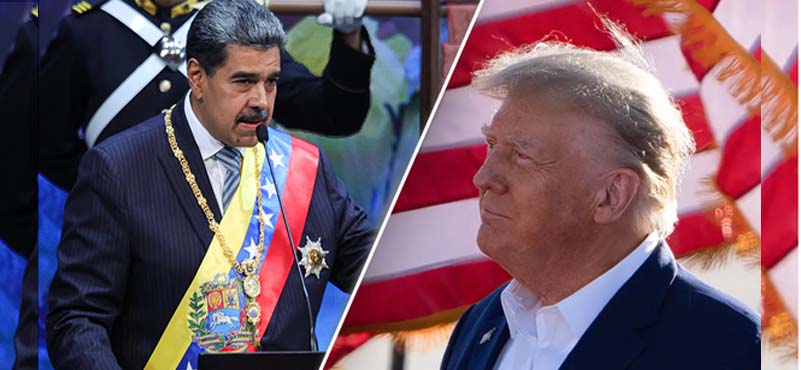
American soldiers attacked Venezuela on 03 January 2026, and captured President Nicolas Maduro and his wife Cilia Adela Flores. USA’s promise to “run” the country indefinitely, all without any UN authorisation, has shredded the remnants of all international norms. The attack has legitimised such possible acts of aggression by others who advocate the principle of ‘doing it my way,’ or ‘might is right.’
To rub salt into the wounds of the United Nations, Maduro was brought before a Magistrate in New York which happens to be the Headquarters of the UN.
In a statement, the French Foreign Minister Jean-Noel Barrot said the US operation “contravenes the principle of non-use of force that underpins international law.” Other responses from US allies were more muted: EU Foreign Policy Chief Kaja Kallas wrote on X that the EU views Maduro as “lacking legitimacy” and called for “restraint,” while saying “the principles of international law and the UN Charter must be respected.”
Democratic US Senator Mark Warner, the Vice Chairman of the Senate Select Committee on Intelligence, said “If the United States asserts the right to use military force to invade and capture foreign leaders it accuses of criminal conduct, what prevents China from claiming the same authority over Taiwan’s leadership?” “What stops Russian President Vladimir Putin from asserting a similar justification to abduct Ukraine’s President? Once this line is crossed, the rules that restrain global chaos begin to collapse, and authoritarian regimes will be the first to exploit it.”
The Greek historian Thucydides’ quote highlighting the harsh reality of power dynamics in the Melian Dialogue; “The strong do what they can and the weak suffer what they must,” rings true over two thousand centuries later.
 Why Venezuela Matters
Venezuela is located in the Western Hemisphere which the US considers its ‘area of influence’ as articulated in the recent US National Security Document which aims “to restore American pre-eminence in the Western Hemisphere.” This is the “Trump corollary” to the Monroe Doctrine.
Its importance lies not just in its proximity to the US, but also in its role as a geopolitical centre of great power competition. It is an energy superpower and a symbol of ideological opposition to the US.
Venezuela has more proven oil reserves than Saudi Arabia and the US put together. Though under sanctions, China is the biggest buyer. Hence, control of these reserves by the US, targeting China, and ensuring that Petro-dollars remain the currency for trade, is also a major reason that possibly triggered this incident.
Apart from this, is the importance of rare earths which Venezuela possesses. These include Tantalum, derived from coltan ore, Antimony and Cobalt. Hugo Chávez announced in 2009 that Venezuela held vast reserves of coltan, which he termed “blue gold.” Today critical minerals have been elevated to the same strategic priority tier as ammunition and fuel.
The Venezuelan government established official collection centres in Los Pijiguaos, and Morichalito in 2023, specifically for Cassiterite, Coltan, Nickel, Rhodium, and Titanium. The Maduro regime had designated these as strategic resources for commercialisation, meaning state control over extraction and export, with Chinese buyers integrated into official operations.
In fact, hours before US special operations forces descended in Caracas, Maduro met with Qiu Xiaoqi, the Chinese government’s special representative for Latin American affairs, at the Miraflores presidential palace.
China fiercely condemned the attack, saying, “Such hegemonic behaviour by the US seriously violates international law,” according to a statement from Beijing’s Foreign Ministry.
Next is the presence of IRGC, which was confirmed by Secretary of State Marco Rubio in December 2025, when he said that Iran’s, Islamic Revolutionary Guard Corps maintains an “anchor presence” in Venezuela, with Hezbollah operating alongside. Further, Iran’s decision to outsource drone production to Venezuela has resulted in manufacturing facilities in Venezuela capable of producing offensive drones. As per reports ‘from a Pentagon perspective, the existence of Iranian drone manufacturing facilities 1,200 miles from Miami, combined with demonstrated willingness to transfer missile systems and Hezbollah operational infrastructure, represents an intolerable threat posture’.
In addition, over 120 Russian troops operate in Venezuela under Lieutenant General Oleg Makarevich. Russian advisers provide training across multiple domains including infantry, drone operations, special forces, military intelligence, signals intelligence, armour, aircraft, artillery, and surveillance. They are positioned in Caracas, Maracaibo, La Guaira, and Aves Island. This is comprehensive military-to-military integration, not limited technical assistance.
Hence the ‘decision to strike was made when the Pentagon concluded that the convergence of Chinese resource control, Iranian weapons manufacturing, and Russian military integration exceeded acceptable risk parameters.’ This is what probably led President Donald Trump to state; “American dominance in the western hemisphere will never be questioned again.”
Past Precedents By US
In 1954, the CIA-backed overthrow of Guatemala’s elected government created decades of civil war and instability. The Bay of Pigs disaster President Kennedy’s failed coup against Cuban leader Fidel Castro led to the Cuban Missile Crisis. In 1973, a US-supported coup against President Salvador Allende in Chile opened the way to Augusto Pinochet’s brutal 17-year dictatorship. President Ronald Reagan’s 1980s intervention against the Sandinistas in Nicaragua ended in the Iran-Contra scandal and another civil war.

Before that, there have been repeated interventions in Haiti going back to President Woodrow Wilson in 1915, 1994 Presidents Bill Clinton in “Operation Uphold Democracy” and George W Bush’s intervention ten years later, only produced more instability, leading to such vicious gang violence that Haitians cannot hold elections. The US also spent billions on “Plan Colombia,” including a large amount of military assistance, only to decertify Bogota in September for “failed” and “ineffective counter-narcotics policies.”
The closest precedent to Trump’s action was President George Bush’s decision to send US troops in to capture dictator Manuel Noriega in Panama in 1989, but it did not really alter the status of the US drug crisis.
Apart from Latin America there have been interventions in Iran, when the Shah replaced the democratically elected Mosaddegh in a coup orchestrated by the US. This was after he nationalised Iran’s oil industry. More recently, President Bush’s invasion and occupation of Iraq was seen as a huge blow to the legitimacy of international law; indeed, Putin has cited it as a justification for Russia’s invasion of Ukraine. However, in that case, the Bush administration sought UN Security Council authorisation, while Trump and his team have not bothered to do so.
As for Venezuela itself, an allegedly US-supported coup backfired against then-President Hugo Chavez in 2002. Since his first term Donald Trump has had his eyes on Venezuela when he formally charged their top leadership with involvement in drug trafficking.
Venezuela, combined with Trump’s military strike against Iran in June also done without UN or congressional authorization is being seen as a hammer blow to the tatters of international law that remain. This incident also casts a shadow on a number of other Latin American countries.
Grave Implications
The United States has no consistent record of successful post-operation stabilisation. While Washington retains unmatched capacity to conduct high-intensity military interventions, it has repeatedly demonstrated institutional weakness in political consolidation, nation-building, and conflict termination. The result, more often than not, is a security vacuum rather than a stable post-conflict order.
From Iraq and Libya to Afghanistan and Syria, US interventions dismantled existing power structures without installing legitimate, self-sustaining political alternatives. Governance was outsourced to fragile elites, externally designed constitutions and militaries dependent on US logistics, intelligence, and air power. Once US commitment waned—politically or fiscally—these constructs collapsed with speed.
Where does this precedence take the world. It takes us to a world of uncertainty. In India, it could be synonymous to ‘Jungle Raj,’ where the strong rule over the weak. 2025 saw many hot spots across the world. Most of these hot spots are still hot, and have the potential to escalate further, now that some legitimacy has been provided by the USA.
In our own neighbourhood, we have Trump’s new irrational friend Asim Munir, waiting to flex his muscles, with tacit Chinese support. On the other side is another American plant, Muhammad Yunus. The slightest spark can submerge the sub-continent into chaos.
US Now Plans to Run the Country
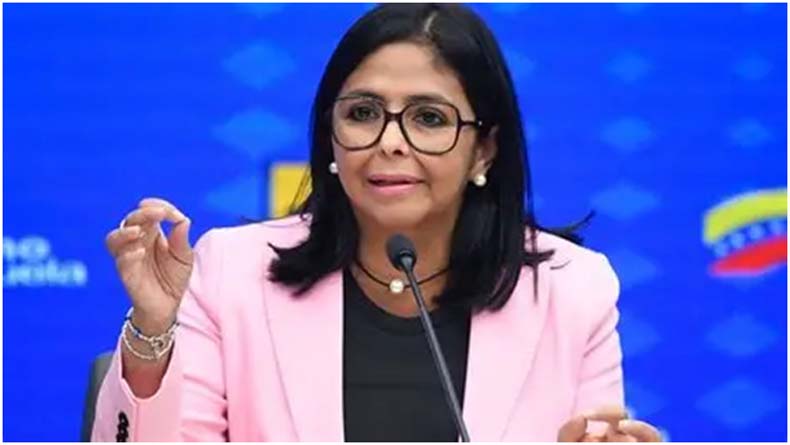
Presently Vice President Delcy Rodriguez is at the helm of affairs. But Trump has stated that; “We’re going to run the country until such time as we can do a safe, proper and judicious transition.” This could require years but said any US costs would be reimbursed by “money coming out of the ground;” in other words, Venezuelan oil, and critical minerals. “We’re going to be taking a tremendous amount of wealth out of the ground,” he stated.
“We can’t take a chance that somebody else takes over Venezuela.” He said that US oil companies would now be sent in to fix things and restore “American property” that he contends was confiscated, as well as “make the people of Venezuela rich, independent and safe.”
Asked if the occupation would involve US troops, Trump said, “we’re not afraid of boots on the ground if we have to.” In other remarks Trump also suggested that he could soon move militarily against Mexico and Colombia telling reporters that Colombian President Gustavo Petro has to “watch his ass.”
Speaking to Fox News, Trump said that despite his good relations with Mexican President Claudia Sheinbaum, “she is not running Mexico. The cartels are running Mexico,” adding that “something’s gonna have to be done with Mexico.”
US Attorney General, Pam Bondi wrote on X that Maduro and his wife would now; “face the full wrath of American justice on American soil in American courts” after being indicted in the Southern District of New York.
The ostensible reason for the Maduro operation, that he is an indicted drug trafficker responsible for pouring “gigantic amounts” of narcotics into the US, as Trump described it does not hold up very well against the facts.
“Most of those drugs come from a place called Venezuela,” Trump said. But based on US drug enforcement data compiled by the Congressional Research Service, Venezuela is responsible for only a tiny amount of the heroin, cocaine, methamphetamine, and fentanyl imported into the US. For example, more than 85 percent of heroin analysed by US agencies originate from Mexico and only about 4 percent is from South America, while most of the cocaine still comes from Colombia.
There is an opinion, that a US-orchestrated transition in Venezuela could benefit the country, if opposition leaders Maria Corina Machado, the winner of the 2025 Nobel Peace Prize, and her designated candidate Edmundo Gonzalez who is believed to have beaten Maduro in the 2024 presidential election are able to take power.
But Trump appeared to dampen such an outcome, saying, “I think it would be very tough for her to be the leader. She doesn’t have the support or the respect within the country.”
Conclusion
While Maduro is facing indictment in the US for being a drug trafficker, Trump has set a potentially devastating precedent by this immoral and illegal act. By undermining norms around sovereignty and intervention he has opened the doors for other countries to act in similar fashion against regional leaders whom they deem to be threats without worrying about the legitimacy of such actions.
Trump’s action “weakens the already compromised US ability to credibly make arguments about rules concerning use of force in international politics which is zero cost to this administration since it does not care about such things,” said William Wohlforth, an international relations expert at Dartmouth University.
“A lawless administration has reached a new low,” said Harold Koh, an expert in international law at Yale and former legal adviser to the State Department. “Trump has baldly violated the UN Charter, with no valid claim of self-defence, and engaged in an illegal extra-territorial arrest that will be vigorously contested in a US court.”
Recent US actions indicate a more overt and transactional projection of US power. Operation ‘Absolute Resolve’ has put a stamp on the normalisation of its double standards.
As far as India is concerned the External Affairs Ministry has given a statement voicing concern of ‘the well-being and safety of the people of Venezuela’ while calling ‘upon all concerned to address issues peacefully through dialogue, ensuring peace and stability of the region.’
We need to avoid reactive policy shifts driven by anxieties over US behaviour, while at the same time ensure that our engagement with them is driven strictly on the basis of our national interests, making use of opportunities. We must continuously remind ourselves, that America has only one friend, who is called America.
ABOUT THE AUTHOR
 Maj Gen VK Singh, VSM was commissioned into The Scinde Horse in Dec 1983. The officer has commanded an Independent Recce Sqn in the desert sector, and has the distinction of being the first Armoured Corps Officer to command an Assam Rifles Battalion in Counter Insurgency Operations in Manipur and Nagaland, as well as the first General Cadre Officer to command a Strategic Forces Brigade. He then commanded 12 Infantry Division (RAPID) in Western Sector. The General is a fourth generation army officer.
 Major General Jagatbir Singh was commissioned into 18 Cavalry in December 1981. During his 38 years of service in the Army he has held various command, staff and instructional appointments and served in varied terrains in the country. He has served in a United Nations Peace Keeping Mission as a Military Observer in Iraq and Kuwait. He has been an instructor to Indian Military Academy and the Defence Services Staff College, Wellington. He is a prolific writer in defence & national security and adept at public speaking.