
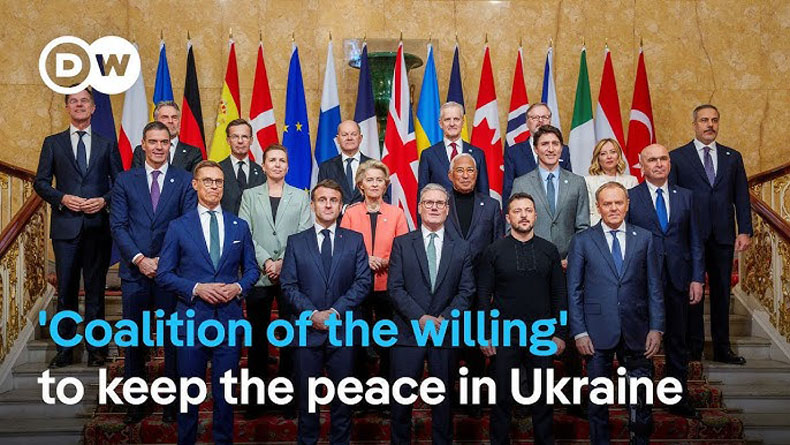
Although the details of the 29-point proposal remain fluid, its internal logic can be understood through five broad groupings. First, there are no final borders, but a military freezing of the conflict. Second, deferred negotiations on contested territories, particularly Donbass, while Crimea is likely to be treated as a settled strategic fact even if not formally recognized. Third, functional restraint on NATO’s eastward expansion, even if the alliance never officially abandons its “open door” principle. The lessons would hopefully have been learnt. Fourth, external security guarantees for Ukraine outside NATO. And fifth, phased easing of sanctions linked to verification and compliance.
This approach seeks to stop the bleeding first and defer sovereignty disputes — or leave them unresolved for now. At the heart of any settlement lies the hardest trade-off: NATO’s forward movement versus Russian strategic reassurance. For Moscow, NATO’s expansion into Eastern Europe was never a benign project of collective security. It was seen as a steady military tightening around Russia’s western perimeter. Ukraine became the final and intolerable extension of that logic. The war, in that sense, was Russia’s violent veto against an order it believed threatened its survival and crossed all red lines.
For the West, restraining NATO expansion cuts into the alliance’s ideological core, yet it is this very expansion that has now led it into crisis. NATO’s legitimacy since the Cold War rested on the promise of open membership for sovereign democracies. Abandoning that outright may appear as moral retreat. Yet nuclear-armed realities do not respect moral frameworks. What is therefore more likely is not a formal reversal, but a silent, long-term functional freeze that still satisfies Russia’s primary objective.
Under such an outcome, Ukraine would be forced into a new and difficult strategic identity — heavily armed, externally guaranteed, yet institutionally outside NATO. This is not without precedent. Cold War Finland preserved sovereignty under constraint; Austria remained neutral but protected. Ukraine’s version, however, would be harsher: a deeply militarized society, permanently anxious, sustained by Western weapons but denied Western membership. It will have to learn to live with it.

Such an arrangement carries risks. An over-armed state without firm institutional security may remain volatile. But the alternative — indefinite war — is worse. For Europe, the end of the war will not bring comfort. Eastern states such as Poland, the Baltics and Romania will demand greater NATO presence and nuclear reassurance, while Western Europe, strained by fatigue and economics, will resist escalation — creating a new strategic divide.
Russia will enter a phase of uncertain recovery. If sanctions ease in stages, energy exports will stabilise, defence sales may revive, and limited access to global finance will return. Yet this will not restore Russia to its pre-2022 stature. The war has deepened demographic decline, technological isolation and civil–military distortion. Post-Ukraine Russia may be less expansionist, but it will remain permanently militarised and strategically wary. The failure to achieve decisive conventional objectives will dampen any appetite for outward military adventure for some time.
For the United States, a Ukraine settlement would signal not retreat but recalibration. Trump’s America will not abandon Europe, but it will demand that Europe pays more, does more and moralizes less. The strategic centre of gravity will continue shifting toward the Indo-Pacific, with Ukraine marking the closing chapter of America’s post-Cold War European primacy.
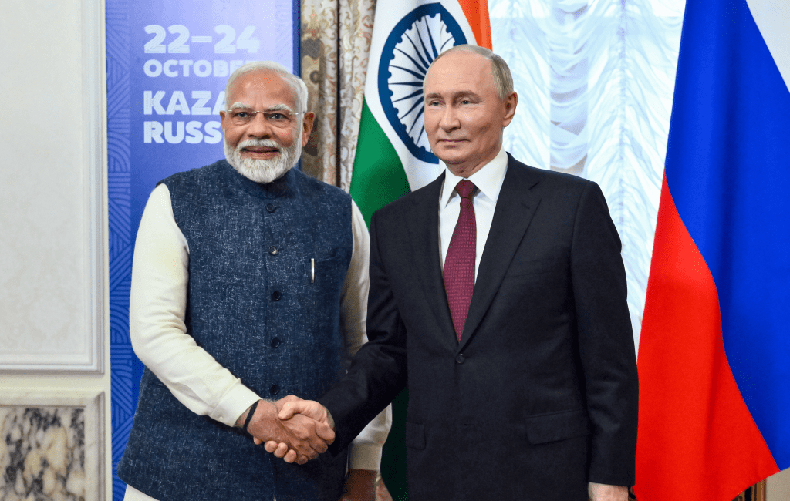
For India, the implications of this strategic reset will be economic, military and diplomatic at the same time. A stabilised Europe and partial removal of sanctions will ease New Delhi’s energy and financial transactions with Russia, reduce insurance and shipping risks, and allow defence sustainment to return to predictable cycles. It will also lower the political cost India has paid in the West for maintaining its Russia ties during the war. More importantly, a post-war Russia less desperate for Chinese economic shelter creates strategic elbow-room for India in Eurasia. This expands India’s options in defence production, rare earth access, and connectivity across Central Asia without being pulled into rigid bloc politics.
It is against this shifting canvas that India’s strategic position becomes particularly interesting. New Delhi has navigated the Ukraine conflict with studied neutrality — resisting Western pressure on energy purchases and defence ties with Russia while deepening its partnership with the United States in the Indo-Pacific, for most of the last four years. This balancing act was possible largely because Washington, until recently, viewed India through the overriding prism of China.
If the Ukraine war ends and sanctions begin to ease, a quiet stabilisation will follow in India–Russia relations. Defence supplies will normalise. Energy trade will lose its political stigma. Financial channels will reopen, at least partially. At the same time, the most consequential geopolitical outcome for India could be Russia’s gradual dilution of its growing dependence on China.
During the war years, Russia was pushed sharply into Beijing’s economic embrace — selling energy at discounted rates, settling trade in non-dollar currencies, and leaning heavily on Chinese manufacturing inputs. Peace would give Moscow options again. India stands uniquely placed to be one of those options — as a large market, a defence partner, and a strategic counterweight in Russia’s Asian calculus.
For India, this is a quiet but significant advantage. A Russia less structurally dependent on China aligns with India’s long-term interest in preventing a tight Sino-Russian bloc. At the same time, a stabilised Europe frees American bandwidth for the Indo-Pacific without tying India into rigid alliance commitments.
The deeper meaning of Trump’s peace initiative, therefore, extends far beyond Eastern Europe. It signals the first major reordering of power relationships after the post-Cold War illusion of unlimited Western expansion. That illusion is now fading — not through formal defeat, but through strategic fatigue.
Peace, if it comes, will not resemble victory for anyone. It will be uneven, mistrustful and conditional. Europe will be more armed and less idealistic. Russia will be more secure but economically constrained. The US will be more selective and less missionary. And India, if it maintains strategic patience, will quietly find its maneuvering space widening.
Ukraine’s war will eventually cease, but it will give birth to a new European power order whose strategic ripples will reach deep into South Asia and the Indo-Pacific.
ABOUT THE AUTHOR
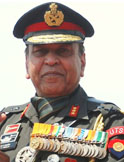 The author is a product of Sherwood College, Nainital and St Stephen’s College Delhi. He is the former Commander of the Chinar Corps Srinagar and is currently the Chancellor of the Central University of Kashmir and Member of the National Disaster Management Authority.