Scenario
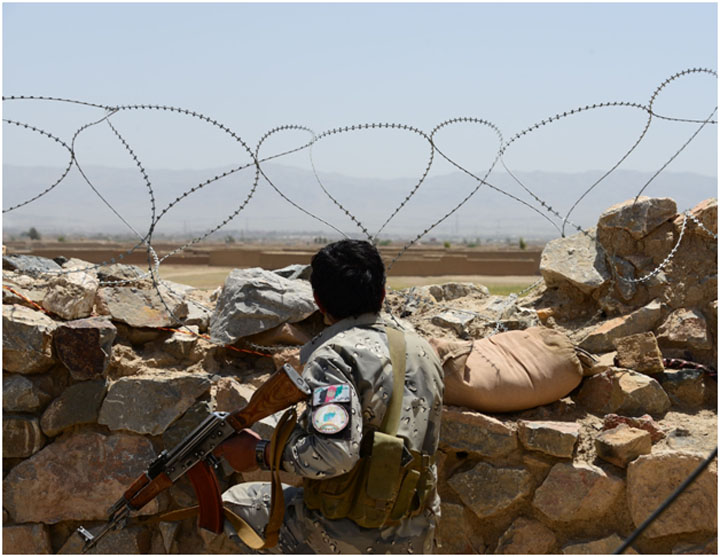
Intense clashes erupted along the Pakistan-Afghanistan border on the night of 11 October, after an attack by Afghanistan on Pakistani military posts led to heavy exchange of fire and reportedly left many of soldiers dead. The attacks came after the Taliban regime in Afghanistan accused Pakistan of carrying out airstrikes on Afghan territory, including the capital, Kabul, earlier in the week.
According to officials, Afghan troops opened fire on Pakistani army posts along the North-Western border with Pakistan and seized several of the posts. The attacks were in response to Pakistan’s airstrikes in Kabul and on a marketplace in Eastern Afghanistan on 09 October, which Pakistan has not directly claimed responsibility for, but has repeatedly stated that it has the right to defend itself against surging militancy that it says is planned from Afghan soil.
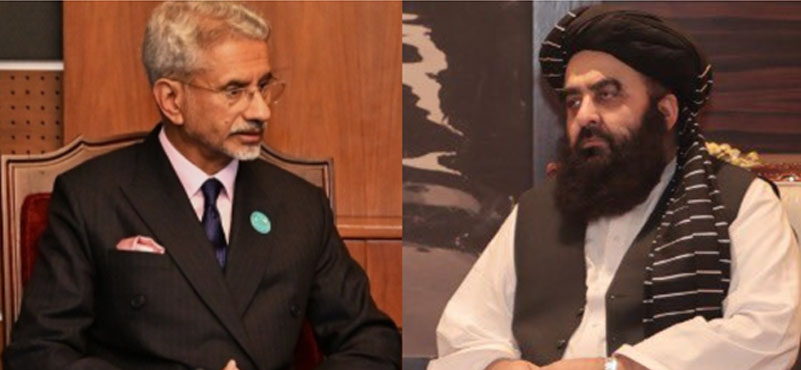
What is significant is that the Pakistani airstrikes coincided with the first visit to India by a Taliban leader, Foreign Minister Amir Khan Muttaqi, which resulted in an announcement by India to upgrade relations. This has no doubt caused concern in Islamabad.
Afghan Claims
Taliban spokesperson Zabihullah Mujahid claimed that Taliban forces killed 58 Pakistani soldiers in the attacks, while just nine from the Taliban side died.
The Taliban government’s Defence Ministry said its forces had conducted “retaliatory and successful operations” along the border. “If the opposing side again violates Afghanistan’s territorial integrity, our armed forces are fully prepared to defend the nation’s borders and will deliver a strong response,” said the Ministry.
Speaking at a press conference in Delhi, while on an official visit to India the Afghan Foreign Minister, Amir Khan Muttaqi, denied that Afghanistan was giving shelter to TTP fighters. “There is no safe haven for TTP in Afghanistan,” he said.
Muttaqi said the situation along the Afghan-Pakistan border was now “under control” and that allies Qatar and Saudi Arabia had reached out to “express that the war should stop”.
“Afghanistan has the right to keep its territory and its borders safe and so it has retaliated to the violation,” he said. “We achieved the objective of our retaliatory mission … so from our end, we have stopped.”
Though he sent a strong message to Pakistan but the dialing back of rhetoric and a bid to reduce tensions, seems to be due to diplomatic pressure and statements from Saudi Arabia and Qatar urging for de-escalation.
Pakistan’s Response
On 12 October, Pakistan responded with retaliatory strikes, gunfire, and ground raids on Afghan Taliban posts along the border. In a statement, the media wing of the Pakistani military said 23 soldiers had been killed and another 29 wounded in the attacks. They claimed that 200 “Taliban and affiliated terrorists” from the Afghan side were killed in their retaliatory strikes and that terrorist training camps had been dismantled.
They also accused the Afghan Taliban of launching attacks to “facilitate terrorism.” “Exercising the right of self-defence, the alert armed forces of Pakistan repelled the assault decisively all along the border and inflicted heavy casualties on Taliban forces,” said the statement. Ishaq Dar, who is Pakistan’s Deputy Prime Minister and Foreign Minister, said on X that the Afghan strikes marked “a serious provocation.” He said Pakistani forces had struck Taliban infrastructure and militant groups operating in Afghanistan. Adding to it, he said “We will not tolerate the treacherous use of Afghan soil for terrorism against Pakistan … the state of Pakistan will not rest until the menace of terrorism emanating from Afghanistan is completely eliminated.”
Pakistan Prime Minister Shehbaz Sharif said he “strongly condemns provocations” by Afghanistan. “There will be no compromise on Pakistan’s defence, and every provocation will be met with a strong and effective response,” Sharif said in a statement, accusing Taliban authorities in Afghanistan of allowing their land to be used by “terrorist elements”.
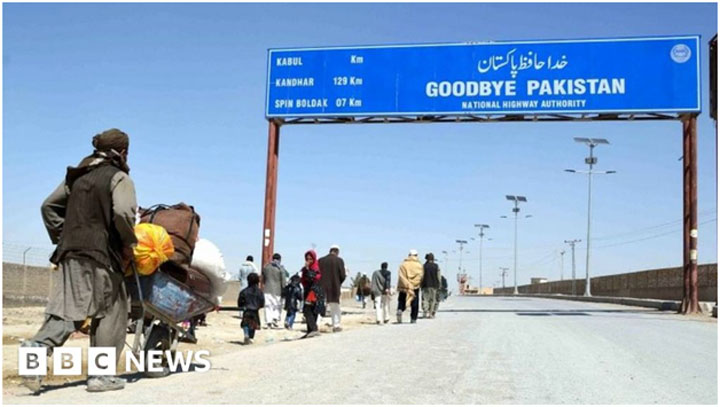
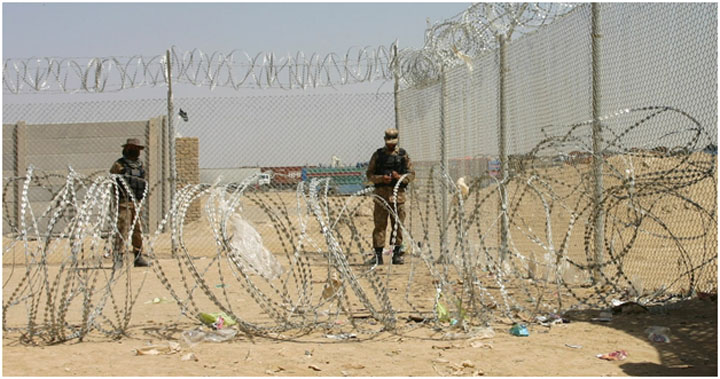
The clashes have led to the closure of two key crossings between the two countries. “The Northwestern Torkham and Southwestern Chaman crossings have been shut since 2 am (local time) Sunday for all kinds of movement until further orders due to the ongoing tense situation at the Pakistan-Afghanistan border,” an official said on condition of anonymity due to restrictions on speaking to the media.
Habib Bangalzai, Deputy Commissioner of Chaman, confirmed the closure of Chaman crossing. Bangalzai told reporters that additional security forces contingents have been deployed on the border due to the ongoing hostilities.
Afghanistan’s private broadcaster Tolo News also confirmed that the Torkham and Chaman-Spin Boldak crossings were closed after Afghan border forces launched operations last night against Pakistani Posts.
Pakistan and Afghanistan share eighteen border crossings, with Torkham and Chaman serving as the key trade and people’s movement.
Resurgent violence
Militancy has increased in Northwestern Khyber Pakhtunkhwa since the withdrawal of US-led troops from Afghanistan in 2021, which saw the return of the Taliban government. But Taliban 2.0 has not panned out the way Taliban 1.0 was as far as its relationship with Pakistan is concerned. There is no doubt that relations between the two countries have deteriorated dramatically in the four years since the fall of Afghanistan to Taliban forces.
The vast majority of attacks are claimed by the Pakistani Taliban (TTP), which is a separate but closely linked group to the Afghan Taliban, which Islamabad claims operates from Afghan soil with impunity. A UN report this year said the TTP “receive substantial logistical and operational support from the de facto authorities,” referring to the Taliban government in Kabul.
After a bloody 2024, with more than 2,500 people killed in violence, Pakistan and Kabul tried to reset their relationship. In April, Pakistan’s Deputy Prime Minister Ishaq Dar visited Kabul, with senior leadership on both sides holding a series of meetings, often mediated by China. That process led to upgraded diplomatic ties and a brief lull in violence over the summer.
But the Taliban campaign against Pakistan security forces has once again intensified. More than 500 people, including 311 troops and 73 policemen, have been killed in attacks since January as per reports. Violence in the border region has “plunged relations between the neighbours to an all-time low”, said Maleeha Lodhi, a former senior Pakistani diplomat. “But there will have to be a return to diplomacy to find a resolution to the confrontation” she said.
While Pakistani Defence Minister Khawaja Muhammad Asif told Parliament on 09 October that several efforts to convince the Afghan Taliban to stop backing the TTP had failed. “Enough is enough,” he said. “The Pakistani government and Army’s patience has run out.”
Pakistan’s military reportedly used artillery, tanks, and drones to target Afghan positions, saying it captured 19 Afghan border posts from where the attacks were launched. PTV also aired footage showing border posts in flames and Afghan soldiers allegedly surrendering in Kurram. Pakistan also claimed to have destroyed several Taliban installations, including the Manojba Battalion Headquarters and Kharchar Fort.
Conclusion
The situation along the 1,600-mile (2,600km) rugged and mountainous border between the two countries known as the Durand Line, which is contested by Afghanistan, has now become volatile.
Since the Taliban returned to power in Afghanistan in 2021, the Pakistani government has accused them of giving shelter to the Tehreek-e-Taliban Pakistan (TTP), who are behind a deadly rise in insurgent attacks in Pakistan’s border region of Khyber Pakhtunkhwa. Relations have deteriorated, with both sides accusing the other of violating sovereignty and harbouring militants.
In keeping with this, the Taliban spokesperson Zabiullah Mujahid on 12 October accused Pakistan of sheltering IS fighters from multiple countries in West Asia and said Pakistan based IS elements were behind the attacks in Russia and Iran. Pakistan unfortunately must face the reality that a sword can cut either way.
But the present clashes signal a new low in Afghan-Pakistan relations, which have become increasingly hostile amid claims that Afghanistan is giving a safe haven to militants carrying out an escalating number of deadly attacks on Pakistani soil.
Saudi Arabia with whom Pakistan has recently signed a mutual defence agreement has stated on X; The Kingdom of Saudi Arabia follows with concern the tensions and clashes witnessed in the border areas between the Islamic Republic of Pakistan and the State of Afghanistan.”
For Pakistan which is besieged by an ongoing uprising in Baluchistan, an unrest in Khyber Pakhtunkhwa or KPK, as well as the latest troubles in PoJK, the clashes with Afghanistan add to their fault lines which are not being addressed and have the potential to spiral out of control. It is imperative for them to therefore put their own house in order.
Michael Kugelman, a South Asia analyst based in Washington DC, described the border situation as “precarious”. He emphasised that while the cash-strapped Taliban in Afghanistan “lacks the capacity to fight the Pakistani military head-on”, he said that; “The risk is that its recent strikes in Afghanistan will galvanise TTP to carry out reprisals, which could invite further and perhaps more intense Pakistani operations in Afghanistan,” said Kugelman.
Though President Trump while speaking to reporters while leaving for the Middle East, said that he could take up the conflict between Pakistan and Afghanistan after his return, since he is “good at solving wars.” However, presently there seem to be no easy long-term solutions as the Taliban seems to have adopted a similar playbook of Pakistan.
India watches carefully as Pakistan gets a taste of their own pudding.
ABOUT THE AUTHOR
 Maj Gen VK Singh, VSM was commissioned into The Scinde Horse in Dec 1983. The officer has commanded an Independent Recce Sqn in the desert sector, and has the distinction of being the first Armoured Corps Officer to command an Assam Rifles Battalion in Counter Insurgency Operations in Manipur and Nagaland, as well as the first General Cadre Officer to command a Strategic Forces Brigade. He then commanded 12 Infantry Division (RAPID) in Western Sector. The General is a fourth generation army officer.
 Major General Jagatbir Singh was commissioned into 18 Cavalry in December 1981. During his 38 years of service in the Army he has held various command, staff and instructional appointments and served in varied terrains in the country. He has served in a United Nations Peace Keeping Mission as a Military Observer in Iraq and Kuwait. He has been an instructor to Indian Military Academy and the Defence Services Staff College, Wellington. He is a prolific writer in defence & national security and adept at public speaking.